Dish and AT&T strike a $5 billion network deal Dish has signed a mobile network services agreement with AT&T worth more than $5 billion over the next ten years. In accordance with the MVNO and the national roaming agreement, Dish’s mobile phone brands will use the AT&T network. When the operator’s 5G service commences, the mobile brands will use AT&T’s infrastructure for roaming in areas where it does not currently have coverage. With this deal, Dish replaces T-Mobile US as a partner in the wholesale network, and it is likely that the network operator will not suffer significant financial losses due to one of its competitors. Read more at: https://tinyurl.com/3fuxje7k Cox Business launches Net Assurance to help small businesses Cox Business has released Net Assurance, a new service aimed at small businesses to protect them from losing their Internet connection during outages. If the Internet loses its wired and private…

Vodafone, in partnership with Nokia, has released a machine learning (ML) solution, operating on Google Cloud, to rapidly detect and eliminate network anomalies before they affect Vodafone’s end customers. Built using Nokia Bell Labs technology, the Anomaly Detection Service automatically recognizes unusual behavior in a mobile cell area. Typically, this behavior, if unnoticed for a prolonged period of time, could affect the quality of service. The solution gives Vodafone engineers the ability to rapidly resolve issues such as congestion on mobile sites, interference, unexpected delays, difficulties in transferring calls between different cells and call setup failures. Besides anomaly detection, the algorithm also pinpoints patterns of change that allow Vodafone to address performance issues before they affect the customer. The operator forecasts that the anomaly detection service will be able to automatically detect and resolve 80% of mobile network problems and capacity needs. This new innovative solution is…
Illegal robocalls have been a major source of consumer complaints at the FCC. Hence, as of June 30, 2021, the Federal Communications Commission (FCC) regulations require that all inbound and outbound voice service providers operating in the United States implement STIR/SHAKEN standards in the Internet Protocol (IP) portions of their network in order to combat the plague that robocalls and spoofed calls have become. Therefore, in order to comply with these FCC requirements and to maintain customers’ trust, DIDWW, a global telecommunications operator and provider of premium quality VoIP services, has announced the successful implementation of Caller ID authentication through the STIR/SHAKEN set of standards. The industry-standard caller ID authentication framework STIR/SHAKEN is a set of technical standards and protocols that allow the authentication and confirmation of caller ID information when calling over Internet Protocol (IP) networks. Caller ID authentication technology allows people to trust the caller…
GCI to expand capacity for rural areas GCI, an Alaskan service provider, has signed a $150 million contract with Intelsat to increase the telecommunications service capacity in rural areas. GCI has been providing geosynchronous (GEO) satellite communications for 35 years to supply the state with data, video and voice services. The latest transaction gives GCI continued access to C-band and Ku-band capacities, which are already a part of GCI’s satellite services portfolio, and also provides new access to state-wide Ka-band capacity. Furthermore, Intelsat will provide the multi-satellite solution through a new and improved managed station platform and C- Ku- and Ka-bands networks. Read more at: https://tinyurl.com/w52yht6u South Sudan launches Digitel Network South Sudan has announced the launch of Digitel Network, the country’s first telecommunications company, which was introduced to celebrate 10 years of independence of the country. South Sudan has so far had the services of only two international mobile…
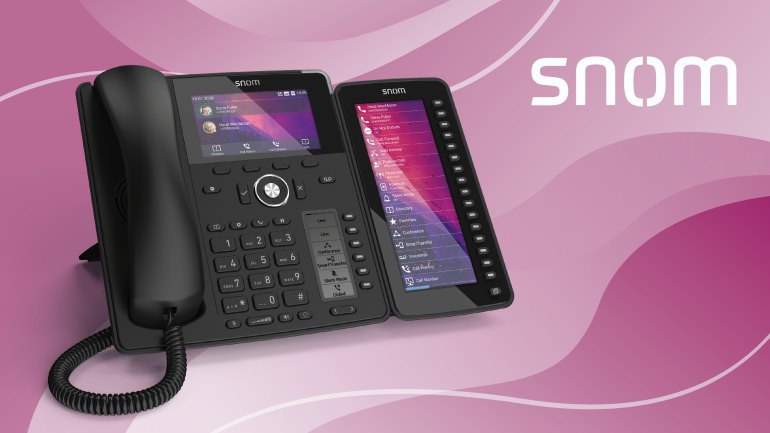
Snom, the top brand for modern IP telephony, has become the first end device manufacturer to integrate its own provisioning app into the new innovaphone PBX dashboard. Configuration data for any Snom device docked at the innovaphone PBX can now be synchronised directly with Snom’s SRAPS (Secure Redirection and Provisioning Service) via a secure interface. Auto-provisioning files from the innovaphone PBX are stored there and made available for each port. This enables innovaphone’s administrators to operate Snom phones at a locally installed innovaphone PBX in ‘zero-touch’ mode using an app. Innovaphone launched its new app store following the release of Version 13r2 of its internationally known PBX system. The store gives partners and customers direct access to useful apps and functions that are part of the communications platform – and is setting new standards for the integration of IP end devices like Snom’s. In the sense of personalising…
PiPcall, a provider of hosted telephony services and solutions for businesses, has released the UK’s first mobile-only business phone system in an application optimized to be used on the personal mobile phones of employees. The PiPoffice app allows users to work from anywhere, be that in an office, their home or even on the go. The telephone system frees the user from their work desk but keeps all the features of a traditional desk phone system. These features include call recording, conference calling, corporate voicemail, IVR, call groups, call tracking and call logging. PiPoffice calls are made over mobile networks only. This technology separates business and personal activities on the device and ensures that call expenses are charged according to the organization’s service plan. When using the PiPoffice mobile app, the user does not incur any charges on its personal calling plan. In addition, PiPoffice states that its…
Google Cloud and Ericsson team up to deliver 5G and Edge cloud solutions for telcos The two tech giants – Google Cloud and Ericsson – have come together to jointly develop 5G and edge cloud solutions to help communications service providers (CSPs) digitally transform and unlock new enterprise and consumer use cases. Google Cloud and Ericsson are developing new solutions at Ericsson’s Silicon Valley D15 Labs, a state-of-the-art innovation center where advanced solutions and technologies can be developed and tested on a live, multi-layer 5G platform. Thomas Kurian, CEO at Google Cloud, said that organizations have a tremendous opportunity to digitally transform their businesses with 5G, using cloud capabilities like artificial intelligence and machine learning at the edge. Read more at: https://tinyurl.com/2c5sez86 DIDWW implements the STIR/SHAKEN technology The global telecommunication services provider, DIDWW, has implemented caller ID authentication through the STIR/SHAKEN set of standards. These standards act as the framework…
In recent years, 5G technology has been deployed around the world at a staggering pace, and the rollout is predicted to continue in the upcoming years. Despite the fact that 5G technology is still in its early stages, the telecom industry is already envisioning and trying to define what the next generation of mobile technology, 6G, will look like. The 5G Infrastructure Association (5GIA) has published a white paper with the title “European Vision for the 6G Network Ecosystem”, which covers key areas of 6G research from technical, societal, policy and business perspectives. As stated in this white paper, 6G will participate in making headway towards achieving more united digital, physical and personal worlds. The key features of the next-gen technology include intelligent connected management and control functions, programmability, integrated sensing and communication, energy footprint reduction, reliable infrastructure, scalability and affordability. 5GIA says that 6G will usher…
Ericsson has announced the launch of its Private 5G, which will reshape on-site connectivity by providing secure and simple 4G LTE and 5G Standalone Connectivity (SA), targeting the manufacturing, mining and process industries, offshore and power companies, as well as ports and airports. Ericsson Private 5G enhances and makes business operations using cloud network management easier, keeping sensitive data on-site without downtime, and guarantees high performance under Service-Level Agreements (SLAs). The Ericsson 5G Private network is based on a 4G/5G radio and dual-mode core technology for extensive indoor and outdoor environment use cases, that include tracking assets and real-time automation, a digital twin to help optimize production operations, effective quality checks using augmented reality, and smart surveillance drones. This technology seamlessly merges with a variety of business projects, devices, and applications to increase productivity, deliver new offerings, boost customer engagement, and improve the overall work environment. The…
Deutsche Telekom (DT), in collaboration with its partners Ericsson, Nokia, Qualcomm, Samsung and Xiaomi, has announced the accomplishment of the world’s first ever Voice over 5G New Radio (VoNR) call in an end-to-end multi-vendor environment. During an innovation test in Warsaw, Poland, the partners tested the capabilities of a 5G Standalone (SA) network with voice and 5G data sessions in parallel. The network setup integrated the Ericsson 5G Core and Nokia’s IP Multimedia Subsystem (IMS). Calls were terminated on commercial terminals from the Samsung Galaxy S21 5G, Xiaomi Mi 11 Lite 5G and 5G smartphone form factor tester supplied by Qualcomm’s Snapdragon 780G and 888 5G mobile platforms with Snapdragon 5G Modem-RF Systems. By taking advantage of cloud-native 5G SA networks, operators will be able to provide high-quality voice services without relying on LTE as an anchor. Because of the high transmission quality of 5G technology, VoNR incorporation…