In a bold move set to enhance its spectrum capabilities, T-Mobile US is poised to acquire Comcast’s 600 MHz frequencies, in a deal worth up to $3.3 billion. With 39 million subscribers potentially impacted, this decision reconfirms T-Mobile’s commitment to streamlining its 600 MHz range, especially in key US cities. It’s worth noting that despite the ambitious agreement, Comcast retains the rights to exclude any licenses before completion. The deal serves both parties well, promising to augment T-Mobile’s already substantial frequencies and refresh Comcast’s spectrum focus on high traffic areas.

The surging interest in cloud-based applications represents a flourishing sector of the tech sphere, by providing an enhanced user experience and considerable savings on terminal investments. Telecommunication giant, ZTE, demonstrates this potential with their virtual STB (vSTB) solution in the television industry – a pioneering effort that bypasses traditional terminal downturns hampering TV service expansion. This solution effectively confronts challenges of limited service quality and hard adaptation processes linked with operator TV services, and eliminates sizable terminal outlays. Similarly, the cloud STB product presented by China Mobile and ZTE capitalises on China Mobile’s robust computing capacities and thus streamlines content broadcast to every terminal.
In a strategic move, Intel has decided to sell 10% of IMS Nanofabrication to Taiwan Semiconductor Manufacturing Company (TSMC), aiming to accelerate the development of cutting-edge lithography technology, vital to the production of state-of-the-art semiconductors. IMS, a leading producer of essential chip-manufacturing components, plays an essential role in the complex world of mobile devices and similar applications. The investment is expected to enhance IMS’ independence to address significant growth opportunities for multi-beam mask writing tools.
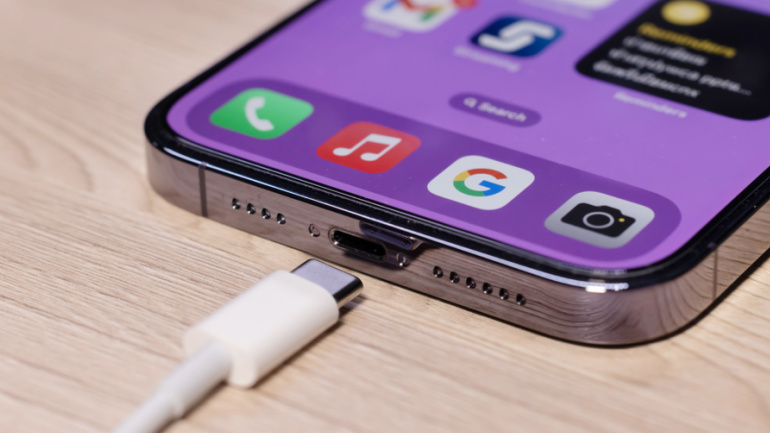
Apple’s recent unveiling of four new iPhone models, with prices starting from £799, highlights the company’s steady stream of innovation. This release has also stirred debate among smartphone enthusiasts questioning the extent of the innovations, especially considering the premium pricing. Despite predicted criticism, Apple maintains its market dominance by committing to incremental upgrades, asserting a commitment to environmental responsibility, and boasting durable, low-bug products.
OneWeb’s constellation of low Earth orbit (LEO) satellites will enhance network coverage for Softbank, particularly in challenging regions. The move aligns with Softbank’s ‘Ubiquitous Network’ strategy, which unifies diverse non-terrestrial network (NTN) solutions to expand digital services. Besides its surprise partnership with SpaceX’s Starlink, Softbank continues to boost its stake in OneWeb, supporting its Japanese launch and integration into the Ubiquitous Network.
Apple’s pursuit of self-reliance in 5G technology is put to the test as it continues its reliance on Qualcomm’s Snapdragon 5G Modem‑RF Systems till 2026. Despite acquiring Intel’s modem segment after a failed business collaboration, Apple’s efforts to create an in-house 5G modem cast doubt on its separation from Qualcomm. The competition intensifies with Huawei’s claim of a successful 5G modem design, amidst the encroaching discussions on 6G technology.
Netcracker’s GenAI Telco Solution, a revolutionary tool that leverages generative AI models to enhance telecom operations, promises to reshape customer experiences and streamline automation. The tool facilitates personalised interaction while anonymizing telecom data and is compatible with widely used GenAI models. Amidst privacy and security concerns, it offers a secure gateway to harness telecom data, promising to boost business value extraction and maximize productivity.
A notable investment from Saudi Telecom into Telefonica has the Spanish Government on the edge, forcing them to balance their national interest and fostering foreign investment. The complexity surrounding the acquisition decision transcends even Spain’s economic landscape, impacting political alliances and national security. With a swift resolution unlikely, this multifaceted negotiation promises to test Spain’s decision-making in an increasingly interconnected economic world.
Qualcomm and Samsung recently announced a pioneering success in telecommunications; achieving dual uplink and quadruple downlink carrier aggregation for 5G FDD spectrum. This innovation, tested using Qualcomm’s Snapdragon X75 5G Modem-RF System with Samsung’s 5G radios, could provide operators increased flexibility. This trial demonstrates the potency of Advanced 5G modems in enhancing 5G connections, hinting exciting future developments in 5G. Commercial implementations of these findings are expected by late 2023.
BYOD VoIP, or “Bring Your Own Device Voice over Internet Protocol,” lets employees use personal devices like smartphones, tablets, or laptops for business calls through VoIP. This approach enhances flexibility, productivity, and cost savings, but it also poses challenges like security risks, device compatibility, and privacy concerns. Implementing BYOD VoIP effectively requires clear policies, network readiness, robust security measures, and employee training.