In an unexpected turn of events, Google’s Pixel smartphones are carving out a significant niche for themselves in Japan, a market traditionally dominated by local brands and, more recently, by Apple. Despite a general downturn in the Japanese mobile phone sector, Google has emerged as a notable exception, with its Pixel range securing a market share surpassing 10% by the end of the fourth quarter of 2023. This growth positions Google as the third-largest player in the market, right behind Sharp but ahead of several traditional and long-standing competitors.
TalkTalk has surged ahead to become the UK’s largest retail fibre broadband provider, boasting a service reach to over 15 million premises, edging out competitors like Vodafone and Zen Internet in the race for the broadest fibre network. This expansion has positioned TalkTalk at the forefront of the UK’s digital infrastructure landscape, despite facing operational hiccups.
In a significant development for Romania’s telecommunication landscape, Huawei, the Chinese equipment manufacturer, has faced a major setback. The Romanian government has formally declined Huawei’s request to deploy its technology within the nation’s 5G networks. This decision, disclosed through the Romanian government gazette without an official press statement, effectively bars Huawei from any future participation in the Romanian mobile network market.
The European Commission has imposed a hefty fine on Apple, surpassing €1.8 billion, for its anti-competitive practices concerning music streaming services via its App Store. This penalty stems from an investigation initiated by a complaint from Spotify, the music streaming behemoth, nearly five years ago. Accusing Spotify of greed, Apple has announced its intention to contest the fine.
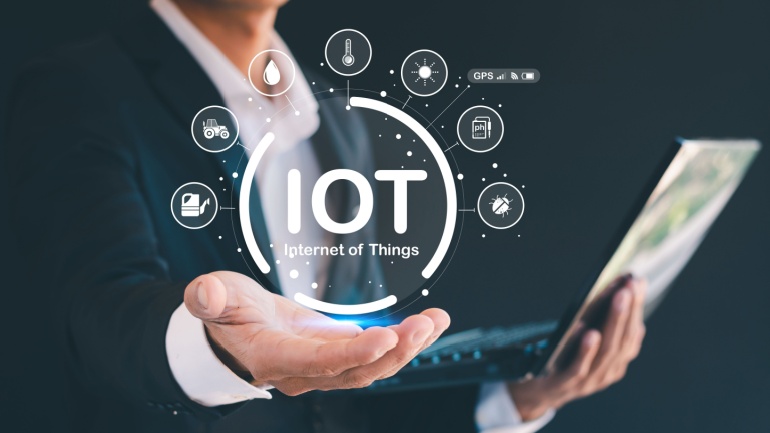
At the Mobile World Congress (MWC) 2024, BT’s Division X unveiled a significant advancement in their technology offerings, introducing a multi-million-pound investment in a narrowband Internet of Things (NB IoT) network. This move is poised to revolutionize the IoT landscape across various sectors, promising a new era of smart cities and advanced agriculture. Chris Keone, the Managing Director of Division X, shared insights into how this technology is setting the stage for futuristic urban environments and industry transformations.
Fastwyre Broadband, a legacy communications company, is investing $65 million into amplifying its fiber-optic infrastructure throughout Louisiana. The objective is to deliver unparalleled internet speeds, championing both residential and business connectivity requirements. CEO, Chris Eldredge, outlined the company’s profound commitment to fostering digital empowerment within local communities.
Unveiling the next generation of wireless systems, the ENLIGHT’EM project has skillfully pioneered advances in visible light communication (VLC) and power efficiency for light-emitting diodes (LEDs), particularly in tricky IoT scenarios. Brought to life by the passionate team at IMDEA Networks, this venture stands at the intersection of cutting-edge technology and sustainability, delivering innovative solutions and triumphantly winning the European EIT Jumpstarter competition.
In a realm shaped by technological leaps, communication is paramount. The clash between VoIP and traditional telephony unfolds a saga of innovation. Landlines tethered us, but VoIP liberated. Its cost-effectiveness, mobility, and rich features redefine connectivity. Traditional providers adapt, but VoIP’s journey continues, merging with AI, 5G, and virtual realms, pushing communication beyond limits.
In a groundbreaking development, Rakuten Mobile, in partnership with Nokia, has successfully conducted a trial demonstrating the capability of transmitting data at a rate of 1 terabit per second (Tbps) over a single wavelength. This trial spanned an impressive distance of 820 kilometers across both subsea and terrestrial networks in Japan, setting a new benchmark in the Asia Pacific region for this level of data transmission.
In a recent analysis, Vodafone has highlighted a significant opportunity cost for UK’s small and medium-sized enterprises (SMEs) due to the sluggish deployment of standalone 5G technology. According to the telecommunications giant, UK businesses are forgoing approximately £8.6 billion annually in potential productivity gains, a situation that also threatens the country’s competitiveness in Europe.