Spanish telecom operator MasMovil agrees $3.3 billion private equity bid KKR, Cinven and Providence have made their Public Acquisition Offer for Spanish telecoms operator MasMovil. The three venture capital funds have proposed to pay EUR 22.5 per share of the telco, which is valued at almost EUR 3 billion. According to the statement, KKR, Cinven and Providence will pay a 20 percent premium on the current MasMovil share price. Meinrad Spenger, MasMovil Chief Executive, said that they have signed an agreement with the bidders on a deal which would be “beneficial for the shareholders and other stakeholders in the company.” Furthermore, the bidders noted that they would maintain continuity in MasMovil’s strategy, staff and executive team. Read more at https://tinyurl.com/y754vsc9 Google Cloud signs major UK government deal The technology giant Google Cloud has signed a Memorandum of Understanding (MoU) with the Crown Commercial Service (CCS) to make its cloud solutions…

Google rolls out BeyondCorp for secure remote network access without a VPN Google has launched BeyondCorp Remote Access, a new security service designed to provide remote access to internal systems without using a virtual private network (VPN). This new cloud-native security product is based on a “zero-trust approach” and is founded on a system that Google originally built for internal use almost a decade ago. Google said that when the number of remote connections suddenly increases, the VPN architecture may not be able to handle the load. BeyondCorp Remote Access includes a database of every device authorized to connect, a security certificate installed on that device, and integration with a human resources database containing information about usernames and group memberships. Read more at https://tinyurl.com/ya4hhtsk Zoom adds encryption as it passes 300 million daily users Zoom Video Communications has launched an update of its virtual meetings software, adding encryption and new…
Verizon buys Zoom rival BlueJeans for less than $500 million Verizon Business has announced a deal to purchase enterprise-grade video conferencing platform BlueJeans, thereby expanding Verizon’s unified communications portfolio and improving its service for business customers. This acquisition shows that the company is also trying to capitalize on the current trend of remote employees making extensive use of online services such as Zoom, Slack and Microsoft during the pandemic. BlueJeans has more than 15,000 customers, including Facebook, IBM-owned Red Hat, ADP, Zillow and LinkedIn. The deal is worth USD 500 million and is expected to close in the second quarter of 2020. Read more at https://tinyurl.com/yd9qtfhg Apple’s new iPhone SE is surprisingly powerful for $399 Apple is launching iPhone SE 2020, the second generation of its cheapest smartphone in the iPhone lineup, priced at just USD 399. The iPhone SE runs on Apple’s latest A13 Bionic chip that enables great battery…
BEREC says COVID-19 won’t break the internet The Body of European Regulators for Electronic Communications (BEREC) has announced that the increase in Internet usage across the continent is more or less stabilizing and that networks have been able to withstand the pressure. BEREC said that national regulatory authorities (NRAs) have reported “a stabilization in the overall traffic, but some NRAs still observe an increase of the overall traffic.” Some operators have expanded their network’s capacity to cope with the steady growth of traffic. According to the organization, “operators, which did not take any such measure, are still closely monitoring their network’s capacity to check if an upgrade is necessary.” Read more at https://tinyurl.com/rxmg53l Vodafone slashes costs of core network functions across Europe using VMware’s telco cloud The UK-based telecoms operator Vodafone has completed the deployment of a single digital network architecture across all of its 21 European business markets, using…
The South Korean tech giant, Samsung Electronics, has announced an effective demonstration of what it terms the world’s first video call on the Amazon Web Services (AWS) cloud platform using Mission Critical Push-to-Talk, Data and Video (MCPTX, also known as Mission Critical Communications), the communications functionality designed specifically for first responders. Based on 3GPP Release 14 specifications, this implementation was enabled by the successful onboarding, integration and deployment on AWS cloud. Wonil Roh, Senior Vice President and Head of Product Strategy, Networks Business at Samsung Electronics, said, “This demonstration showcases how Samsung’s Mission Critical Communications solutions can manage public crises and be readily deployed on public cloud platforms. It also enables us to learn and adapt to the evolving needs of service providers and end-users alike. This brings a new level of broad coverage, scalability and reliability to mission critical service deployments, and we look forward to continuing our journey…
ITU platform to protect networks during Covid-19 The International Telecommunications Union (ITU) has introduced the Global Network Resiliency Platform to help global networks remain “safer, stronger and more connected” in the face of increasing strain and growing demand during the coronavirus crisis. ITU Secretary-General Houlin Zhao said, “The new platform will assist governments and the private sector in ensuring that networks are kept resilient and telecommunication services are available to all.” Also, this platform will collect relevant information and expertise on actions that telecommunication policymakers and others in the regulatory community can use to ensure that their telecom networks serve the needs of their country. Read more at https://tinyurl.com/vam4enm Remote working triggers demand for chips, laptops, and network goods As more and more employees switch to remote work during the outbreak of coronavirus disease, the demand for laptops, networking goods and supply chain components has increased substantially. Therefore, electronics retailers and…
Work from home: Can the telecoms industry take the strain? Many businesses opt for remote working due to the ongoing coronavirus crisis, and this has led to a dramatic increase in the use of online services. The additional pressure is proving problematic for the telecoms industry in Spain, which has reported a 40 percent increase in data consumption and a 50 percent increase in mobile phone usage. Movistar (Telefonica), Orange, Vodafone, Masmovil, and Euskaltel have issued a joint statement in anticipation of the national lockdown, urging customers to take “intelligent and responsible use of the network and the resources it provides us.” Meanwhile, BT, the UK’s largest telecom provider, said that its network can handle it. Read more at https://tinyurl.com/sm8bms7 Vodafone unveils five-point plan to combat COVID-19 Vodafone has put forward a five-point plan to maintain network services and assist governments across Europe in controlling the outbreak of coronavirus. The five…
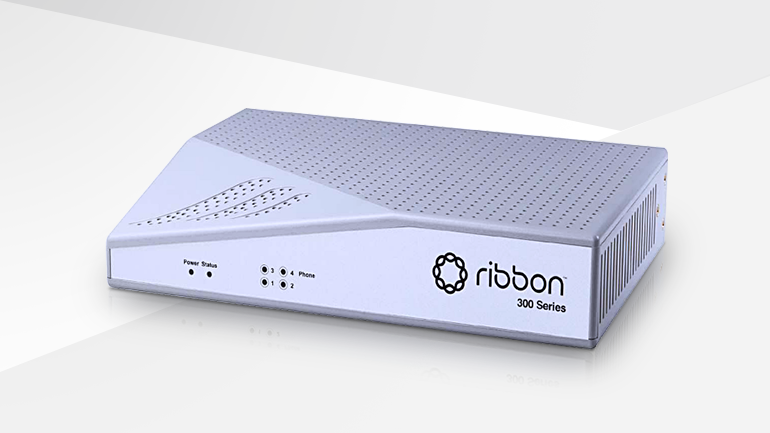
The US technology company Ribbon Communications has introduced its new EdgeMarc 300 Series to provide small businesses, home office and branch office customers that currently have analog voice infrastructure, with an easy and cost-effective way to capitalize on IP-based voice services. The cloud solutions provider said that the EdgeMarc 300 is part of the recently launched cloud-based Ribbon Next Generation Intelligent Edge portfolio, which securely connects and enhances enterprise voice and data applications, including Microsoft Teams. This portfolio of edge solutions delivers service assurance, advanced analytics, security, policy and routing functionalities for cloud communications applications. Ribbon’s EdgeMarc 300 is a survivable branch office solution that supports the integration of analog endpoints and the public switched telephone network (PSTN), as well as Session Initiation Protocol (SIP) calls. This gateway provides connectivity between analog and SIP devices, enabling branch offices to rapidly migrate analog phones to a SIP-based network and communicate seamlessly with…
Tel Q Global, a telecom hub for voice and SMS services, has selected Singapore operator Cataleya for its global voice network virtualization. With its superior technology, innovative commercial models and a world-wide footprint, Cataleya will completely virtualize Tel Q Global’s international voice network, resulting in significant cost savings and operational simplicity. According to a statement, Tel Q Global required a switching and BSS service in three global regions to be able to launch their new virtual number services in the shortest possible time. These new solutions include mobile and two-way SMS numbers, and are a highly anticipated addition to the company’s existing portfolio of DID and toll-free numbers. Moreover, the nodes also need to be used as geographic backup sites for each other, should a major disruption occur in any of the hosting centers. Ankit Agarwal, CEO of Tel Q Global, said, “Before we moved to Cataleya, we…