64 Results

IDC

Search

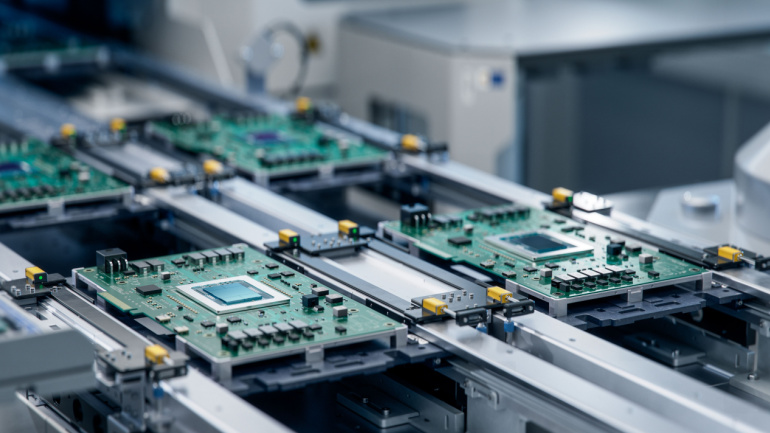
IDC predicts a promising future for the semiconductor industry, driven by AI advancements and a stock level recovery. With a refreshed outlook signaling sustainable growth, the firm anticipates global chip revenue of $526.5 billion in 2023. Progress can be seen in the revised revenue forecast for 2024, hinting at a 20.2% year-on-year growth to $633 billion.

Huawei SingleRAN 22.1 prepares 4G and 5G mobile networks for AI agents with stronger uplink, lower latency, smarter spectrum use, and AI-powered RAN automation. For VoIP providers, these upgrades could improve real-time voice, video calling, enterprise communications, and network reliability as autonomous mobile traffic rapidly grows worldwide over next-generation infrastructure

Gamma Communications’ £1.015 billion acquisition by Epiris could reshape the UK VoIP and business communications market. Going private may accelerate investment in cloud telephony, AI, unified communications and European expansion, while giving shareholders cash certainty. For channel partners and IT buyers, Gamma’s next moves could influence competitive telecom innovation significantly.

Ericsson and MTN Group Fintech are accelerating Africa’s mobile money evolution with a cloud-native MoMo migration across key markets. For VoIP and telecom providers, the upgrade highlights how scalable digital infrastructure, APIs, and public cloud readiness can strengthen payments, merchant services, resilience, and innovation across Africa’s connected financial ecosystem today.

Chunghwa Telecom is expanding AI data center capacity in Taiwan, strengthening cloud, colocation, and low-latency connectivity for enterprises. With new IDC investments, submarine cables, satellite links, and optical networks, the operator is positioning itself as a regional AI infrastructure hub for VoIP providers, carriers, and businesses seeking resilient global connectivity.

AI-powered meeting rooms are reshaping VoIP, unified communications, and hybrid collaboration. Smart cameras, beamforming microphones, transcription, and workflow automation help remote teams engage more naturally. But enterprises must balance better audio, speaker attribution, privacy, and trust to unlock reliable, intelligent meeting experiences across modern workplace communication platforms and VoIP systems.

The AI revolution in project management promises efficiency through streamlined workflows and reduced manual tasks, bolstering VoIP systems. Yet, many firms struggle with deployment, lagging in productivity gains. Successful AI adoption hinges on data cohesion, reinforcing the narrative that fixing underlying processes is crucial before leveraging AI tools in VoIP environments.