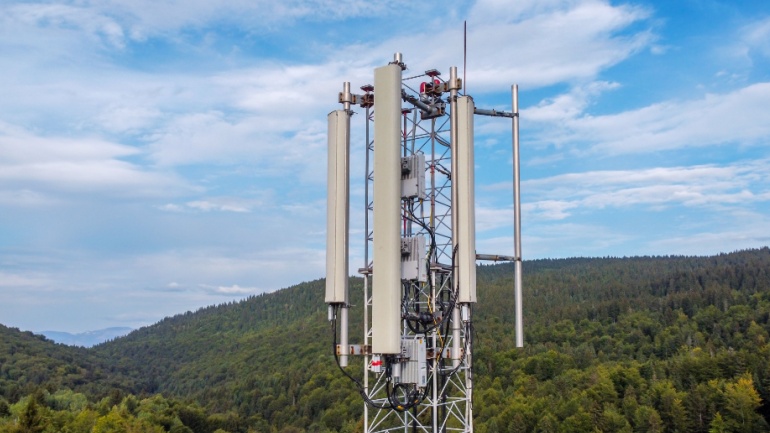
Japan’s largest telecom provider, NTT, might get a break from longstanding regulations that have created competitive boundaries since its partial privatization back in the 1980s. But will this veer the industry off the road to a fair market environment? The proposed changes face major resistance, with critics highlighting the impact on national interests and the security of Japan’s telecom infrastructure.
Fastwyre Broadband, a legacy communications company, is investing $65 million into amplifying its fiber-optic infrastructure throughout Louisiana. The objective is to deliver unparalleled internet speeds, championing both residential and business connectivity requirements. CEO, Chris Eldredge, outlined the company’s profound commitment to fostering digital empowerment within local communities.
The 2021 ‘Build America, Buy America Act’ significantly reshaped U.S. telecommunications, demanding domestic purchases from companies eyeing a piece of the $42 billion BEAD funding. Despite industry concerns, majority purchase from U.S. vendors remains crucial.
CWCS, a well-established telecommunication company, is amplifying its services through the strategic acquisition of a new site in response to growing customer demands. With an elaborate suite of colocation and cloud services, the company continues to fortify its role as a trusted partner in data hosting.
In a realm shaped by technological leaps, communication is paramount. The clash between VoIP and traditional telephony unfolds a saga of innovation. Landlines tethered us, but VoIP liberated. Its cost-effectiveness, mobility, and rich features redefine connectivity. Traditional providers adapt, but VoIP’s journey continues, merging with AI, 5G, and virtual realms, pushing communication beyond limits.
In a groundbreaking development, Rakuten Mobile, in partnership with Nokia, has successfully conducted a trial demonstrating the capability of transmitting data at a rate of 1 terabit per second (Tbps) over a single wavelength. This trial spanned an impressive distance of 820 kilometers across both subsea and terrestrial networks in Japan, setting a new benchmark in the Asia Pacific region for this level of data transmission.
The UK government reveals its plans to leverage AI technology for operational efficiency within the civil service. Amid concerns over escalating staffing costs, AI might undertake administrative tasks, analyze consultation responses, and craft initial parliamentary responses.
Nokia unveiled specialized, private AI models for the telecom sector to improve network operations and customer service. A coalition of 10 governments agreed on principles for secure 6G networks. IBM and the GSMA have launched a global AI training initiative to bridge the AI knowledge gap among telecom operators. Qualcomm’s Snapdragon X80 modem chip introduces 5G-Advanced support with up to 10 Gbps speeds and six-carrier aggregation.
In a significant move at the Mobile World Congress this year, Orange has taken a step further in its environmental initiatives by enhancing its partnership with Cisco. This collaboration is not new, as Orange Business has been distributing Cisco solutions for over two decades. However, the addition of a Memorandum of Understanding (MoU) brings a fresh focus on environmental transparency and the shared goal of reducing greenhouse gas emissions (GHGs).
By the end of this decade, the global number of 5G connections is expected to surge to 5.5 billion, positioning 5G as the leading mobile technology by 2028. This forecast comes from the latest research released by the GSMA. Despite a significant phase of investment in the 5G network already behind us, the mobile industry is set for continuous financial commitment towards enhancing this technology in the coming years.