Most businesses today have several incoming telephone numbers, each one used for a different purpose or department such as customer service, sales, marketing etc. Some companies even have the ability to assign a personal phone number to each employee without requiring multiple physical phone lines, making it possible for telephone traffic to be split up and managed more easily. This powerful framework is only achievable using Direct Inward Dialling (DID). DID, also known in Europe as DDI (Direct Dial-in), is a service offered by telephone companies, that allows organizations, who operate a private branch exchange (PBX) system, to have multiple telephone numbers lines connected to one or more analog or digital physical circuits to their PBX. The system sends the dialed telephone number to the PBX so that an outside caller can have direct access to the PBX extension, possibly avoiding an auto-attendant. In a business with DID, the telephone…

“This call may be monitored and recorded for record-keeping, training and quality-assurance purposes,” is a message that probably all of us have heard before when calling a contact center. But once an agent answers the phone, we immediately forget that we are being recorded, after all, we will most likely never hear that call recording. For the Contact Center, on the other hand, that recording is extremely useful. It allows business to collect and analyze a set of data that enables them to improve and optimize their service. However, there is much more to call recording than the eyes can meet. Steve Kaiser, Co-founder and CEO of OrecX Open Source Recording, shows us that it is not only a great feature available thanks to Business VoIP and the Cloud, but a powerful tool to boost your business. Why do businesses use call recording? Businesses are aware that nowadays customer experience…
According to Technavio’s analysts, the Session Initiation Protocol (SIP) Trunking market is expected to grow at a compound annual growth rate of 18.23% by 2021. SIP Trunking is an Internet-based service that allows businesses to extend VoIP (Voice over Internet Protocol) telephony beyond the organization’s firewall without the need for an IP-PSTN gateway. It allows VoIP users to stay connected in local and long-distance calls to and from endpoints in the traditional phone network. The report ‘Global Session Initiation Protocol Trunking Market 2017-2021’, was based on detailed and reliable data gathered from an extensive research and an in-depth market analysis with inputs from industry experts. It provides a complete market and vendor landscape as well as a SWOT analysis of the key vendors and major factors that influence the market such as drivers, opportunities, and challenges. Session Initiation Protocol Trunking Market Driver: – The increasing adoption of cloud-based solutions is…
The first VoIP (Voice over Internet Protocol) services were launched in 2004, and since then the technology has come a long way with new VoIP features being added each year. VoIP allows users to make and receive free voice and video calls from and to anywhere over the Internet. In recent years VoIP providers have discovered increasingly innovative uses for VoIP technology that are helping all size businesses to be more productive, scalable and cost-efficient simultaneously. Here are the five innovative VoIP features that your business should consider: 1. Interactive voice recognition Whenever you call a company and are greeted by a pre-recorded voice asking you to select the reason for your call, it means company uses an interactive menu based on a VoIP system. Interactive VoIP menus have integrated this voice recognition software to provide a more intuitive means for users to choose options. Very soon, you will be…
Since VoIP (Voice over Internet Protocol) technology has been commercially available, most of the marketing and promotion surrounding its features have been aimed at front-office staff and managers. However, back-office workers also greatly benefit from the VoIP business system, and although it’s not often stressed, it is also a solid selling point for VoIP. Back-office workers are the network engineers who design, install, support and maintain information-technology environments inside a business. So what exactly are the benefits for them and how do these advantages contribute to their efficiency and that of the business? Design Advantages When moving into a new facility the first thing technology engineers consider is the cable plant design. VoIP technology offers many options when designing and budgeting the process, such as letting you run one line to the phone. With a computer jack plugged in the VoIP phone, the connection to the computer is established, effectively reducing…
VoIP (Voice over Internet Protocol) technology and VoIP services has allowed telephone operators to provide low-cost communications services in an ever-changing and developing global market. With VoIP technology, your voice can now be converted into a digital signal that travels over the Internet, which enables you to make phone calls directly from a computer, a smartphone, or a traditional phone connected to a special adapter. The introduction of mass-market VoIP services that use existing broadband Internet access, through which subscribers place and receive telephone calls in the same way as they would via the public switched telephone network (PSTN), began in 2004. Now, after 13 years, there are a number of successful VoIP businesses such as Vonage, Comcast, Time Warner, Charter, 8×8, Jive, MITEL, Broadvoice, OnSIP, Nextiva, and new companies are entering the market each day. VoIP services are targeted for individuals and businesses that want to stay connected with other people, families or…
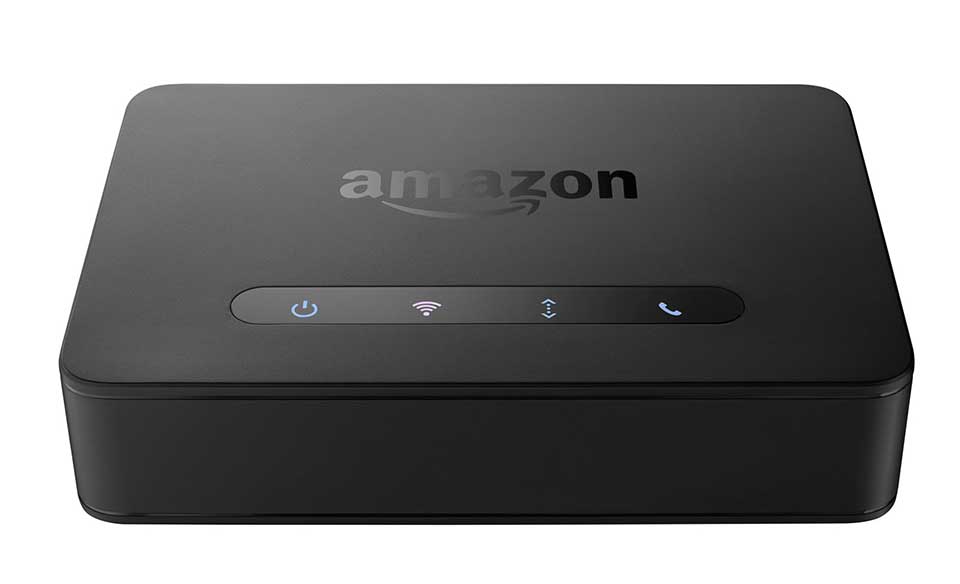
Amazon announced at a press conference that the Echo Connect, a device that uses Alexa – Amazon’s voice-activated digital assistant – can turn your home phone into a smart, hands-free speakerphone that can call any landline number or contact from your phone. It also allows you to call 911 for emergencies using only your voice. According to the online retailer, the Echo Connect will work with your existing home phone service, whether it’s landline or VoIP, but you must have an Echo speaker in addition to the Echo Connect. The Echo Connect plugs into a standard phone jack or VoIP adapter and connects wirelessly to your Echo device. Once it is all set up through the Alexa app, you can use your Echo speaker to ask Alexa to call anyone from your contacts list, and they will be able to see your home phone number on their caller ID. Likewise,…
Last Wednesday, 225 Chinese nationals believed to be involved in a fake operation using Voice Over Internet Protocol (VoIP) were arrested in Phnom Penh, capital of Cambodia. According to Y Sok Khy, director of the Interior Ministry’s anti-terrorism police department, the scammers were accused of stealing money from Chinese residents through a scheme using Internet voice call technology. The arrest occurred at an apartment building in Tuol Kok district’s Boeng Kak II commune at around 5 p.m, where all 225 apparently lived, and police are still searching for more suspects involved in the operation. Although Wang Dexin, head of the political section of the Chinese Embassy in Phnom Penh, declared that he was not aware of Wednesday’s arrest, Mr. Sok Khy confirms to have detained the 225 Chinese nationals at the anti-terrorism department, and that his team is now collecting their equipment, counting and questioning them. It looks like Southeast…
When we talk about the future of corporate communication networks, most experts point to VoIP technology as the future. However, many companies still opt for older platforms that, although offering fewer features, can still be quite reliable. The most famous of them goes by the name of SS7. But what are the fundamental differences between VoIP and SS7? In this article, we will examine what each of these technologies does, their advantages and disadvantages, and in what situations they present themselves as the best options for the communication structure of companies around the world. SS7: An old technology, but it may still be necessary SS7 is the abbreviation for Signalling System 7: a digital network dedicated and used for initializing and controlling voice calls. Each signaling point on the SS7 network is uniquely identified by numeric point code. These are loaded in signaling messages exchanged between signaling points in order…
Bringing together over 600 telecom companies from across 85 countries and 2000 senior-level attendees, Capacity Europe is the largest annual carrier event in Europe. This year’s conference will take place on October 24, 25 and 26 at the Intercontinental in the vibrant and busy city of London, with a pre-event on the 23rd. Designed to offer businesses an opportunity to promote their brand and gain exposure, the event will provide an exhibition room, where more than 130 companies will showcase their products and services in voice, data, peering, cloud, IP connectivity, IPX, data centre, SMS, security and much more- making it Capacity Europe’s largest ever exhibition. In addition, more than 100 private meeting rooms will be available for all companies to get together with clients and potential customers in a reserved and quiet setting. The event makes a solid commitment to all participants through their official website We understand the…