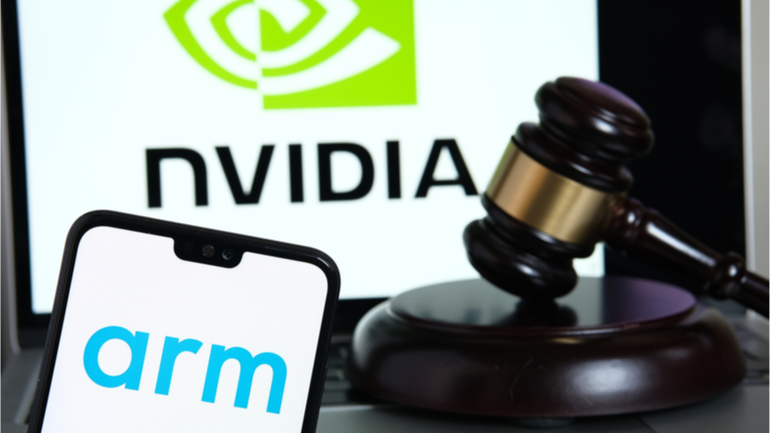
After the British Competition & Market Authority (CMA) uncovered and voiced severe competition concerns, the planned 40-billion-dollar merger between American chipmaker Nvidia and Arm is at risk. The CMA has expressed apprehension that the proposed relationship between Nvidia and the UK chip specialist Arm might be motivated by and be able to limit or even restrict access to the intellectual property (IP) of Arm. Currently, this technology is utilized to make semiconductor chips by firms that compete with Nvidia. The potential absence of competition could interfere with innovation in various industries, including data centers and the Internet of Things (IoT). This might lead to products that are more costly or of reduced quality. The CEO of the CMA Andrea Coscelli said: “We’re concerned that Nvidia controlling Arm could create real problems for NVIDIA’s rivals by limiting their access to key technologies, and ultimately stifling innovation across a…
Dialpad, the US-based business VoIP, video and contact-center service provider has announced $100 million in E Series financing. The funding phase was led by OMERS Growth Equity, Andreessen Horowitz, GV, ICONIQ Capital, Felicis Ventures, Section 32 and Work-Bench. As claimed by the company, its value now exceeds $1.2 billion, based on the $245 million that it has raised up till now. The new funding will focus on Dialpad innovations and support expanded market strategies. The $1.2 billion evaluation comes as no surprise, as the demand in the market is growing. The company says its annual revenue figure now exceeds $100 million. In addition, Dialpad has recently focused on its artificial intelligence solutions. In 2018, the company launched its VoiceAI service and now provides many AI solutions as part of its voice intelligence service. The services include automated note taking, real-time transcription and voice analytics. Moreover, the news…
Uniphore Software Systems Pvt, a global conversational Artificial Intelligence (AI) technology startup based in Chennai, India and Palo Alto, California, has announced that it has raised USD 51 million in Series C funding led by March Capital Partners. The latest round was reinforced by Chiratae Ventures (formerly IDG Ventures), Sistema Asia, CXO Fund, ITP, Iron Pillar and Patni Family, amongst others. Uniphore’s new round is their largest funding so far, and marks “one of the most substantial funding rounds in the conversational AI sector.” This Indian startup promotes the use of the AI in call centers to bridge the gap between people and machines through voice, and aims to substantially innovate customer service, a market that is valued at USD 350 billion. According to the statement, the funds will be used to accelerate Uniphore’s go-to-market in North America, invest in research and development for the next wave of improvements…
NowSecure, a Chicago-based mobile security startup that helps businesses test the safety of their applications, has raised USD 15 million in a Series B round led by ForgePoint Capital, a fund that invests exclusively in cybersecurity companies. As a result of this round, the total amount of NowSecure funding to date is USD 27 million. The funding comes as cybersecurity threats remain a constant and high priority issue for businesses, and NowSecure said it will use this money to accelerate the development of its security testing products and scale operations. NowSecure CEO Alan Snyder said, “Every business is becoming mobile first; yet millions of people are using apps on a daily basis that have major security and privacy issues. NowSecure is addressing this fundamental, global-scale problem that puts businesses and consumers at direct risk. We’re thrilled to be working with ForgePoint Capital to grow our business and empower mobile app…
Next Caller – the three-year-old startup based in New York- provides the most advanced caller identification system to any business vulnerable to phone fraud. Generally, this includes banks, financial institutions, retailers, and government agencies. Though as companies strengthen and improve their fraud detection structure, so do fraudsters refine their tactics to attack, costing businesses more money and time, and making life more difficult for real customers. The most recent fraudulent method has been phone spoofing – when criminals manipulate their phone number and trick a business into thinking that they are a real customer. The technology created by Next Caller allows companies to instantly verify caller identities, certify phone numbers, and flag all forms of call spoofing by analyzing data before, during, or after the call, then delivering a threat-level analysis in milliseconds. This system enables businesses to take action faster when suspicious calls are detected and to validate real customers ensuring…
Nokia’s AI infrastructure surge is reshaping VoIP, IP networking, and cloud communications demand as data centers accelerate optical investments. With Infinera boosting capacity and AI-RAN plans targeting 5G and 6G, Nokia’s growth looks powerful, but chip shortages, margins, and commercial execution will determine whether momentum becomes long-term telecom success ahead.
Europe’s satellite connectivity battle is heating up as SpaceX and Starlink target mobile spectrum for direct-to-device services reshaping VoIP, cloud communications, and telecom competition. European operators are racing to build alternatives, while AI networks, 5G sensing, and tower sharing redefine connectivity strategy for businesses, providers, and policymakers across Europe today.
Orange is postponing its European satellite direct-to-device trial to secure stronger coverage and call reliability. For VoIP providers, the move signals how D2D, AST SpaceMobile, Vodafone partnerships, 2GHz MSS spectrum, and satellite messaging could reshape rural connectivity, emergency communications, and mobile voice services in hard-to-reach markets across Europe and beyond.
Nvidia and Nokia are pushing telcos to transform networks into distributed AI infrastructure, bringing edge computing closer to users. For VoIP providers, AI-RAN, fiber, and 5G upgrades could cut latency, improve call quality, and unlock smarter enterprise communications, while operators balance future AI revenue with today’s connectivity demands and growth
Zayo is expanding fiber cautiously as AI workloads, cloud growth, and data center demand reshape telecom infrastructure. With Nvidia and Corning deals, the provider strengthens high-capacity networks vital for VoIP, unified communications, broadband, and cloud connectivity, while balancing permits, supply chains, investment risk, and human-led AI network operations at scale.