630 Results

ais

Search

Several prominent German telecoms associations, including ANGA, Bitkom, BREKO, BUGLAS, and VATM, have united in a call to the German government, urging a reduction in funding for fibre-optic projects. Citing concerns over the overwhelming response to the German Gigabit funding program, the associations propose a cut in funding to €1 billion between 2024-2026.


In a strategic move set to revolutionize financial support in the telecommunications sector, Telin has joined forces with Lighter Capital, a financial ally renowned for fostering business growth. The partnership promises a tailored offer for businesses boasting a consistent Annual Recurring Revenue (ARR) of at least $200K, providing an opportunity to secure financing up to 50% of their ARR, capped at an impressive $4 million.

The FCC recently reiterated its denial of Starlink’s bid to gain nearly $900M in support from the Rural Digital Opportunity Fund program. Despite Starlink’s impressive technology, FCC Chairwoman Jessica Rosenworcel questioned the wisdom in subsidizing the still evolving tech until 2032. Starlink had initially received the lofty sum in a 2020 auction but was later deemed inadequate in verifying its capabilities.

In a groundbreaking move, Parallel Wireless, Inc., a U.S. based Open RAN innovator, has officially launched the general availability of its pioneering 5G Standalone (SA) software stack. The innovative solution, a first of its kind globally, is designed to be hardware-agnostic, allowing operators, private networks, and public safety networks to seamlessly deploy their RAN infrastructure across diverse processor hardware platforms.

In a bid to promote digital inclusion and ease the financial burden on its customers, Virgin Media O2, the UK’s second-largest telecoms operator, has taken significant steps to raise awareness of social tariffs. The company, with a customer base of 5 million broadband and TV users, is now including information on its Essential Broadband and Essential Broadband Plus tariffs in the monthly bills of all its customers.

BT Group has taken a bold step into the future of content delivery with an innovative concept known as Multicast-Assisted Unicast Delivery (MAUD). This technology takes a fresh approach, replacing the traditional individual internet stream with a more efficient consolidated flow. Not only is this technology seamless for consumers, it also delivers substantial resource savings. Furthermore, in an era of environmental consciousness, MAUD offers up to a 50% bandwidth reduction during peak times, resulting in lower energy usage.

In a significant move, Australia has auctioned off 3.4 GHz and 3.7 GHz spectrum bands, amassing a considerable A$722 million. Telstra emerged victorious, with plans to enhance its 5G offerings, notably in rural Australia. However, Telstra’s rivals also secured frequencies, with speculation around their strategic plans. ACMA chair affirmed the benefits of this allocation for digital connectivity and competition, reflecting the shared optimism of telecom regulators and companies.

As Algar Telecom turns 70, the prominent Brazilian ISP continues to seize market share amidst 10,000 competitors. Serving 1.5 million customers across Brazil, they masterfully intertwine fiber broadband, wireless, and content services, satisfying the divergent needs of B2B and B2C consumers. The strategic blend of high-tech infrastructure and seamless customer experience propels Algar’s journey, pivoting on the indomitable broadband, termed as the “cardinal element”. Additionally, foreseeing the potential of the imminent 5G rollout, Algar’s game plan involves marrying fixed-line connectivity with wireless services, laying a robust groundwork for the future.

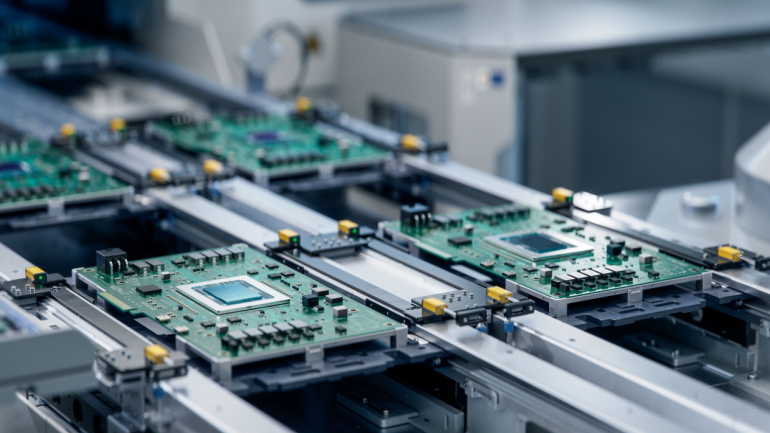
IDC predicts a promising future for the semiconductor industry, driven by AI advancements and a stock level recovery. With a refreshed outlook signaling sustainable growth, the firm anticipates global chip revenue of $526.5 billion in 2023. Progress can be seen in the revised revenue forecast for 2024, hinting at a 20.2% year-on-year growth to $633 billion.