UK telecom operator O2 is pioneering the deployment of mobile masts with pre-assembled units, transforming mobile network installations across the UK. This innovative approach, conducted in partnership with Vecta Labs, enhances efficiency and accelerates deployment times, drastically reducing on-site installation durations. These advancements ensure rapid, reliable network expansion, vital for 5G growth.

Ciena and Meta’s collaboration marks a milestone in subsea telecommunications, successfully transmitting 800 Gb/s over 16,608 km without needing signal regeneration. Utilizing Ciena’s advanced WaveLogic 6 Extreme technology on Meta’s Bifrost cable, this breakthrough highlights advancements in long-distance VoIP data transmission, essential for evolving AI and cloud-scale networks.
The broadband access equipment market is poised for a major bounce back in 2026, driven by investments in cable infrastructure upgrades. Dell’Oro Group’s report indicates that after years of stagnant growth, operators are shifting focus back to infrastructure. Fiber optic networks and 5G fixed wireless access equipment are leading the charge.
Explore how hollow core fiber (HCF) is revolutionizing AI data centers. With its photonic-crystal fiber roots, HCF offers faster data transmission and less signal loss compared to traditional optical fiber. This advancement is crucial for industries needing reduced latency, potentially easing land and energy constraints while enhancing AI efficiency.
Europe’s pivotal role in the global AI ecosystem is evident as it becomes a key exchange hub for artificial intelligence. With rising data generation from connected devices and AI technologies, robust digital infrastructure is essential. Data centers and strong networks are vital for handling data volumes, highlighting Europe’s strategic advantage.
China’s fiber networks are rapidly transforming the country’s digital landscape, with fiber now underpinning most fixed broadband connections. This move promotes gigabit services and smart cities, boosting operators’ revenue in a saturated market. AI integration further enhances network efficiency, ensuring premium service quality and opening new revenue channels for operators.
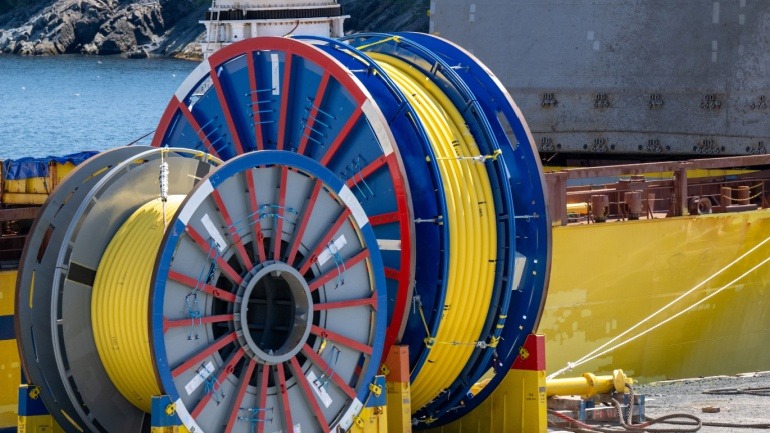
Google’s introduction of the TalayLink subsea cable marks a transformative step in enhancing digital connectivity, particularly for the Asia-Pacific region. As TalayLink extends the Interlink system, it offers a vital alternative route through the Indian Ocean, alleviating congestion in the Sunda Strait. This expansion fortifies Google’s robust subsea cable initiatives, advancing global digital networks.
VoIP technology is pivotal for telecommunications operators in urban areas, where managing data connectivity demands is crucial. The rise of 5G and Fixed Wireless Access (FWA) introduces faster, low-latency solutions but faces interference challenges. Advanced sectorization and beam switching technologies effectively enhance VoIP service quality, ensuring reliable connectivity for urban users.
The UK’s focus on safeguarding its undersea networks is critical amid rising tensions with Russia and China. With concerns over VoIP communication vulnerabilities and infrastructure threats, the Royal Navy is vigilant. Reforms ensure clear accountability, emphasizing the importance of protecting crucial subsea networks for digital security.
Quantum computing is set to revolutionize the internet. IBM and Cisco are paving the way for a quantum computing internet by 2030. This innovation could significantly change VOIP communications, enabling faster, more secure connections. Their joint efforts may unlock new possibilities for the VOIP industry and beyond.