Huawei has introduced new optical network solutions aimed at industrial AI adoption. The company unveiled them at Huawei Connect 2026 in Shanghai. The launch formed part of its Optical Summit, focused on optical-AI convergence.
The message was clear. AI will need more than powerful processors. It will also need fast, resilient, and intelligent networks. Optical networks can move large data volumes with low delay. That makes them useful for data centres, campuses, transport systems, and factories.
Kim Jin, Huawei Vice President of Optical Business Product Line, framed the shift strongly. He stated: “We are experiencing a cognitive industrial revolution. AI will deeply reshape every enterprise, and all-optical networks are the core element of AI infrastructure.”
Huawei’s strategy links two ideas. First, AI can improve optical network performance and operations. Second, better optical networks can accelerate AI use across industries. This creates a two-way relationship between networks and intelligence.
The company highlighted F5G-A as the foundation for this model. F5G-A refers to advanced fixed network technology based on fibre. It supports high bandwidth, low latency, and sensing abilities. In simple terms, the network can connect, detect, and help automate operations.
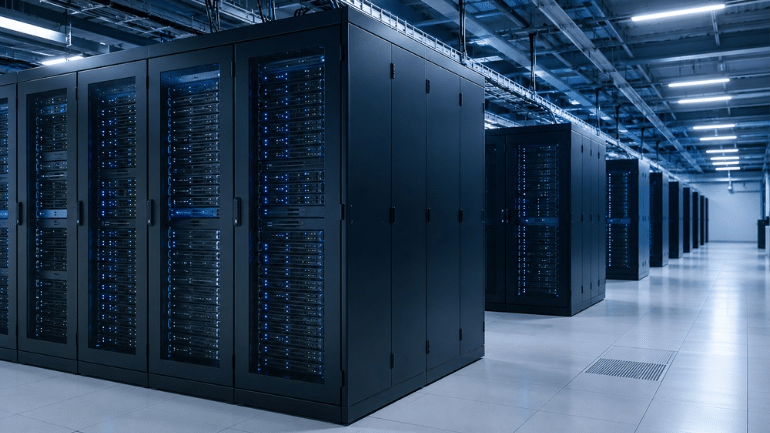
For data centres, Huawei introduced the OptiXtrans OCS800 optical circuit switch. It targets computing clusters that need rapid data exchange. The system offers high-density optical switching and low latency. These features matter when AI workloads move between servers.
Huawei also presented its iFTTO solution for AI-enabled campuses. It combines sensing, computing, and networking. The platform supports 10 Gbps access, open IoT, and intelligent maintenance. Huawei said more than 18,000 campuses already use its FTTO solution.
This scale shows strong demand across education, healthcare, and hospitality. However, deployment still requires careful planning. Enterprises must assess fibre readiness, staff skills, and system integration. They also need clear data governance when sensing technologies enter daily operations.
Zhu Kai, Chairman of Shandong Haina Intelligent Equipment Technology, described one industrial use case. He said: “This solution drives the transformation of the conveyor idler operation and maintenance(O&M) model from “reactive repair” to “proactive O&M”, addressing the limitations of traditional belt conveyor inspection solutions that fail to detect potential faults at an early stage.”
The company also pointed to Red Sea Global as a showcase deployment. Its smart destination infrastructure uses an all-optical network for operations and guest services. Ayman Alharbi said: “Our all-optical network enables simplified operations, unified management and scaleable expansion, supporting critical services across employee residencies and commercial assets while enhancing guest experiences and operationalefficiency.”
These projects suggest optical networks are moving beyond connectivity. They are becoming part of the AI infrastructure stack. Still, operators and enterprises must balance ambition with cost, interoperability, and long-term vendor strategy.
Looking ahead, Huawei also discussed the path from F5G-A to F6G. Marcus Brunner, Vice Chair ETSI ISG F5G, said F5G-A is enabling reliable connectivity and high-precision sensing. The next phase could bring deeper convergence between communication, computing, and sensing.