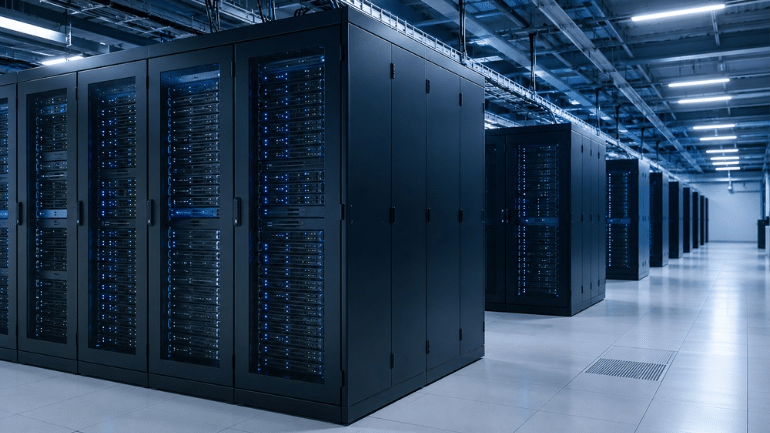
Submer has launched Corenix, a new business focused on modular data centres for AI workloads. The move targets a fast-growing infrastructure gap. AI systems need high-density computing, stable power, advanced cooling, and reliable networking.
The company will serve neoclouds, hyperscalers, and AI operators. Corenix will build platforms around Nvidia reference designs. These designs offer tested blueprints for AI infrastructure. That approach can reduce uncertainty during planning and deployment.
In practice, Corenix will assemble complete data centre modules in factories. Each module will include IT, power, cooling, and networking systems. After testing, the modules will move to their final site. Corenix will then manage installation, connection, testing, and commissioning.
This model gives customers greater schedule visibility. It may also reduce delays caused by site-by-site construction. Factory integration can improve quality control. It can also help operators scale capacity in repeatable blocks.
However, the delivery model still faces real-world pressure. AI sites require huge power availability. Grid access remains a constraint in many regions. Local permitting, fibre connectivity, and cooling resources can also slow projects. Modular design helps, but it does not remove every bottleneck.
Corenix will be led by Martin Renkis as CEO. He previously held senior roles at Johnson Controls. His roles included General Manager of Global Products and Executive Director of Data Centre Infrastructure. Before that, he founded Smartvue, an IoT hardware and software company.
The new company joins two other businesses within Submer Group. Rubix Data Centres develops and operates AI data centre campuses. Radian Arc provides GPU-as-a-Service and AI-as-a-Service. Together, the group is building a wider AI infrastructure stack.
Submer Group CEO, Patrick Smets, said: “AI factories are driving unprecedented demand for new data centre capacity, and the market needs a faster, more predictable way to build it.
“Corenix builds on Submer’s history in modular data centre delivery and the engineering, thermal, and infrastructure expertise we have developed solving high-density compute challenges for years. We are bringing that experience into a dedicated business built to deliver AI infrastructure at scale.”
Renkis added: “Customers need clarity before they commit: what needs to be built, how it will be tested, who is accountable, and when it will become operational.
“That’s the foundation I’m building Corenix on from day one. Corenix puts a dated program and a go-live date on the table before a contract exists. One team stays accountable from factory integration and testing through on-site commissioning and operational readiness, with the same team offering the flexibility to support current and future accelerated computing systems.”
For telecom operators, this launch matters beyond cloud computing. AI data centres will shape traffic patterns, edge demand, and network investment. Faster deployment can support new digital services. Yet operators must still balance power, location, latency, and cost. Corenix enters the market as demand accelerates, and execution will decide its impact.