1454 Results

cloud

Search

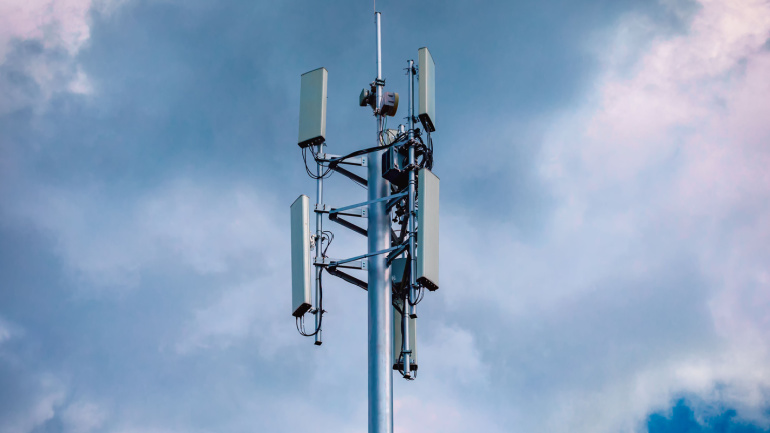
Telecom giants Vodafone and Orange are breaking new ground with the first real-life 4G calls over a common shared network in an Open RAN setting. Stemming from a landmark endeavor near Bucharest, this initiative provides a glimpse into the potential strengths of an Open RAN-based network. What’s more? The progress doesn’t halt at 4G. The duo are set to soon take down another first – operating 2G and subsequently 5G, over shared Open RAN sites. Both operators see this as a model for extending mobile networks throughout rural Europe.

VoIP continues its growth trajectory, serving both businesses and individuals for internet-based calls and messaging. Predictions for the next decade include 5G integration, AI-driven enhancements, IoT synergy, and mobile VoIP expansion. VoIP adoption will increase globally, cybersecurity investments will rise, and it will be integral to customer-centric strategies. Ultimately, VoIP may replace PSTN, undergo infrastructure improvements, and remain promising with 5G and AI advancements.

Intermedia Cloud Communications has expanded free international calling for North America-based Intermedia Unite® users to 33 countries. This enhancement offers substantial cost-savings for businesses, improved global connectivity, and enhanced productivity. Mark Sher, Senior Vice President of Product Marketing at Intermedia, emphasized their commitment to delivering efficient communication solutions.

Deutsche Telekom and Mavenir are making strides in 5G network slicing technology. A “5G Live Video Production Service” now allows reliable HD video streaming over 5G, even via smartphones. They’ve also demonstrated a proof-of-concept for on-demand 5G network slicing services, streamlining customization and quality assurance. These innovations offer agility, efficiency, and new revenue prospects.

The European Commission is urging member states to conduct shared risk assessments in key tech realms including advanced semiconductors, AI, quantum tech, and biotech. Amidst the cloud of geopolitical tech skirmishes, EU stands poised to protect sensitive technologies and is resolved not to preemptively decide on any corrective measures. Only time will reveal the Commission’s next steps after risk assessments.

As Nokia unveils its latest collaboration with Brazil’s Jacto for a new private network, we see industry lines blur, with telecom revolutionizing agriculture. As expected, automation will dominate, revolutionizing production lines in Jacto’s massive smart factory. A key player in this transformation – 4.9G/LTE and 5G connectivity, allowing various aspects of manual labor to be automated. A ground-breaking stroke, this could signal the advent of a new era in Latin America’s agriculture-tech crossover. Moreover, Nokia’s innovative compact DAC private wireless offering reveals the company’s flexibility and adaptability.

In collaboration with technology giants like HPE, Casa Systems, Mavenir and Dell Technologies, Orange Spain launches Open RAN nodes allied with a cloud-native 5G SA core network. This pilot project notches a triumph in network deployment within an hour, brandishing the power of automation in modern technologies. While this showcases POTENTIAL for end-to-end virtual networks management and elevates energy efficiency, a sense of guarded optimism is needed, given a drop in Open RAN and vRAN revenues in Q2 2023.

Leading the way in private network establishment, the U.S. capitalizes on unique advantages from Citizens Broadband Radio Service (CBRS) and its innovative three-tiered spectrum approach. This nonpareil blueprint fosters efficient allocation of limited spectrum resources, empowering the expansion of private 5G networks. Riding this wave, companies like Quanta Cloud Technology and Intel synergize to create future-focused solutions, navigating challenges and setting the stage for 5G’s transformative potential.

Summoning a significant tide in the telecommunications sector, 20 notable European telco CEOS, under the GSMA, urge EU policymakers for a comprehensive revamp of the present regulatory environment. They key point is the mounting need for major tech corporations to contribute to telco infrastructure costs in the midst of a data traffic surge. However, critics argue such proposal infringes upon net neutrality principles and imposes a dual-end payments system.

Strengthened by two pivotal elements, technical prowess and spectrum liberalization advancements, 5G cellular technology emerges as a game-changer. Its reliable performance makes it a preferred choice, enriching private 5G networks globally; a feat powered by QCT and its OmniPOD solution. In the telecommunications horizon stands ‘Network X’, a groundbreaking initiative merging wireline and cloud under the 5G umbrella. Slated for October 2023 in Paris, it aims to propel progress in product innovation and network modernization. Indeed, the 5G revolution is unmissable for businesses and individuals alike, with platforms like Network X offering invaluable insights.