AI agents are transforming VoIP operations by automating calls, routing requests, qualifying leads, and delivering 24/7 customer support. With reliable SIP trunking, phone numbers, and messaging infrastructure, voice AI can scale faster, reduce costs, and improve service quality while keeping human teams focused on complex telecom challenges and business growth.
Syria and Cyprus are advancing Eastern Mediterranean connectivity with UGARIT 2, a 240 km subsea cable boosting international telecom, VoIP, cloud, and enterprise data services. With scalable capacity up to 370 Tbps, the route promises lower latency, stronger network resilience, and digital gateway opportunities between Europe, the Gulf, and Asia.
e& UAE’s live eRedCap trial signals a major 5G IoT breakthrough for enterprises moving beyond LTE. With lower power, wider coverage, and cost-efficient connectivity, eRedCap can support smart meters, trackers, and VoIP-enabled devices while helping operators modernize networks, simplify service planning, and prepare scalable connected infrastructure for the 5G era.
Quantum computing is reshaping VoIP security planning as future machines threaten today’s encryption protecting calls, messages, identities, and customer data. Telecom providers, UC teams, and enterprises must map cryptography, assess suppliers, and prepare post-quantum security roadmaps now to reduce harvest-now-decrypt-later risks and protect long-term communications infrastructure from emerging quantum attacks
Zendesk brings Employee Service AI Agents into Slack and Microsoft Teams, helping hybrid teams resolve HR, IT, finance, and access issues without portal hopping. For VoIP and unified communications leaders, the move highlights AI-powered collaboration, permission-aware support, workflow automation, and faster employee service across enterprise communication channels and connected systems.
Telenor has chosen Vodafone Procure and Connect to manage international voice operations across Nordic markets and Telenor Maritime, shifting traffic to Vodafone’s global VoIP platform. The deal highlights telecom voice consolidation, stronger routing, fraud prevention, and scalable interconnect services while aiming to maintain reliable customer and wholesale partner service continuity.
Lockheed Martin’s NetSense turns live Verizon 5G signals into drone-detection intelligence, showing how telecom, AI, and edge computing can transform network security. For VoIP providers and enterprises, this highlights a future where 5G and 6G infrastructure supports safer communications, smarter airspace monitoring, and new managed service opportunities worldwide at scale.
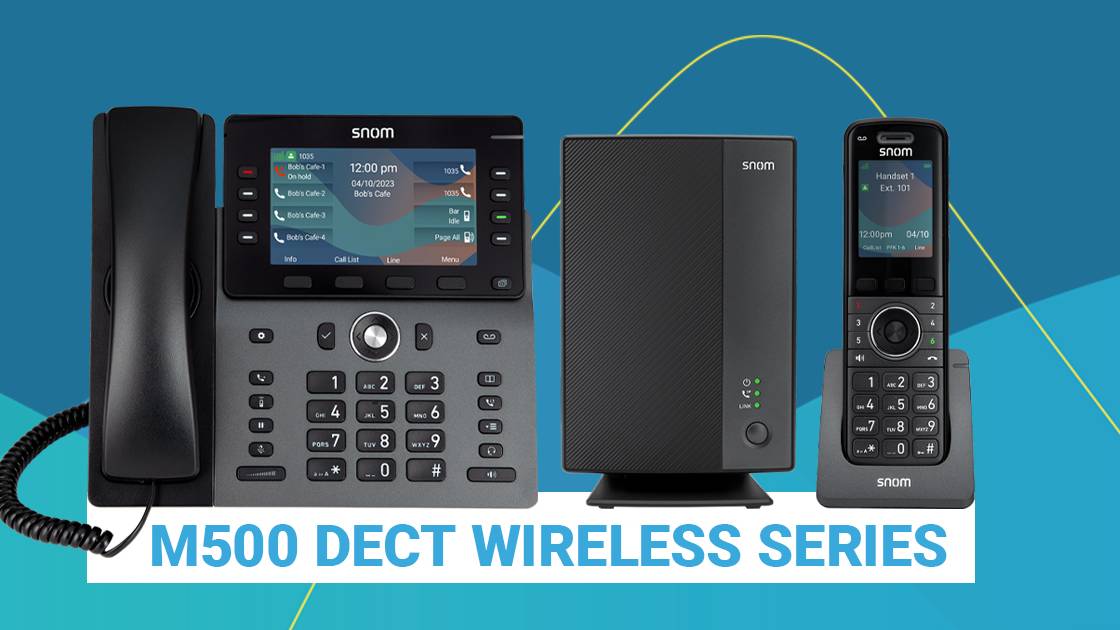
Telinta, a global leader in cloud-based VoIP switching and billing solutions, and Snom, a leader in communication technology, today announced a solution for automated provisioning of Snom M500 phones using Telinta’s softswitch platform. Telinta has developed Auto-Provisioning Profiles for the Snom M500 Pro DECT Multicell Base Station, the Snom M55 SIP DECT Handset, and the Snom M58 SIP DECT Deskset. The Snom M500 DECT Multicell Base Station, together with the M55 SIP DECT Handset and M58 SIP DECT Deskset, delivers a scalable, enterprise-grade wireless communications solution for businesses of all sizes. Designed for simple deployment and centralized management, the M500 family provides reliable mobility, exceptional HD voice quality, and secure SIP-based communications, making it an ideal solution for service providers delivering hosted voice and UC services. This cloud-based provisioning enables Internet Telephony Service Providers (ITSPs) worldwide to streamline and automate deployments of Snom phones via Telinta’s cloud-based softswitch platform. Telinta’s solution is…

Zoom Spaces brings AI-powered Zoom Rooms to the hybrid workplace, turning VoIP meetings into actionable workflows. With smarter camera framing, transcripts, notes, digital signage, and hardware flexibility, Zoom aims to improve collaboration, reduce meeting admin, and help IT teams connect physical offices with intelligent communications across modern workspaces securely efficiently.
Smart glasses are entering VoIP and unified communications strategies, but privacy fears could define adoption. As European regulators scrutinize wearable cameras, vendors must prioritize visible recording alerts, GDPR-ready safeguards, and trust-first design. For enterprises, secure smart glasses may transform remote assistance, collaboration, and frontline communications without normalizing covert public recording