New technologies, especially in wireless communications, is helping increase VoIP services. As smartphones, laptops and tablets are being more available worldwide, VoIP services are also growing and the competition between different providers is leading to a constant update in their offers. The BYOD (Bring Your Own Device) policy that is spreading in companies is another key factor in this demand on VoIP. Devices like phablets (a mix between smartphones and tablets like the Galaxy S9+) are replacing computers on many aspects. The PMR (Persistence Market Research) expect the market to grow up to US$ 194.5 Billion in the next seven years. Most of this increase will be from long distance VoIP calls that could represent US$ 120 Billion in revenue.

The U.S. Congress is concerned about revelations of a deal that was made between Facebook and the Chinese device maker Huawei. Huawei is not the only device constructor to have a privilege access to data from Facebook, as Lenovo, Oppo and TCL are also on that list “Concerns about Huawei aren’t new – they were widely publicized beginning in 2012, when the House Permanent Select Committee on Intelligence released a well-read report on the close relationships between the Chinese Communist Party and equipment makers like Huawei,” said U.S. Senator Mark Warner. In an investigation done by the House Intelligence Committee, it was stated that “Huawei did not fully cooperate with the investigation and was unwilling to explain its relationship with the Chinese government or Chinese Communist Party, while credible evidence exists that it fails to comply with U.S. laws”. Moreover, the Chinese company has an history of collaboration with the…
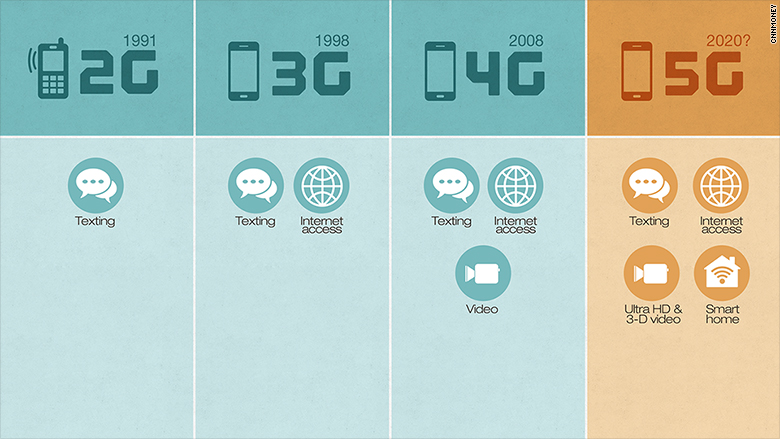
The investment required to upgrade a network to support standalone 5G technology is important. JP Morgan think this is the reason why Telecom companies stocks did not do so well last year. There is a serious concern that the investment might not be as effective as expected. The lack of return put an important shade on some valuation for some asian (China, Japan and South Korea) and Australian telecommunications stocks. Those worries could be explained as the daily applications and advantages of 5G technology are yet to be seen and to be invented. James Sullivan,head of Asia ex-Japan equity research at J.P. Morgan explained “It’s not really about faster download speeds,” he said. “It’s about internet of things, autonomous vehicles and things of that nature for which no one understands a monetization case for networks yet.” 5G will not only be customer centered but also will help companies in processing…
Without a doubt, the new generation of VoIP Softphones has revolutionized the industry by allowing real-time, high-quality free calls to be carried out across devices. Furthermore, voice over Internet Protocol (VoIP) has become a vital tool for many businesses and companies. With that in mind, this is an in-depth comparison between some of the most notable VoIP softphones available today. 1. Call.Center Call.center is compatible with various operating systems, call.center is definitely one of the most multifaceted VoIP Softphones available right now. Using a single SIP line across various desktop and mobile devices, this app allows you to seamlessly take VoIP calls no matter where or when. In addition to having a variety of useful functionalities, this app aims at simplifying the configuration, management and secure deployment of your VoIP services. Due to its compatibility with various operating systems and devices, it may be somewhat difficult to install and configure.…
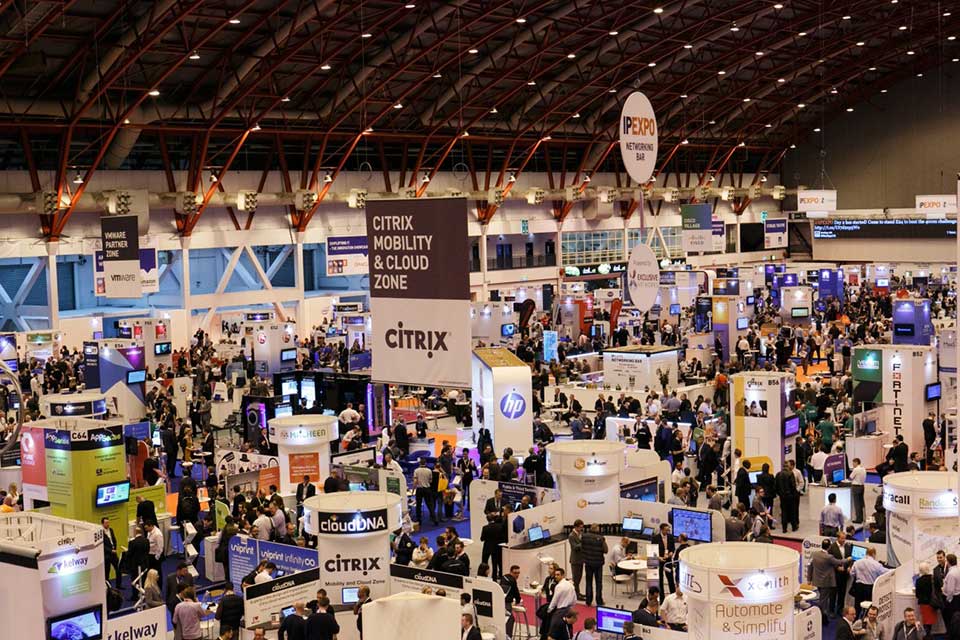
The 2017 IP EXPO Europe was the greatest IT conference of the year for CIOs, heads of IT, security specialists, heads of insight, tech experts and organizations looking to innovate and evolve through technology. Focusing on six IT themes, the event’s 12th edition brought together more than 300 exhibitors from different parts of the technology sector and 300 free seminar sessions at ExCel in London on 4 and 5 of October. Across both days, Artificial Intelligence (AI) was the main topic of discussion, with Stuart Russell, Professor of Electrical Engineering and Computer Sciences at UC Berkley and AI-pioneer providing powerful insights on the reality of AI and whether or not we, as humans, should be concerned about its evolution. “It seems very likely that at some point we will have machines that are more intelligent than human beings,” said Professor Russell in one of his presentations. However, AI wasn’t the…