1323 Results

mobile services

Search

Explore EE’s new ‘everything app’, aiming to centralize device sales and manage subscriptions. This all-encompassing platform offers the ability to purchase gaming accessories or trade devices. Alongside this, EE has introduced enhanced broadband and mobile packages, and a focus on personalized customer service. As the company confidently adjusts to its innovative role within the telecommunications landscape, competitors are left needing to pick up the pace.


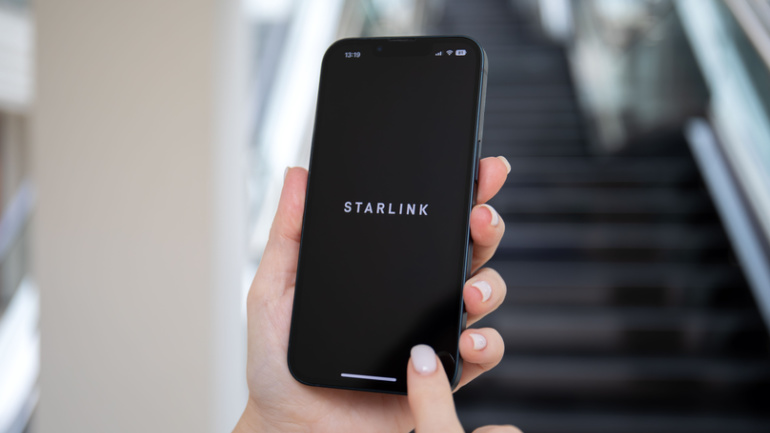
Intriguingly, SpaceX’s Starlink offers an innovative Direct to Cell feature allowing existing LTE phones to function even in remote locations – a potential boon for those often out of terrestrial coverage. With a rollout plan targeting texts by 2024, and full voice, data, and IoT compatibility by 2025, Starlink seems poised for a breakthrough. While the proposition seems formidable, concerns around possible limitations of Starlink’s proprietary technology remind us advantages of relying on industry best practices. Without disclosed pricing details, we can only anticipate how this venture will fare against other satellite connectivity contenders.

As the Competition and Markets Authority gears up for an official investigation about the planned merger between Vodafone and Three, concerns such as reduced consumer choices, price hikes, and changing market dynamics are cropping up. Simultaneously, anticipation builds over potential improvements and expansive opportunities the merger might usher in for the UK’s mobile network scene.

An ambitious €1 billion initiative is underway in Spain to narrow down the digital divide in rural areas, spearheaded by the Ministry of Economic Affairs and Digital Transformation. The project focuses on escalating the presence of 5G technology, committing an impressive €544 million towards standalone deployments. Aimed at areas unlikely to be targeted by private sector network deployments, it accentuates the government’s determination to extend tech revolutions to the unserved regions. With potential applications to various sectors, Spain’s pathway to complete 5G integration could serve as an inspirational model for others in this era of digital transformation.

In a pioneering collaboration, Samsung, Vodafone, and Orange have achieved a significant breakthrough by completing the first 4G calls over shared networks in rural Romania using Open RAN technology. This milestone, with the promise of integrating 2G and 5G, signifies a transformative step towards more efficient, sustainable, and innovative telecommunications.

Amazon’s Project Kuiper, which birthed two prototype satellites aimed to test potential satellite broadband service, operates similarly to Space-X’s Starlink and OneWeb. The venture is set to increase internet connectivity in remote areas using an extensive satellite constellation. Still, the delay in launching has welcomed accumulating competition. Rabid advancements by competitors including satellite direct-to-device technology pioneers and those concentrating on 5G NTN IoT services could tilt the scales. Would adopting the 5G NTN-compatible network give Project Kuiper a competitive edge? Or will the ongoing innovations by industry leaders overshadow it? However, underlying operational challenges and time constraints might hamper Amazon from contemplating a substantial shift in direction.

Telecom giants Vodafone and Orange are breaking new ground with the first real-life 4G calls over a common shared network in an Open RAN setting. Stemming from a landmark endeavor near Bucharest, this initiative provides a glimpse into the potential strengths of an Open RAN-based network. What’s more? The progress doesn’t halt at 4G. The duo are set to soon take down another first – operating 2G and subsequently 5G, over shared Open RAN sites. Both operators see this as a model for extending mobile networks throughout rural Europe.

VoIP continues its growth trajectory, serving both businesses and individuals for internet-based calls and messaging. Predictions for the next decade include 5G integration, AI-driven enhancements, IoT synergy, and mobile VoIP expansion. VoIP adoption will increase globally, cybersecurity investments will rise, and it will be integral to customer-centric strategies. Ultimately, VoIP may replace PSTN, undergo infrastructure improvements, and remain promising with 5G and AI advancements.