Subco plans a major subsea expansion across the Indo-Pacific.
The Australia-based operator announced three new hypercable projects. They are APX North, APX-2, and APX West. All three should enter service by 2029.
The company links the move to rising AI traffic demand. Data centers need stronger international routes. AI applications also need fast paths between compute hubs and end users.
“I know it’s ambitious, but it’s achievable and it’s necessary,” said Subco founder and co-CEO Bevan Slattery in a statement.
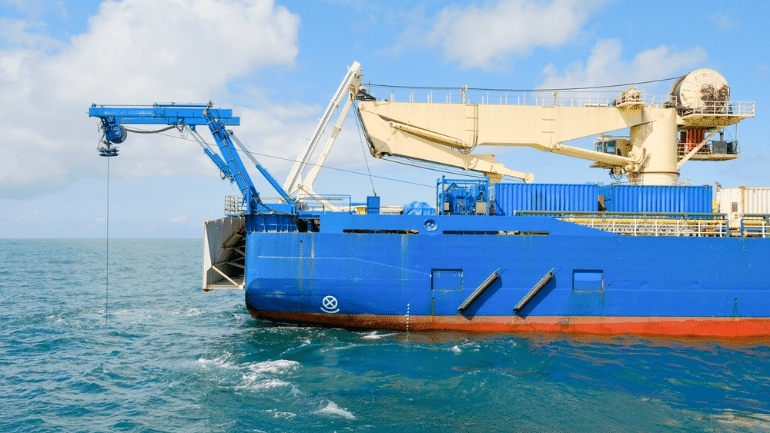
Subco is still finalizing cable supply and vessel details. It expects contracts to be in force by early next year. Each system uses a 24-fiber pair design.
APX North will span 9,500 kilometers. It will connect Sydney with Japan through Guam. Subco says it would be the first hypercable from Australia to Guam’s interconnection hub.
The system will also support direct Australia-Japan connectivity. Switched branching units can let selected fiber pairs bypass Guam. This design improves routing flexibility and resilience.
Meanwhile, APX-2 will run about 10,000 kilometers. It will connect Australia and Japan to Los Angeles through Guam. Slattery called this segment vital for Asia-US traffic.
“This segment is vital and will serve as the backbone for trans-Pacific traffic between Asia and the US, as well as providing diverse connectivity for Australia and Japan via APX North. We expect this system to be incredibly popular,” said Slattery.
APX West will cover 4,600 kilometers. It will connect Perth to Singapore. Branches will extend to Jakarta and Batam in Indonesia.
This route could strengthen regional redundancy. It also reflects Indonesia’s growing role in digital infrastructure. However, multi-country builds need careful permitting and operational coordination.
At the same time, FLAG is upgrading its dedicated fiber pair on the Echo cable. The upgrade will support new 400GbE and 800GbE services between Asia and North America.
FLAG will use Ciena technology for the deployment. The platform includes WaveLogic 6 Extreme coherent optics. These components help push more data across long subsea routes.
“Our investment in Echo enables us to transport rapidly growing volumes of AI, cloud, and enterprise traffic across one of the world’s most important digital corridors,” said Brad Kneller, chief network officer, FLAG.
Elsewhere, XLSmart confirmed construction activity on the Candle cable. The 8,000km system will connect Japan and Singapore. It will also link Taiwan, the Philippines, Indonesia, and Malaysia.
The broader picture is clear. Subsea cables now form the backbone of AI-era connectivity. These projects promise scale, diversity, and lower latency. Yet they also demand capital, regulatory patience, and strong execution.