


Nokia and Lenovo are redefining network capabilities for AI data centers with their strategic partnership. This collaboration guarantees advanced infrastructure for telecoms and cloud providers.

Nokia and Lenovo are redefining network capabilities for AI data centers with their strategic partnership. This collaboration guarantees advanced infrastructure for telecoms and cloud providers.
In light of Ericsson’s mounting tension with Lenovo and Motorola Mobility for suspected patent infringement, the telecom giant invites a discussion on the significance of intellectual property rights in fostering innovation. An influx in Ericsson’s licensing revenue, along with recent 5G legal victories, underscores this issue within the tech landscape.
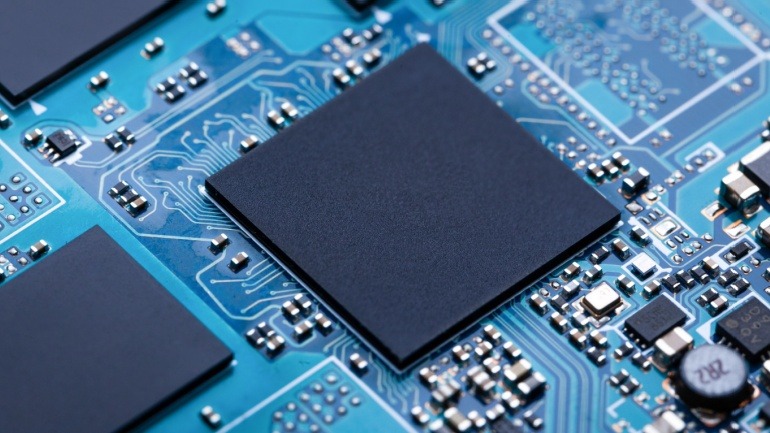
AMD’s new 5th Gen EPYC processors, “Turin,” featuring the Zen 5 core architecture, significantly enhance data center performance for enterprise, AI, and cloud applications. With models like the EPYC 9575F offering a 28% speed boost and up to 5GHz, AMD leads in energy-efficient, powerful solutions for AI and virtualized infrastructures.

Ericsson and Oppo have entered a multi-year cross-licensing patent agreement, reinforcing their collaboration on 5G projects and cellular technology advancements. Oppo will make royalty payments to Ericsson under this new arrangement. This deal bolsters Ericsson’s patent portfolio and demonstrates the efficacy of business negotiations in the VoIP and 5G sectors.

Nokia has enhanced its WaveSuite optical network platform. Companies across various industries are increasing their investment in artificial intelligence. Ericsson launched EFTG to drive 5G advancements in U.S. federal agencies for national digital transformation. NVIDIA’s launch of the GB200 Grace Blackwell Superchip promises to revolutionize generative AI’s efficiency and performance.

In a significant development for Romania’s telecommunication landscape, Huawei, the Chinese equipment manufacturer, has faced a major setback. The Romanian government has formally declined Huawei’s request to deploy its technology within the nation’s 5G networks. This decision, disclosed through the Romanian government gazette without an official press statement, effectively bars Huawei from any future participation in the Romanian mobile network market.

Global smartphone market recovery slows as consumer demand remains weak, with IDC revising downward its shipment projections. Despite exciting innovation in foldable phones, longer replacement cycles and high inventory levels signal a cautious outlook.

Orange and MasMovil in talks about joint venture Orange and MasMovil have stated that they are in talks to launch a 50:50 joint venture (JV) in Spain. Orange’s Spanish subsidiary is valued at €8.1 billion, while MasMovil is valued at €11.5 billion, for a total enterprise value of €19.6 billion. The merged operator would include around 7.1 million fixed line customers and 20.2 million mobile users, with a combined FTTH network of approximately 16 million residences. The operators claim that the combination would result in a slew of meaningful synergies of more than €450 million within three years of the merger closing. Read more at: https://tinyurl.com/y5d9h3y7 Google acquires Mandiant to boost its cloud offering In a move aimed at bolstering the capabilities of its Google Cloud platform, Google has agreed to pay $5.4 billion for the cybersecurity firm Mandiant. To address harmful information and software vulnerabilities, Google Cloud currently offers…

Salt Security raises $20 million to protect APIs with AI US-based Salt Security, a cybersecurity startup that helps companies protect APIs, has closed a USD 20 million Series A round. The company plans to use the new capital to renew its investments in product development and expand its sales and marketing teams. Salt’s platform aims to prevent cyber attacks with a combination of AI and machine learning techniques. It analyzes a copy of the traffic from web, software-as-a-service, mobile, microservice, and the Internet of Things (IoT) app APIs. Salt uses this process to understand each API and creates the basis for normal behavior tailored to customers and their applications. After that, Salt reveals anomalies that are identified as indicators of an attack during reconnaissance. Read more at https://tinyurl.com/y88n2l7r Lenovo delivers world’s first 5G laptop with Verizon, EE, Sunrise and CMCC Lenovo, one of the world’s leading personal technology companies producing innovative PCs and mobile…

The U.S. Congress is concerned about revelations of a deal that was made between Facebook and the Chinese device maker Huawei. Huawei is not the only device constructor to have a privilege access to data from Facebook, as Lenovo, Oppo and TCL are also on that list “Concerns about Huawei aren’t new – they were widely publicized beginning in 2012, when the House Permanent Select Committee on Intelligence released a well-read report on the close relationships between the Chinese Communist Party and equipment makers like Huawei,” said U.S. Senator Mark Warner. In an investigation done by the House Intelligence Committee, it was stated that “Huawei did not fully cooperate with the investigation and was unwilling to explain its relationship with the Chinese government or Chinese Communist Party, while credible evidence exists that it fails to comply with U.S. laws”. Moreover, the Chinese company has an history of collaboration with the…
