1218 Results

5G SA

Search

Italian telecom provider Wind Tre faces hurdles in selling infrastructure due to complex 5G network sharing negotiations with rivals Iliad and Fastweb. CK Hutchison delays the deal closure by three months to February 12, citing challenges with Iliad and Fastweb. Meanwhile, Indosat Ooredoo Hutchison’s $6 billion merger in Indonesia with Huawei’s support achieves significant growth. France’s Orange introduces satellite broadband, while Norway’s Telenor sells its satellite operations. FCC’s new broadband rules target discrimination, raising concerns of unintended consequences. Mavenir and Nokia achieve remarkable Open RAN interoperability, overcoming past criticisms and showcasing commitment to multi-supplier systems.


President Biden’s administration has launched an extensive review of over 2,700 megahertz of spectrum, perceiving its significant role in the nation’s technological leap. The initiative intends to implement a well-grounded American spectrum strategy, focusing on fostering tech advances, heightening public understanding about its economic role, and fostering a cooperative national framework.

In a strategic move to bolster its mobile network, Australia’s premier telecom firm, Telstra, acquires local operations of small cell provider Dense Air. Both financial details and timelines of the transaction remain veiled. This comes after the Australia Competition Tribunal blocked Telstra’s partnership with TPG, favoring competition and avoiding regional coverage setback. While rivals speculate, Dense Air’s retreat from Trans-Tasman markets coincides with Sidewalk Infrastructure Partners’ takeover. This deal provides Telstra’s network expansion plans with crucial additional spectrum capacity.

In a surprising shift, Cellnex decides to offload its private networks niche to Boldyn Networks, refocusing its operations back to its base business of towers. This comes despite previously earmarking the private networks sector as critical for growth and the Superlative successes recorded by Edzcom, the Finnish-based firm that designs and runs 4G and 5G networks. This transition aims to trim the company’s debt. In contrast, Boldyn Networks is ready to capitalize on the promising growth in 5G private networks, projected to hit $109.4 billion by 2030.

Marlink has teamed up with Eutelsat OneWeb to bring satellite connectivity to the luxury icebreaker cruise ship, Le Commandant Charcot. Their innovative hybrid network enhances both operationally and leisurely experiences, using layered, encrypted technology for robust security. Remarkably, it allows for separate crew and operational systems on one terminal and ensures unprecedented internet access in remote locations.

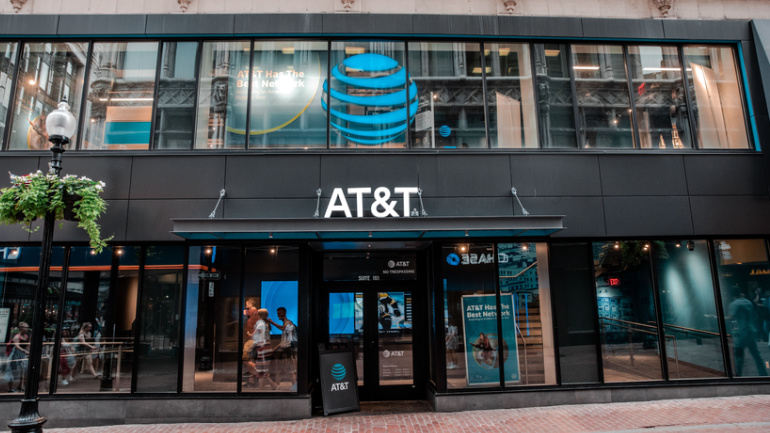
As the Federal Communications Commission refocuses on airway ownership, the conversation around midband spectrum control heats up. Telecom leaders differ: AT&T calls for a review of midband acquisitions, while T-Mobile criticizes this as self-serving. Dish joins the debate, advocating a 25% national screen to encourage competition. Amid conflicting viewpoints, the FCC must forge a path in balancing market sense and fairness.

IBM has introduced Watsonx Code Assistant, an AI-powered tool for enterprise software development. Riga Technical University partners with IS-Wireless to advance 5G Open RAN technology. Snom’s phones are certified for NetSapiens, streamlining deployment for telecom resellers. Google Maps enhances user experience with AI-powered features, offering Immersive View, improved navigation, and EV charging information, striving to outperform competitors.

At the European Conference on Optical Communication, Huawei’s cutting-edge FTTR solution solidified its standing as the industry leader by winning the Most Innovative PON/5G/FTTx Product Award. Catering to a wide range of users—from homes to small businesses—Huawei’s solution offers superior bandwidth, minimal latency, uninterrupted Wi-Fi connectivity, and self-management capabilities, making it a favorite among global broadband users and operators. Moreover, it’s built on a point-to-multipoint all-optical networking architecture, providing ultra-gigabit Wi-Fi networks. Remarkably, the FTTR rollout is efficient and aesthetically pleasing, using a unique self-adhesive transparent optical fiber with fast deployment times.

AT&T’s vast addition to their fiber net base underlines an impressive income growth. This growth is visible in their third-quarter report, boasting revenues over $30 billion. The influential role of AT&T’s fiber subscriptions reveals a customer base exceeding 8 million aided significantly by a striking 26.9 percent growth in AT&T Fiber revenues. Notably, the company’s recent launch, AT&T Internet Air, foresees further enhancement to their service offerings.