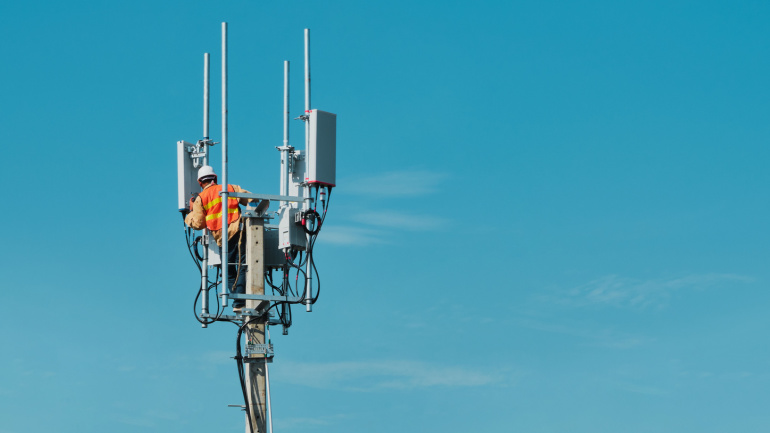
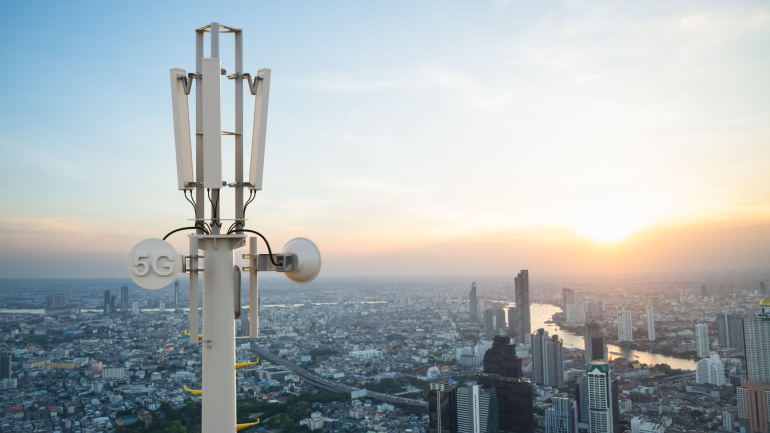
Mitratel is significantly expanding its telecom mast portfolio with the purchase of 803 towers from Gametraco Tunggal, marking a strategic move beyond Java Island. This $113 million acquisition not only increases Mitratel’s infrastructure landscape but also welcomes 1,327 new tenants. The company’s ongoing investment in fiber optic networks aims to enhance tower operations, and crucially support the anticipated deployment of 5G networks in Indonesia.

As the year draws to a close, the Radio and Internet Services Department (RDI) is inching closer to launching private local spectrum licenses for enterprise clients. Set to equip them with the 3.5GHz spectrum and power the assembly of private 5G networks, this promises to transform sectors such as Virtual Reality and autonomous vehicles. However, some concerns have borne by airports and ports on fair allocation.
Ofcom has cemented plans to propel UK’s 5G coverage by introducing the nation’s first millimetre-wave (mmWave) spectrum auction. This will span the robust 26GHz and 40GHz spectrum bands, targeting faster 5G speeds across 68 UK towns and cities. Interestingly, mmWave 5G promises impressive speed and capacity upgrades, but struggles with range and penetrability, making it ideal for densely populated areas. The auction awaits a verdict on a key industry merger before commencement.
Vodafone’s recent triumph, a successful trial achieving 5 Gbps using the upper 6 GHz band for mobile signal transmission, highlights the upcoming decision on spectral band division at ITU’s WRC23. Through this trial, performed on Madrid’s Vodafone campus, engineers established the 6 GHz band can provide coverage on par with existing 5G networks.
Dish’s recent announcement differentiates them as the first operator to amalgamate both 2 uplink and 4 downlink 5G carriers, reaching compelling speeds with such configuration. Despite skepticism around Open RAN’s performance, Dish continues to silence critics and signifies an exciting possibility for future network builds.
Sweden’s recent spectrum auction has not only proved to be a triumph for the Swedish Post and Telecom Authority (PTS), but also for the nation’s digital future. The robust participation from the country’s primary operators substantiates the utility of the spectrum in bolstering Sweden’s wireless services and advancing its 5G capabilities. In an impressive display, not just of interest, but also of investment, an imposing SEK 4.23 billion ($380 million) was raised in a span of just one day. This unprecedented event echoes Sweden’s commitment to digital progress, with new licenses primed to spark a wave of innovative advancements in the long-term. Stay tuned for more updates on the fascinating world of telecommunications.
In a bold move set to enhance its spectrum capabilities, T-Mobile US is poised to acquire Comcast’s 600 MHz frequencies, in a deal worth up to $3.3 billion. With 39 million subscribers potentially impacted, this decision reconfirms T-Mobile’s commitment to streamlining its 600 MHz range, especially in key US cities. It’s worth noting that despite the ambitious agreement, Comcast retains the rights to exclude any licenses before completion. The deal serves both parties well, promising to augment T-Mobile’s already substantial frequencies and refresh Comcast’s spectrum focus on high traffic areas.
Qualcomm and Samsung recently announced a pioneering success in telecommunications; achieving dual uplink and quadruple downlink carrier aggregation for 5G FDD spectrum. This innovation, tested using Qualcomm’s Snapdragon X75 5G Modem-RF System with Samsung’s 5G radios, could provide operators increased flexibility. This trial demonstrates the potency of Advanced 5G modems in enhancing 5G connections, hinting exciting future developments in 5G. Commercial implementations of these findings are expected by late 2023.
Nokia, TPG and Mediatek are collaborating to showcase the power of carrier aggregation technology in live-streaming 360-degree broadcasts, a key element for future metaverse applications. The demonstration at Nokia’s 5G Futures Lab used multiple sub-6 GHz frequency bands to maximize 5G uplink speeds, enabling real-time transmission of high-quality video. The technology could revolutionize the viewing experience for TV, movies, sports and industrial metaverse scenarios such as remote-controlled robots performing hazardous tasks.
T-Mobile has taken a bold step forward in the world of 5G technology, initiating the rollout of its latest innovation that promises lightning-fast speeds of up to 3.3Gbps. The breakthrough is achieved through carrier aggregation, a technique that combines four distinct 5G channels into one for compatible devices. At present, only Samsung’s newer Galaxy S23 phones are capable of harnessing this impressive speed boost.