IBM’s Quantum Safe portfolio, launched at the Think conference, addresses emerging security risks from quantum computing advancements. Offering enhanced protection against potential quantum-powered cyberattacks, this suite of tools and roadmap aims to guide organizations through the post-quantum era.
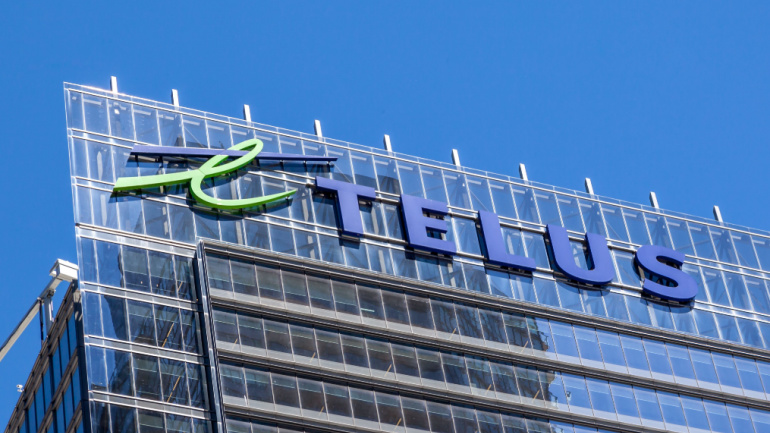
TELUS becomes the first North American CSP awarded ‘Running on ODA’ status, joining global giants in utilizing Open Digital Architecture to transform into agile digital organizations. Achieving cost and time reductions, TELUS delivers enhanced customer experience through cloud-native, vendor-agnostic solutions.
Claro Colombia collaborates with Casa Systems for a cloud-native network, utilizing Axyom Virtual CCAP and Remote PHY solutions to enhance broadband capacity and offer converged services, while maintaining cost efficiency and seamless operations.
With over 10.9 billion mobile connections globally, integrating text messaging into business communications strategies has become a must for brands. Recognizing this growing demand, Telgorithm has made it their mission to provide messaging API solutions designed exclusively for independent SaaS vendors, to help their customers tap into the increasing adoption of text messaging for customer communications. What is Telgorithm? Telgorithm is a cloud communications enablement API platform that provides SaaS companies with compliance-based SMS & MMS solutions. It was developed by telecom industry veterans with the goal of delivering automated and reliable A2P text messaging API solutions that assist businesses to navigate the ever-changing A2P messaging market while simultaneously scaling their operations. Telgorithm’s solution is reliable, effective, and simple to implement, making it an ideal choice for software vendors seeking to assist their customers in improving consumer engagement. The platform automates the entire journey of registration, onboarding, rate limit management,…
Windstream Enterprise migrates VoIP platform to Microsoft Azure for Operators Windstream Enterprise has switched its VoIP technology to Microsoft’s Azure for Operators clustered Call Feature Server. This enables increased dependability, access to additional communications, and integrated data and voice capabilities for Dynamic IP and Unified Communications clients. Windstream Enterprise is making investments to improve its cloud-based communications services, including this update. The cooperation with Microsoft broadens the company’s Dynamic IP solution, a VoIP platform that supports numerous call pathways and enables clients to exploit their current network infrastructure with flexible bandwidth. To help reduce unforeseen downtime, the system provides numerous layers of redundancy. Read the full article. 22 US telecoms face fines over failure to deliver rural broadband, says FCC The Federal Communications Commission (FCC) of the United States proposed fining 22 telecom companies for failing to deliver on the Rural Digital Opportunity Fund (RDOF), a project targeted at increasing…
GoTo introduces over 30 new features GoTo has revealed over 30 new features across its IT management, support, and unified communications solutions. The new features include GoTo Resolve and Zendesk connectivity for remote support sessions and automated session tracking. Also, Rescue and Google Translate integration, GoTo Customer Engagement, and OpenAI’s ChatGPT integration to produce custom content. Other additions include enhanced call statistics, a centralized security dashboard, and customized surveys. The new features are intended to help consumers and IT teams save time and money while boosting productivity, usability, and the customer experience. Read the full article. Virsae and Hammer team up for a 360-degree cloud contact center experience Virsae and Hammer have collaborated to introduce Outside In – Inside Out, a 360-degree consumer and agent experience solution for contact centers. The service delivers a unified view across on-premise, cloud-based, and hybrid infrastructures, allowing network readiness evaluations, customer journey discovery and…

AST SpaceMobile has made history by successfully connecting a direct voice call between the United States and Japan via its Low Earth Orbit (LEO) satellite constellation, using standard smartphones. The use of standard smartphones makes this a world first, as no one has previously achieved a direct voice connection from space to unmodified cellular devices. AST SpaceMobile partnered with some of its mobile operator partners, including AT&T, Rakuten, and Vodafone, to make the connection. The test call was made using AT&T spectrum and a Samsung Galaxy S22 smartphone in the Midland, Texas area, connecting to Rakuten in Japan. The successful test call validated AST SpaceMobile’s network architecture and systems, including its BW3 satellite, which it describes as the largest commercial communications array in low-earth orbit. The call also paves the way for space-based cellular broadband. AST SpaceMobile’s goal is to provide coverage to close to 50% of the world’s population…
Messaging apps urge UK government to rethink online safety bill The heads of messaging apps including WhatsApp and Signal have written an open letter urging the UK government to reconsider its proposed internet law. The Online Safety Bill, which is presently being debated in the House of Lords, would provide the government with broad powers of censorship over all digital speech and information. The letter says that the measure might damage end-to-end encryption, allow indiscriminate monitoring, and fundamentally destroy communication security. The top executives of the firms say that there can be no “British internet,” and that the measure should be revised to encourage more privacy and security. Read the full article. AT&T to be the exclusive mobile carrier for US MVNOs The US National Content & Technology Cooperative (NCTC) has signed a deal with AT&T making it the exclusive mobile carrier for almost 700 small and mid-sized independent cable…
US carriers to address airline safety concerns over C-band spectrum In an open letter, AT&T, Verizon, T-Mobile US and UScellular agreed to take voluntary steps to allay worries about aviation safety and allow these telecom companies to fully utilize their C-band spectrum. According to the letter, the steps are intended to minimize operational impact on C-Band operations and support full-power deployments across the C-Band spectrum. In the past, airlines have resisted the introduction of C-band spectrum for 5G services due to concerns over interference with aircraft altimeters. To assure the secure coexistence of C-band frequencies and radio altimeters, which are more than 220 MHz apart, the FCC has issued licensing and technical standards. Read the full article. Deutsche Telekom now owns a 50.2% stake in T-Mobile US According to CEO Tim Höttges, Deutsche Telekom now owns 50.2% of T-Mobile US, completing a long-term objective initially stated at the company’s 2021…