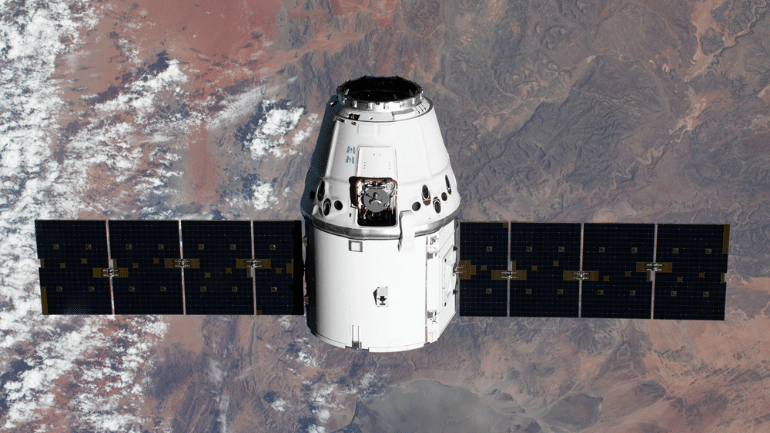
Amazon, the multinational technology company, has received the approval from America‘s Federal Communications Commission (FCC) to deploy 3,236 internet satellites into low Earth orbit (LEO) and to provide the US with satellite-based broadband services. The project, named Kuiper, was first announced last spring with the intent to build a LEO satellite constellation that would have the potential to provide cost-effective broadband services to unserved and underserved communities around the world. A project of this magnitude requires a great amount of resources, therefore Amazon will invest more than $10 billion in the project. This investment will not only provide broadband services, but will also create workplaces and infrastructure around the United States. Dave Limp, senior VP at Amazon, commented: “There are still too many places where broadband access is unreliable or where it doesn’t exist at all. Kuiper will change that. Our $10 billion investment will create jobs and…

Global satellite operator Telesat, the Vodafone Group and the University of Surrey in the UK, have successfully accomplished the world’s first 5G backhaul demonstration deploying a Low Earth Orbit (LEO) communications satellite. This successful trial demonstrates that LEO satellites are able to provide efficient backhaul transport channels for mobile network operators (MNOs), including for 5G advanced services. During the live test conducted by these partners in April, Telesat’s Phase 1 LEO satellite was connected to the University of Surrey’s 5G testbed network, with the support of specialist Vodafone engineers. Vodafone also provided some funding and arranged licensing for the demonstration system. John Miller, Head of Satellite Engineering at Vodafone, said: “The use of LEO satellites provides an additional mobile backhaul option and can be an important part of the delivery system particularly to customers in our markets who live in rural areas.” Professor Barry Evans, University of Surrey, said: “The University of Surrey is very…
To improve emergency services and to better locate callers, The European Commission has approved a regulation that will require new smartphones to include satellite and Wi-Fi location. The integrated chipset with Global Navigation Satellite System (GNSS) must deliver access to the EU’s satellite system Galileo, which provides accurate positioning and timing information. Currently, most emergency services are faced with the challenge of only being able to locate troubled mobile callers within an area of several kilometers. However, the proposed use of satellite and Wi-Fi systems will enable 112 emergency number callers to be located within a range of less than 100 meters. Galileo-enabled devices receive signals for positioning, navigation and timing. This satellite system has been servicing around 400 million users, and this summer the system was supplemented by four more satellites, which were successfully launched from the European spaceport. Every additional satellite steadily improves Galileo’s performance, and,…
Orange backs the Pisces subsea cable to strengthen Europe’s digital backbone, improving cloud, AI, and VoIP connectivity between Ireland and mainland Europe. With EU funding, new landing stations, and resilient routes, the project highlights how telecom infrastructure, low latency networks, and secure data transport are shaping enterprise communications worldwide today.
SpaceX’s 800 MHz spectrum deal could reshape Starlink Mobile, direct-to-device connectivity, and VoIP services across rural America. By blending satellite coverage with terrestrial wireless assets, Elon Musk’s network ambitions may pressure AT&T, Verizon, and T-Mobile while opening new possibilities for mobile VoIP, broadband bundles, and resilient business communications nationwide soon.
Europe’s fragmented IoT landscape is reshaping telecom strategy as 2G shutdowns, 4G expansion, 5G rollouts, satellite links, and sovereignty rules challenge global connectivity. Vodafone IoT says AI-driven orchestration will help enterprises simplify cross-border devices, strengthen VoIP-ready networks and deliver reliable, scalable communications across complex national markets for connected businesses worldwide
Nokia and ICEYE are developing sovereign LEO satellite communications for governments and defence, strengthening secure VoIP, resilient telecom networks, and real-time connectivity. Launching from 2028, the project could give nations owned satellite infrastructure, reduced reliance on commercial providers, and stronger communications continuity during crises, conflict, disasters, and contested operations worldwide.
AT&T’s $3 billion Corning fiber deal strengthens US broadband infrastructure as AI data centers, 5G, 6G, VoIP services, and cloud connectivity drive bandwidth demand. With fiber usage soaring, the agreement supports faster internet, reliable business communications, and future-ready telecom networks for homes, enterprises, carriers, edge sites, and digital innovation nationwide.
T-Mobile’s new FCC request signals a major step toward 6G-ready spectrum, with tests planned in the 2.7GHz and 4GHz bands. For VoIP providers, faster mobile networks could improve call quality, latency, and reliability, while shaping future cloud communications, unified communications, and business VoIP services across the United States over time.
U Mobile and ZTE tested a portable solar-powered 5G site in rural East Malaysia, delivering 4G/5G connectivity via satellite backhaul. The solution can support VoIP calls, mobile broadband, emergency communications, and remote communities where towers are slow to build, helping close coverage gaps with faster, greener network deployment options today