ZTE Corporation and Intel have jointly launched the Light Cloud platform for access networks at the 5G Summit being held at Mobile World Congress 2019 in Barcelona. The Light Cloud solution is based on Intel’s innovative Edge products, impeccably integrated into ZTE’s flagship optical fiber access platform, Titan, thus merging Multi-access Edge Computing (MEC) and Network function virtualization (NFVI). The solution employs lightweight blade servers equipped with Intel Xeon D processors. When embedded in an OLT or BRAS device, the blade servers transform it into lightweight cloud infrastructure, thus reducing high capital costs and making a positive environmental impact. The infrastructure opens up computing and storage possibilities based on telecom access equipment, and allows the deployment and distribution of application-sensitive services. The access layer with cloud features is supported by built-in blade servers, and facilitates the ability to offer a wide range of cloud applications and services, including…

A cloud-hosted, VoIP-powered PBX is an attractive and preferred option for a modern business telephone service. It is extremely cost effective, available for use anytime and almost anywhere, and requires none of the hardware investment that traditional on-premises systems needed in the past. With maturing technology and the desired convenience in business communication, now is the right time for change. Switching to a hosted private branch exchange (PBX) may sound complicated, however a well-thought-out transformational process can be smooth and hassle-free. Let’s discuss the main points to consider when moving from a traditional voice system to a cloud PBX. PBX systems – traditional vs virtual To begin with, it is important to understand the main differences between a traditional PBX and a cloud PBX. A legacy PBX is an enterprise phone system stored and hosted on the customer’s premises, and consists of specialized hardware, generally connected using circuit switched networks.…
The Lithuanian mobile operator BITĖ has launched a new Smart call management service oriented towards its business customers, delivering full PBX services to mobile users. While cloud-based PBX services are now generic, BITĖ’s Smart call management service has fulfilled their specific and innovative requirement that the solution must be delivered over the standard mobile voice network, and should not require data services or the use of an app on the mobile device. The result is a seamless, simple-to-use, fully featured and high availability business voice service, accessible from any mobile device and being operating system agnostic. The solution architecture enables instant deployment of phone system extensions without any action required by the end users (business employees), eliminating the time and effort required by the business IT department and BITĖ’s customer service to configure, manage and support the service. “Phone calls constitute an essential and integral component of all…
When using a cloud PBX, customers have access to advanced features and enterprise-level functionality, while enjoying reduced infrastructure costs and minimized system administration concerns. However, you should diligently compare providers to ensure that you do not subscribe to a service that does not fit your needs and goals. This article lists some points to consider before committing to any hosted PBX phone service provider and should assist you in choosing a service that meets your communication needs. Are my feature set requirements satisfied? Before you start looking for a provider, you must compile a list of features that are essential to your business model and operational requirements, and also consider what features you might need in the future. In many cases, the cloud PBX provider charges for a specific set of features, or bills on a per-feature basis. Therefore, it may be useful to differentiate between “must have” features, and…
FCC approval of SpaceX’s Starmind satellite data centers could reshape VoIP, cloud communications, and AI networking. With orbital computing, optical links, and radio backup, telecom providers may gain resilient global infrastructure. Yet scale, spectrum coordination, latency, and orbital safety will determine whether space-based communications become viable for business VoIP services.
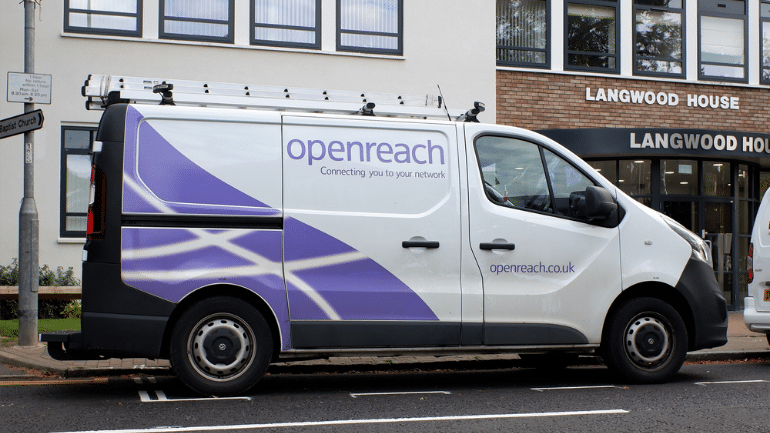
Openreach’s ISDN shutdown warning puts UK public bodies on deadline as the PSTN copper network closes in 2027. Legacy phone systems serving hospitals, schools, prisons and industrial sites must migrate to VoIP and all-IP voice quickly, with audits, resilience planning and cloud calling strategies needed to prevent critical communications disruption.
T-Mobile is pushing AI-RAN closer to real-world deployment, promising a world-first test after its Nokia and Nvidia voice call trial. For VoIP providers, AI-driven 5G networks could improve latency, throughput, and call quality, while raising key questions about GPU costs, energy efficiency, and the road to 6G-ready communications services ahead.
Nvidia’s reinstatement of Jensen Huang brings leadership stability to AI chips, cloud infrastructure, telecom networks, and VoIP innovation. As carriers accelerate 5G, AI-RAN, edge computing, and VoIP platforms, Nvidia’s roadmap matters for performance, security, and scalability while new compliance oversight aims to rebuild market and customer confidence worldwide this year
Starlink’s dynamic satellite broadband pricing could reshape VoIP connectivity for rural users and remote businesses. With discounts reaching half in high-capacity areas and hikes elsewhere, the model affects internet calling reliability, SIP trunking costs, and cloud phone performance. As SpaceX expands capacity, VoIP providers should watch pricing stability closely nationwide.
Nokia and CMC Networks are building EMEA-R, a high-capacity optical network linking Africa, the Middle East and Europe. The route boosts VoIP connectivity, cloud access and enterprise telecom resilience with scalable 1G, 10G and 100G leased circuits, improving latency, redundancy and international voice/data performance for carriers and businesses worldwide alike.