Philippine telecom giants PLDT, Globe Telecom, and Converge ICT plan over $2.2 billion in 2026 network investment, expanding fiber, mobile backhaul, and digital access. For VoIP providers, stronger broadband infrastructure could reduce latency, improve call quality, boost cloud communications, and support resilient connectivity across the nation’s challenging island geography nationwide

AI inference is moving to the network edge, reshaping telecom, VoIP, and cloud communications infrastructure. As real-time voice assistants, contact centers, and enterprise voice apps demand ultra-low latency, operators must expand metro fiber, edge data centers, and resilient optical routes to deliver reliable, high-performance AI-powered VoIP services worldwide by 2030
Orange’s acquisition of Dome boosts secure private 5G and VoIP-ready communications for defence and critical infrastructure. The cloud-native platform helps organisations build resilient hybrid networks, protect sensitive traffic, and maintain connectivity during disruption, supporting drones, emergency services, ports, airports, and mission-critical operations across Europe’s evolving secure telecom and VoIP landscape
Fairphone’s €50 million funding push highlights rising demand for durable smartphones as telecom innovation accelerates across EMEA. From quantum-safe satellite links and AI network automation to Ericsson fintech, Ooredoo 5G gains and DSA oversight, these developments shape mobile connectivity, VoIP services and secure digital communications for operators, enterprises and consumers
AT&T’s OTel 2.0 brings open-source Telco AI into production, giving VoIP and telecom operators a powerful model for network automation, troubleshooting, standards analysis, and secure on-premises deployment. Built with GSMA, Google Gemma, AMD GPUs, and Dell infrastructure, it signals a practical shift from AI pilots to carrier-grade operations worldwide today.
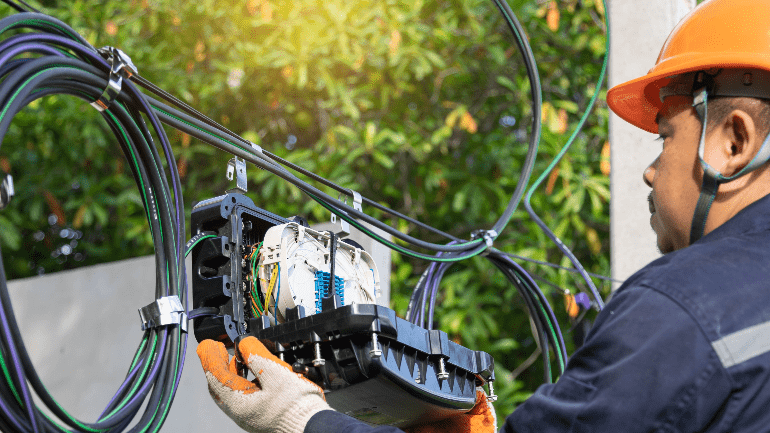
Clearfield’s WAV distribution alliance expands access to fiber, power, and active network solutions across North America, supporting wireless backhaul, small cells, DAS, and VoIP-ready connectivity. As operators densify networks, the partnership aims to simplify sourcing, speed deployments, and strengthen the fiber infrastructure behind high-performance voice, data, and cloud communications services.
Duos Technologies is bringing GPU-powered edge computing to Tier 3 and Tier 4 markets, giving telecom carriers, VoIP providers, schools, healthcare, and businesses faster local processing. By pairing modular data centers with fiber and wireless networks, Doug Recker’s strategy could boost low-latency AI services, connectivity, and growth in underserved communities
TDS Telecommunications expands its VoIP and fiber broadband footprint in New Hampshire by acquiring Granite State Communications’ voice and fiber operations. The deal adds 11,000 service addresses, strengthens regional network density, and promises continuity for customers while positioning TDS for future high-speed internet, business communications, and rural voice service growth.
VodafoneThree warns the UK’s AI ambitions could stall without faster mobile network upgrades. As AI tools, VoIP services, cloud communications, and 5G traffic surge, congestion may rise across telecom infrastructure. Stronger spectrum, backhaul, and planning reform are essential to deliver reliable voice, video, and real-time connectivity for businesses and consumers.
Gamma Communications’ £1.015 billion acquisition by Epiris could reshape the UK VoIP and business communications market. Going private may accelerate investment in cloud telephony, AI, unified communications and European expansion, while giving shareholders cash certainty. For channel partners and IT buyers, Gamma’s next moves could influence competitive telecom innovation significantly.