

Tech giant Google is set to pour $1 billion into the development of a new data centre in Waltham Cross, Hertfordshire, signaling a robust commitment to expanding its technical infrastructure in the United Kingdom.

Tech giant Google is set to pour $1 billion into the development of a new data centre in Waltham Cross, Hertfordshire, signaling a robust commitment to expanding its technical infrastructure in the United Kingdom.

Indosat Ooredoo Hutchison (IOH) discloses plans of selling its data centres to BDx Indonesia, brightening BDx’s footprints in the Indonesian market. This move plays to the advantage of BDx who already operates data centres in Asia, while strengthening IOH’s commitment to enhance Indonesia’s tech landscape. Secured by substantial banking funding, this development emphasizes the continuous growth in the telecom and IT sectors.

KKR’s recent acquisition of a segment of Singtel’s data centre business, marking a staggering valuation of Singtel’s Digital InfraCo at S$5.5 billion, signals enduring private equity interest in telecommunications, regardless of economic turbulence. The move intends to boost Singtel’s regional expansion, piggybacking on the booming data centre industry and skyrocketing enterprise spending on cloud infrastructure services. This symbiotic partnership, leveraging Singtel’s expertise and KKR’s track record, promises to advance InfraCo’s growth in markets like Indonesia, Malaysia, Thailand, and Singapore.
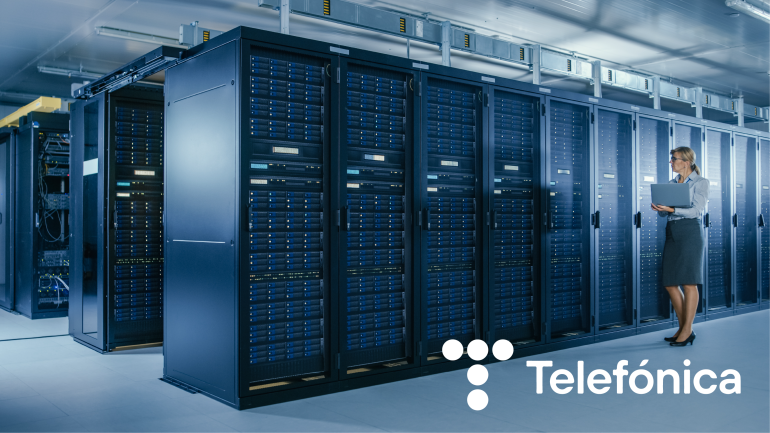
Telefonica, a Spanish international telecommunications company, has sold its four Data Centers (DCs) to a leading independent investment management company Asterion Industrial Partners in exchange for a 20 percent stake in the Nabiax hosting business. With this deal, Telefonica is forming a strategic partnership with the company’s current shareholder, Asterion and its co-investors, who retain the remaining 80% of the share capital. Two of the properties sold are located in Chile and two are in Spain. The contract includes an agreement for housing services in the four DCs on identical terms and conditions as set out in the previous transaction. The deal does not include the sale of Telefónica’s owned servers, as well as the management and access to their customers hosted on those servers. As a result, Telefónica will continue providing and managing the services it has offered to its customers from these data centers and will support…

Nvidia, Rebellions and SK Telecom are advancing sovereign AI infrastructure in Korea, combining GPUs, NPUs and NVLink Fusion to power faster telecom and VoIP services. The project targets AI data centres, network automation, fraud detection and customer care, giving operators a practical path to efficient, locally controlled intelligence at scale.
Openreach is boosting its UK optical network with national 800G services powered by Ciena, strengthening fibre backhaul for cloud, AI, data centres and VoIP providers. The upgrade delivers scalable high-capacity connectivity, helping wholesale carriers improve resilience, reduce network complexity and support next-generation VoIP, enterprise communications and digital infrastructure across Britain
SoftBank’s $3.1 billion DigitalBridge acquisition signals a shift in AI infrastructure, cloud connectivity, and VoIP network growth. With data centres, fibre, towers, and edge assets now central to digital strategy, telecom providers must prepare for rising bandwidth demand, smarter communications platforms, and next-generation voice services worldwide amid accelerating enterprise transformation
Huawei’s new optical network solutions spotlight how AI-ready fibre can transform enterprise connectivity, VoIP performance, and real-time communications. From F5G-A to intelligent campuses and data centres, Huawei is pushing low-latency, high-bandwidth infrastructure that supports smarter operations, resilient cloud voice services, and future-ready industrial AI deployments across connected sectors globally today.

Jordan and Rwanda’s new digital economy MoU could reshape telecom infrastructure, VoIP interconnectivity, cloud communications, cybersecurity, and cross-border digital services. With focus on AI, data centres, smart cities, and digital payments, the partnership offers operators opportunities to expand resilient networks and accelerate innovation across emerging African and Middle Eastern markets.

Microsoft’s $10 billion Middle East cloud and AI investment could reshape VoIP, telecom, and digital connectivity across Kuwait, Qatar, Saudi Arabia, and the UAE. With new data centres, low-latency networks, subsea capacity, and AI platforms, operators gain fresh opportunities to enhance cloud communications, collaboration, and resilient enterprise voice services regionwide
