The Dublin, Ireland-based company AirSpeed Telecom has partnered with Intellicom, an international business telephony and contact center provider, to integrate new Voice over IP (VoIP) solutions into the telecommunications products and bandwidth services provider’s existing product portfolio. AirSpeed Telecom said that this integration will assist end-users in their quest to achieve superior operational excellence and offer an enhanced customer experience. According to the statement, the new VoIP solutions encompass a full-featured business telephony and contact center system that carries voice and other multimedia traffic across broadband networks. AirSpeed Telecom noted that by leveraging the power of IP networks, businesses can improve customer service, increase workplace mobility and enhance remote working solutions, and also reduce telecommunications costs. “Our customers’ needs are changing and at AirSpeed, we like to think that we’re able to innovate to meet those developing requirements. While best known for high-class connectivity, AirSpeed is increasingly offering business-class…
NetNumber, the US-based provider of centralized signaling and routing controller (CSRC) solutions, and Voipfuture, the developer of edge technology for monitoring and analyzing voice quality in IP networks, have announced the launch of a fully-automated and intelligent routing system for voice services. This is the industry’s first intelligent platform to conduct traffic analysis for media and signaling, and transform quality information into routing actions. According to the announcement, the system will provide domestic telecommunications companies and international carriers with the capability to automatically reroute traffic in real-time in case of media quality deterioration. The rerouting and route recovery decisions will be based on the specified policies of the communication service providers (CSP). It is stated that the availability of automatic rerouting capabilities allows CSPs to improve quality by choosing more efficient downstream carriers, thereby attracting additional traffic from customers as well as OTTs and optimizing termination costs. Moreover, valuable traffic can receive…
ZTE Corporation and Intel have jointly launched the Light Cloud platform for access networks at the 5G Summit being held at Mobile World Congress 2019 in Barcelona. The Light Cloud solution is based on Intel’s innovative Edge products, impeccably integrated into ZTE’s flagship optical fiber access platform, Titan, thus merging Multi-access Edge Computing (MEC) and Network function virtualization (NFVI). The solution employs lightweight blade servers equipped with Intel Xeon D processors. When embedded in an OLT or BRAS device, the blade servers transform it into lightweight cloud infrastructure, thus reducing high capital costs and making a positive environmental impact. The infrastructure opens up computing and storage possibilities based on telecom access equipment, and allows the deployment and distribution of application-sensitive services. The access layer with cloud features is supported by built-in blade servers, and facilitates the ability to offer a wide range of cloud applications and services, including…
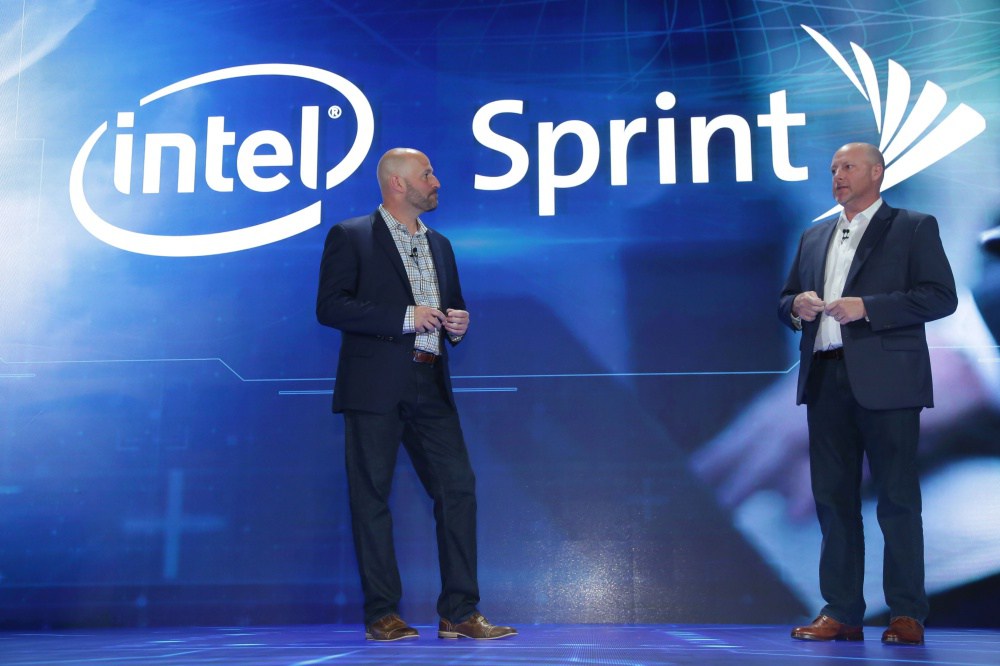
Sprint announced that 5G PCs will be available to buy in their stores next year. Those computers will be built around Intel’s chips. The operator won’t be the only one to offer 5G PCs as Acer and Asus also recently declared their plan to produce 5G Intel-based computers. With Microsoft, Dell, HP and Lenovo having already announced their plan to launch 5G laptops, the market will see a total of six companies battling for this new segment, until others tech companies come out with their own project. Intel has fought hard for this, as the company met difficulties competing with Qualcomm in implementing its chips in connected devices, especially in 4G PCs that are supposed to be available in stores this year with Snapdragon chips inside.
SK Telecom is spearheading an AI revolution in mobile networks, aiming to enhance VoIP and mobile communication efficiency through AI-powered Radio Access Networks. Collaborating with Ericsson, the focus is on 5G monetization and future 6G standardization. AI promises improved VoIP quality, ensuring superior service even in high-density environments.
Nokia and Orange are revolutionizing radio access networks through an AI-powered collaboration. Utilizing Nokia’s anyRAN 5G software and NVIDIA’s AI infrastructure, this partnership aims to enhance network performance, improve energy efficiency, and deliver new services. This innovative AI-RAN approach will optimize radio algorithms, support 6G evolution, and enable seamless, cognitive networking solutions.
The ever-evolving world of workplace technology faces a challenge with AI infrastructure shifting the dynamics of personal computing. As enterprise IT leaders anticipate rising demand for AI integration, a strategic pivot in device management becomes crucial. Exploring this AI-driven landscape can redefine VoIP systems, ensuring connectivity aligns with modern computing foundations.
OpenAI’s exciting expansion into London’s King’s Cross offers strategic implications for VoIP and Unified Communications leaders. With proximity to AI innovation hubs like Google DeepMind, OpenAI is primed to enhance regional collaborations. This move strengthens fast iterations of AI in communications, ensuring tailored solutions and compliance for UK enterprises.
As VoIP technology evolves, the telecommunications sector grapples with declining margins and complexity. Michael Weening, CEO of Calix, envisions an AI-driven shift transforming VoIP offerings, enhancing customer experience through personalization. By harnessing AI and robust platform architecture, this innovation could redefine VoIP services, driving customer satisfaction and revenue growth.
In the world of VoIP, the rapid growth of AI applications presents both opportunities and challenges. With over 3,400 AI tools in use, organizations face security risks as AI becomes integral to operations. Zscaler’s AI Protect platform addresses these risks by controlling access, safeguarding data flow, and ensuring regulatory compliance.