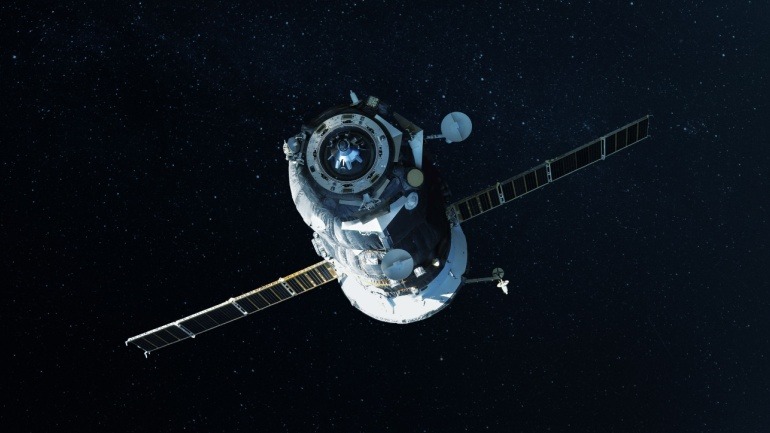
In a groundbreaking collaboration, T-Mobile US and SpaceX are gearing up for the field testing of Starlink satellites, heralding a significant stride in eliminating mobile coverage dead zones. While the exact date for the commencement of field testing remains undisclosed, T-Mobile is optimistic about its imminent initiation, stating that the low-Earth orbit deployment of satellites sets the stage for the forthcoming trials.
Amazon’s Project Kuiper and Vodafone join forces to bolster 4G and 5G availability in Europe and Africa using cost-effective low Earth orbit (LEO) satellites. This partnership aims to connect distant cellular antennas to core networks, enabling telecom services without relying on intricate fibre-based systems. With a larger goal of bridging the digital divide, the collaboration also plans to offer backup services for disruptions and connect distant infrastructure.
On July 30, 2021, Ariane 5, a European heavy-lift space launch vehicle developed and operated by Arianespace for the European Space Agency, successfully launched its first flight in nearly a year. The aim of the mission is to deploy a pair of geostationary communications satellites for commercial operators in Brazil and France. One of the satellites, called the Star One D2, will be operated by Embratel, a Brazilian telecommunications company. The Star One D2 will give Embratel the ability to expand its broadband coverage to new regions in Central and South America, supply Internet access to those in under-serviced areas, and increase X-band payload for government use in the Atlantic region. The second satellite, named Eutelsat Quantum, which was developed as part of an ESA partnership with satellite operator Eutelsat and major manufacturer Airbus, has an active antenna, a first for the European commercial telecommunications industry. This revolutionary…

OneWeb, a global communications company that provides broadband satellite Internet services around the world, has announced another successful launch of 36 Arianespace satellites from the Vostochny Cosmodrome. With this launch, the company gets closer to reaching their “Five to 50” goal and the lift off of commercial services by the end of this year. The launch took place on May 28th at 18:38 BST. The OneWeb satellites detached from their host rocket and were distributed in nine clusters over 3 hours and 52 minutes. Signals were received from all 36 satellites, indicating their operational status. This launch is the fourth in a series of five total launches needed to complete the “Five to 50” program. The program will allow OneWeb to offer connectivity in all parts of the UK, Alaska, Northern Europe, Greenland, Iceland, the Arctic Seas and Canada. The service is predicted to be available by the end…
Huawei’s MWC Shanghai 2026 vision signals a major shift for VoIP, mobile operators, and 6G networks. As AI agents, smart glasses, and cloud services demand faster uplinks, carriers may monetize both data and AI tokens, creating new telecom revenue models built on intelligent, low-latency connectivity and advanced network computing platforms.
India’s tighter review of foreign satellite broadband could reshape VoIP connectivity, rural internet access, and telecom security. As Starlink, OneWeb, and SES face scrutiny, Reliance Jio is advancing sovereign satellite plans, leasing capacity, and building ground stations to support secure, low-latency broadband for future voice over IP services nationwide deployment.
AT&T’s innovative approach utilizes satellite technology to bolster VoIP and expand connectivity in rural areas. By targeting the last mile of service, the collaboration with Verizon and T-Mobile promises enhanced VoIP coverage through pooled resources. This strategic move underscores satellite’s complementary role, optimizing VoIP without compromising terrestrial networks.
SpaceX’s IPO buzz centers around Elon Musk’s stellar ambitions, highlighting Starlink as a crucial financial engine. In 2025, Starlink served 10.3 million users globally, contributing 60% of SpaceX’s revenue. Yet, financial stability eludes them amid heavy investments in AI infrastructure and satellite advancements. Starlink’s strategic upgrades promise enhanced connectivity and broader market reach.
The evolving D2D satellite connectivity landscape in Europe is transforming mobile services. A recent Omdia report indicates a 22% engagement surge from European mobile operators in this innovative technology. As D2D integrates into existing systems, it enhances coverage, ensuring network resilience. European providers gain a unique edge by enabling direct satellite connections for unmodified smartphones, merging seamlessly with traditional networks.
AST SpaceMobile’s recent setback with the BlueBird 7 satellite underscores the challenges of enhancing global connectivity through Direct-to-Device (D2D) satellite services. Although initially promising, the positioning error prevents operational deployment. Despite this, AST remains committed to expanding its satellite constellation, emphasizing continued innovation in the VoIP space.