As Portugal’s telecom operator Nos marks two years of 5G services, it declares readiness to launch services on a new 5G standalone infrastructure. Despite the slower than expected progress, Nos’s move signifies a key contribution to the sector. Intriguingly, the viability and potential benefits of this new infrastructure remain a matter of debate. With collaborations with Nokia and Ericsson, Nos envisions a surge in ultra-low latency services.

The GSMA annual report depicts a thriving European mobile industry, contributing over €910 billion to the economy in 2022 with projections to hit the €1 trillion mark by 2030. Despite impressive mobile coverage across Europe, certain challenges persist. The report suggests mobile operators need to make sustained investments in networks to meet global competition, and regulatory reform is crucial. Yet, some caution that this could lead to higher prices and no increase in investment, exemplified by the US situation.
The online retailer, musicMagpie, recently confirmed preliminary dialogue with telecom giant BT and investment firm Aurelius, creating ripples in the wireless tech marketplace. While BT harbors plans to extend its EE customer division’s footprint in the pre-owned smartphone market, musicMagpie’s potential sale throws a thrilling spin to proceedings. It’s a pivotal situation in a rapidly evolving telecommunications world, requiring stakeholders to recalibrate their strategies to mirror the dynamic customer needs. Meanwhile, noteworthy events unfold elsewhere in the sector, promising fascinating updates.
The 2023 Asian Games offered a glimpse into the future of event tech, from eSports to AI-driven systems. Among the innovations, a standout was ‘RADICAL’, an intelligent digital solution by Huawei and China Mobile Zhejiang, designed to manage intense 5G traffic, ensuring an exceptional experience for attendees.
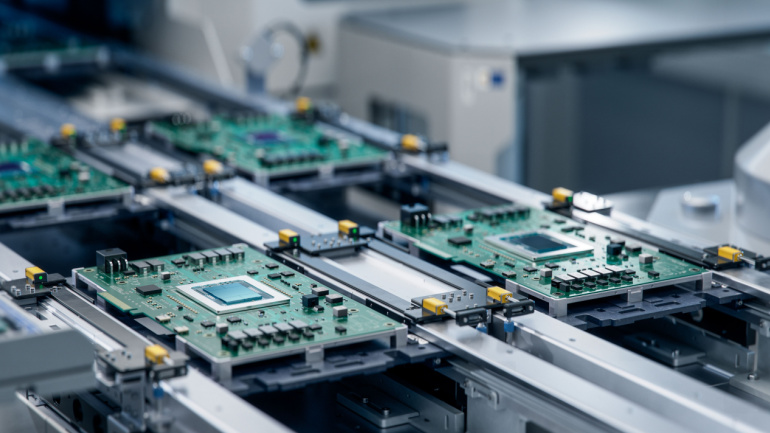
IDC predicts a promising future for the semiconductor industry, driven by AI advancements and a stock level recovery. With a refreshed outlook signaling sustainable growth, the firm anticipates global chip revenue of $526.5 billion in 2023. Progress can be seen in the revised revenue forecast for 2024, hinting at a 20.2% year-on-year growth to $633 billion.
The UK’s Department for Science, Innovation and Technology earmarked £36 million from its budget for 10 regions, highlighting a drive towards 5G innovation. Projects range from enhancing port operations to supporting advanced manufacturing and boosting tourism. However, an interesting aspect to note is the unique applications, including agricultural advancements in Sussex and the creation of 5G science parks in Oxfordshire.
Just under a year ago, the tech world buzzed with anticipation over a new partnership between chip mogul Qualcomm and satellite firm Iridium. The aim? Integrating satellite-to-phone services via Snapdragon Satellite and Iridium’s resources. However, a recent shift in direction caught the industry’s attention. Despite a successful demo, smartphone manufacturers didn’t opt to incorporate this feature, leading Qualcomm to end the agreement. Yet, in the face of disappointment, Iridium remains optimistic, envisaging an industry veering towards greater satellite connectivity. As earthquakes ripple across the telecoms landscape, all eyes await what’s next.
As the digital revolution persists, Communication Service Providers (CSPs) are redefining traditional revenue streams, with data monetisation being key to their success. CSPs have transitioned from solely facilitating connectivity to enabling fascinating digital technologies. They’re effectively tapping into the vast quantities of data from their networks to drive valuable insights. For instance, Vodafone Portugal, aided by Celfocus, successfully converted raw data into significant insights to improve operational effectiveness.
Emerging from the tech world, the AI Pin—an innovative, screen-free wearable gadget—incorporates artificial intelligence to facilitate verbal engagement and numerous other unique functionalities. Embedded into a shirt, it provides easy, hands-free access to information and personal communication. It features an unusual ability to support nutritional goals, leveraging computer vision technology to identify various food items. Functioning on the tailored OS, Cosmos, the AI Pin tries to simplify user interaction with AI, by veering away from the conventional method of downloading or launching apps. With no need for smartphone pairing and its claim of not eavesdropping on user’s conversations, it offers a fresh take on consumer technology.
Samsung enters the mobile AI game with Galaxy AI, its latest invention aimed to revolutionize smartphone experiences. Powered by Samsung-developed on-device AI and a cloud-based system, it incorporates remarkable features like real-time audio and text translation during phone calls. Alongside this, Samsung excites with Samsung Gauss, dedicated to streamlining diverse tasks from coding assistance to content translation – a move promising profound impacts on our technology interactions.