The Commission for Communications Regulation (ComReg), the Irish national regulatory authority, and the current Minister for Communications, Climate Action and Environment Richard Bruton TD have signed new regulations that will allow the release of additional radio spectrum to create extra capacity for mobile phone and broadband services. These are temporary measures taken in response to a sharp increase in the use of mobile networks, as people rely more heavily on their operators to communicate and stay connected during COVID-19 social distancing. According to ComReg, mobile operators have coped well with increased usage so far, but they have currently less headroom to accommodate further spikes in demand. ComReg Commissioner, Jeremy Godfrey, said, “The provision of this spectrum will help the mobile providers cater for the increased demand on their networks. ComReg will continue to work with industry and will support operators so that telecoms networks may continue to meet demand…
BEREC says COVID-19 won’t break the internet The Body of European Regulators for Electronic Communications (BEREC) has announced that the increase in Internet usage across the continent is more or less stabilizing and that networks have been able to withstand the pressure. BEREC said that national regulatory authorities (NRAs) have reported “a stabilization in the overall traffic, but some NRAs still observe an increase of the overall traffic.” Some operators have expanded their network’s capacity to cope with the steady growth of traffic. According to the organization, “operators, which did not take any such measure, are still closely monitoring their network’s capacity to check if an upgrade is necessary.” Read more at https://tinyurl.com/rxmg53l Vodafone slashes costs of core network functions across Europe using VMware’s telco cloud The UK-based telecoms operator Vodafone has completed the deployment of a single digital network architecture across all of its 21 European business markets, using…
The South Korean tech giant, Samsung Electronics, has announced an effective demonstration of what it terms the world’s first video call on the Amazon Web Services (AWS) cloud platform using Mission Critical Push-to-Talk, Data and Video (MCPTX, also known as Mission Critical Communications), the communications functionality designed specifically for first responders. Based on 3GPP Release 14 specifications, this implementation was enabled by the successful onboarding, integration and deployment on AWS cloud. Wonil Roh, Senior Vice President and Head of Product Strategy, Networks Business at Samsung Electronics, said, “This demonstration showcases how Samsung’s Mission Critical Communications solutions can manage public crises and be readily deployed on public cloud platforms. It also enables us to learn and adapt to the evolving needs of service providers and end-users alike. This brings a new level of broad coverage, scalability and reliability to mission critical service deployments, and we look forward to continuing our journey…
Comcast says voice and video calls have skyrocketed 212 percent during widespread self-isolation Comcast Corporation, a global media and technology company, has announced that voice and video calls have more than tripled on its network since people across the US started working from home due to the COVID-19 outbreak. According to the company, traffic in this category has increased by 212 percent in total, while overall peak traffic on its network has grown by 32 percent. Tony Werner, Comcast’s tech leader, said that the additional traffic is “well within the capabilities of the network,” and despite the increases in usage, the company’s network is working just fine. Read more at https://tinyurl.com/skncjow Zoom freezes feature development to fix security and privacy issues Over the past few weeks, the Zoom video conferencing app has been widely used for personal and business online meetings during the coronavirus lockdowns around the world. According to the…
Telstra, an Australian telecommunications and technology company that offers a full range of communications services, has officially announced the launch of its My Telstra app. The new and improved application provides an easier way to manage Telstra accounts and services, find information, shop and redeem Telstra Plus points. With My Telstra, customers will gain convenient access to billing and technical support, as well as manage their services and payments, get help, check for outages and track orders from their home. In a statement, Telstra said that its app “has been designed with accessibility at the forefront” and is built to be compliant with the Web Content Accessibility Guidelines 2.1. The company plans to update the existing Telstra 24×7 app so users can expect to see it on their phone soon. Customers who have auto-update enabled do not need to take any action – their current Telstra 24×7 app will update to…
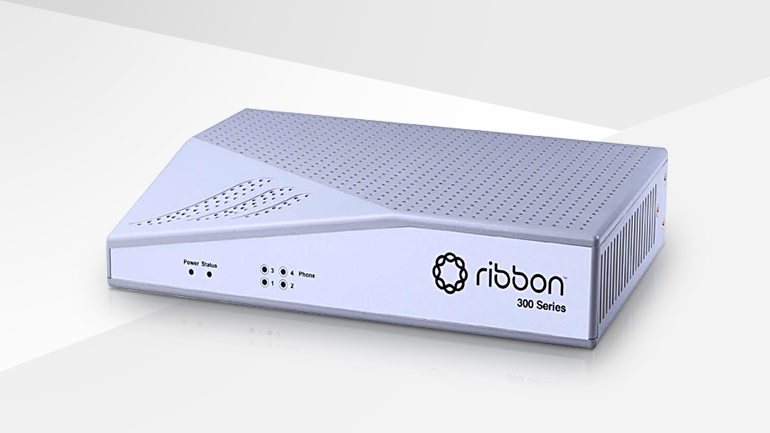
The US technology company Ribbon Communications has introduced its new EdgeMarc 300 Series to provide small businesses, home office and branch office customers that currently have analog voice infrastructure, with an easy and cost-effective way to capitalize on IP-based voice services. The cloud solutions provider said that the EdgeMarc 300 is part of the recently launched cloud-based Ribbon Next Generation Intelligent Edge portfolio, which securely connects and enhances enterprise voice and data applications, including Microsoft Teams. This portfolio of edge solutions delivers service assurance, advanced analytics, security, policy and routing functionalities for cloud communications applications. Ribbon’s EdgeMarc 300 is a survivable branch office solution that supports the integration of analog endpoints and the public switched telephone network (PSTN), as well as Session Initiation Protocol (SIP) calls. This gateway provides connectivity between analog and SIP devices, enabling branch offices to rapidly migrate analog phones to a SIP-based network and communicate seamlessly with…
Tel Q Global, a telecom hub for voice and SMS services, has selected Singapore operator Cataleya for its global voice network virtualization. With its superior technology, innovative commercial models and a world-wide footprint, Cataleya will completely virtualize Tel Q Global’s international voice network, resulting in significant cost savings and operational simplicity. According to a statement, Tel Q Global required a switching and BSS service in three global regions to be able to launch their new virtual number services in the shortest possible time. These new solutions include mobile and two-way SMS numbers, and are a highly anticipated addition to the company’s existing portfolio of DID and toll-free numbers. Moreover, the nodes also need to be used as geographic backup sites for each other, should a major disruption occur in any of the hosting centers. Ankit Agarwal, CEO of Tel Q Global, said, “Before we moved to Cataleya, we…
Hailo raises $60 million to accelerate the launch of its AI edge chip Israeli startup Hailo has raised further USD 60 million in series B funding for artificial intelligence (AI) chips, bringing its total financing to date to USD 88 million. This round, led by existing investors, was joined by strategic investors including ABB Technology Ventures, NEC Corporation, and London-based Latitude Ventures. Hailo said the new funding will help to roll out its Hailo-8 Deep Learning chip and to reach new markets and industries worldwide. The Hailo-8 could give edge devices far more processing power than before, allowing them to perform AI tasks without having to connect to the cloud. The company was founded in 2017, and its technology is designed for the automotive market, smart cameras, smartphones, drones and AR/VR platforms. Read more at https://tinyurl.com/tbwyjnb Ericsson starts manufacturing of 5G base station in Texas Sweden’s Ericsson, one of the…
The next-generation wireless technology for digital cellular networks is steadily gaining traction, with significant implementations under way. All of the major carriers are rolling out their 5G networks, targeting large cities that crave super speeds, virtually lag-free connections, extended coverage and other great benefits that are made available by this advanced technology. 5G has already been launched in many different locations around the world, but it is still considered to be in its initial stages. All of the US carriers have now launched some form of 5G cellular network. But what exactly is 5G, how fast is it compared with 4G, what will it bring to VoIP applications, and what are the benefits and drawbacks of this innovative technology? Let’s take a look at 5G in more detail. What is 5G? 5G stands for fifth-generation cellular wireless and is the next generation of telecom networks that entered the…