The strategic partnership between Workday and Google Cloud introduces AI agents into HR and finance workflows, revolutionizing enterprise operations. By embedding AI technology, they enhance employee efficiency and streamline processes. This integration signifies the growing importance of agentic HR solutions in simplifying tasks like leave management and expense tracking, optimizing VoIP communication systems in the enterprise environment.
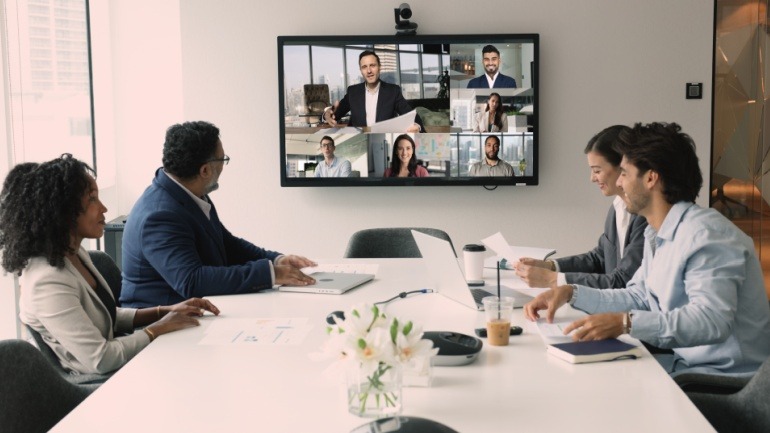
Google Beam’s transformative update now supports group meetings on platforms like Zoom and Google Meet, expanding beyond its two-person limitation. This life-size video solution projects participants without headgear, using advanced AI and light field technology. Despite high costs, its immersive experience boosts social connection and participation in hybrid meetings.
Sparkle’s QSI service extends its quantum-safe solutions to 20 Equinix IBX data centers globally, enhancing data protection against quantum threats. By seamlessly integrating with existing network infrastructure and supporting Network-as-a-Service, QSI ensures secure VPN and multi-cloud environments without significant redesigns, driving adoption and global cybersecurity advancements.
Jabra’s PanaCast U30 is revolutionizing small meeting spaces with its cutting-edge USB video bar designed for flawless BYOD video collaboration. Designed for rooms up to six people, this plug-and-play solution ensures seamless integration with platforms like Microsoft Teams or Zoom. Featuring a 120-degree wide-angle view, Intelligent Zoom, and six integrated microphones, the PanaCast U30 transforms compact areas into powerful, efficient meeting zones, perfect for businesses aiming to optimize hybrid work models.
The latest update to Meta’s Ray-Ban smart glasses introduces groundbreaking features like Neural Handwriting, which revolutionizes user interaction by allowing command inputs through subtle finger gestures. These advancements expand beyond typical notifications, integrating enhanced WhatsApp capabilities and AR recording, signaling a new era in smart glasses functionality.
VoIP providers, much like telecom operators, must focus on enriching customer experience rather than solely banking on network capabilities. The differentiating edge now lies in offering superior, personalized interactions. While 5G and technological advancements are foundational, loyalty is built through bespoke services that align with customers’ evolving digital needs.
In June 2026, Microsoft will retire Teams Together Mode, shifting focus to a more streamlined user experience. While Together Mode initially boosted social cohesion in VoIP meetings, its relevance has faded. Microsoft’s strategy now prioritizes enhanced video quality and AI-driven efficiencies, like Copilot, meeting evolving VoIP communication needs.
Airtel Business has launched Airtel Secure Workforce, a revolutionary managed security platform for hybrid work environments. This innovative solution integrates security layers into a Zero Trust Architecture, addressing the challenges of managing distributed networks. As hybrid work models proliferate, VoIP enterprises can enhance security and optimize resources with Airtel’s cohesive system.
AI agents revolutionize workforce management by enhancing productivity insights beyond traditional VoIP status updates. Embedded in 40% of enterprise applications by 2026, they streamline workload assessments across platforms, offering real-time solutions. Unlike outdated self-reporting, AI-driven tools like Google’s Remy proactively identify issues, optimizing team dynamics and preventing burnout.
Telinta, a global leader in white label cloud-based softswitch and billing solutions, announced that it has added a multi-language interface to its brandable Desktop Softphone and WebRTC solutions. Users can select their preferred language from an easy-to-use menu within the softphone. Telinta customers can offer these softphones in any language they need. Telinta’s brandable Desktop Softphone and WebRTC are currently available with default language choices of English, Spanish, Portuguese, French, and Ukrainian. Telinta customers can request any additional language needed. Desktop Softphone and WebRTC are part of Telinta’s family of brandable softphones, which all can be used in multiple languages. Telinta’s Mobile Softphone also enables end users to select language, and can automatically detect the default language of the user’s device, both phones and tablets. The softphones can support both attended and unattended transfers, BLF, a convenient Operator Panel, a PBX extension list, user status display, and more. Telinta’s brandable softphones can be customized to add a…