Dish Wireless, through its Boost Mobile branch, is courting Amazon Prime users with discounted SIM kits for its postpaid Infinite Unlimited plan. The flat rate monthly service promises unlimited connectivity, but with potential speed limits for heavy data users. However, the lack of compatible devices and reliance on AT&T and T-Mobile’s networks pose noteworthy challenges, dampen the impact of the partnership, and call into question its ability to significantly boost Dish’s customer base.
Amazon’s potential entry into the mobile market with Prime subscriptions has sparked discussions with leading carriers. While offering mobile connectivity at competitive prices, carriers and Amazon remain tight-lipped about this possibility.
Dish Network’s potential deal with Amazon may revolutionize its mobile business and offer a competitive edge against leading operators. The partnership, expected to be unveiled soon, could enhance retail exposure and propel Dish’s postpaid market growth, despite challenges with device compatibility and network deployment costs.
Amazon, the multinational technology company, has received the approval from America‘s Federal Communications Commission (FCC) to deploy 3,236 internet satellites into low Earth orbit (LEO) and to provide the US with satellite-based broadband services. The project, named Kuiper, was first announced last spring with the intent to build a LEO satellite constellation that would have the potential to provide cost-effective broadband services to unserved and underserved communities around the world. A project of this magnitude requires a great amount of resources, therefore Amazon will invest more than $10 billion in the project. This investment will not only provide broadband services, but will also create workplaces and infrastructure around the United States. Dave Limp, senior VP at Amazon, commented: “There are still too many places where broadband access is unreliable or where it doesn’t exist at all. Kuiper will change that. Our $10 billion investment will create jobs and…

The US tech company Ribbon Communications, a global software leader providing IP-based real-time communications security and software solutions, has extended its collaboration with Amazon Web Services (AWS) to enable the simplified forwarding of VoIP audio streams to Amazon Chime Voice Connector by using SIP-based Media Recording (SIPREC). Ribbon’s Session Border Controllers (SBCs) with SIPREC capabilities can forward audio streams to AWS for real-time, automated call analytics and recording. Ribbon is a member of the AWS Partner Network (APN), whose SBC Software Edition (SWe) is available in the AWS Marketplace and as an AWS Quick Start. In March 2019, Ribbon reported that its SBC SWe was successfully tested with the Amazon Chime Voice Connector, to help customers move their SIP trunking workloads to AWS. The company said that IT professionals can use the Connector for low-cost SIP trunking with on-premises or cloud-based phone systems. Sid Rao, General Manager at Amazon…
After suing Apple over patents infringement VoIP-Pal is determined to launch the exact same process with Amazon. The lawsuit has been filed in Nevada, and is focusing and Amazon’s cloud-based virtual assistant, Alexa, especially on its calling and messaging services. The Washington-based company blames Amazon for using the very same four patents that it is suing Apple for. In Amazon’s case, the technology is used to make function voice and video calls or voice messages. Voip-Pal is trying to make profits from patents they own that are based on VoIP technology. The CEO of Voip-Pal, Emil Malak said, “After investigating Amazon’s Alexa platform and Echo line of products our technical team has concluded that the calling and messaging functions infringe our patents. Amazon’s foray into communications seems to be part of a larger trend of giant corporations battling for market dominance by offering Internet-based communication products that integrate with traditional…
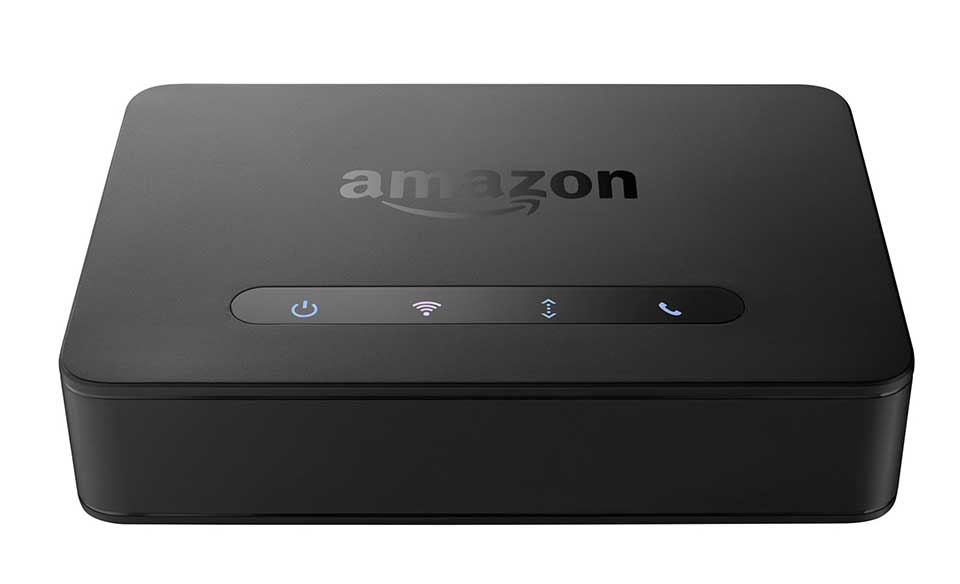
Amazon announced at a press conference that the Echo Connect, a device that uses Alexa – Amazon’s voice-activated digital assistant – can turn your home phone into a smart, hands-free speakerphone that can call any landline number or contact from your phone. It also allows you to call 911 for emergencies using only your voice. According to the online retailer, the Echo Connect will work with your existing home phone service, whether it’s landline or VoIP, but you must have an Echo speaker in addition to the Echo Connect. The Echo Connect plugs into a standard phone jack or VoIP adapter and connects wirelessly to your Echo device. Once it is all set up through the Alexa app, you can use your Echo speaker to ask Alexa to call anyone from your contacts list, and they will be able to see your home phone number on their caller ID. Likewise,…
Starlink’s faster broadband is reshaping VoIP connectivity, with Ookla reporting major upload gains and stronger nationwide performance ahead of V3 satellite launches. As urban adoption grows and dynamic pricing emerges, businesses and remote users must weigh improved voice quality, uptime, and latency potential against uncertain internet costs for cloud communications.
AI infrastructure spending is echoing past telecom cycles, where costly fiber builds hurt investors but later powered cheaper networks. For VoIP providers, cloud communications, and telecom operators, the lesson is clear: data centers, power access, and utilization will shape future AI pricing, network economics, and next-generation voice services worldwide success.
UK space cleanup funding highlights a growing challenge for VoIP and telecom networks: sustainable connectivity. As satellites power broadband backhaul, emergency communications, global IoT, and AI-RAN growth, orbital debris and energy-hungry data centers raise new risks. Operators must balance innovation, reliability, greener infrastructure, and future-ready voice services worldwide at scale.