Italian telecom provider Wind Tre faces hurdles in selling infrastructure due to complex 5G network sharing negotiations with rivals Iliad and Fastweb. CK Hutchison delays the deal closure by three months to February 12, citing challenges with Iliad and Fastweb. Meanwhile, Indosat Ooredoo Hutchison’s $6 billion merger in Indonesia with Huawei’s support achieves significant growth. France’s Orange introduces satellite broadband, while Norway’s Telenor sells its satellite operations. FCC’s new broadband rules target discrimination, raising concerns of unintended consequences. Mavenir and Nokia achieve remarkable Open RAN interoperability, overcoming past criticisms and showcasing commitment to multi-supplier systems.

President Biden’s administration has launched an extensive review of over 2,700 megahertz of spectrum, perceiving its significant role in the nation’s technological leap. The initiative intends to implement a well-grounded American spectrum strategy, focusing on fostering tech advances, heightening public understanding about its economic role, and fostering a cooperative national framework.
After the whopping $6.2 billion acquisition by Inmarsat, Viasat is readying for a major reorganization, with a planned 10% workforce reduction. The move, affecting approximately 800 roles, aims for a substantial year-on-year cost-saving starting from 2025. Despite the promising financial outlook, the firm accepts the substantial costs linked with these transitions, yet considers them a vital investment for the future.
In a pioneering collaboration, Samsung, Vodafone, and Orange have achieved a significant breakthrough by completing the first 4G calls over shared networks in rural Romania using Open RAN technology. This milestone, with the promise of integrating 2G and 5G, signifies a transformative step towards more efficient, sustainable, and innovative telecommunications.
VoIP continues its growth trajectory, serving both businesses and individuals for internet-based calls and messaging. Predictions for the next decade include 5G integration, AI-driven enhancements, IoT synergy, and mobile VoIP expansion. VoIP adoption will increase globally, cybersecurity investments will rise, and it will be integral to customer-centric strategies. Ultimately, VoIP may replace PSTN, undergo infrastructure improvements, and remain promising with 5G and AI advancements.
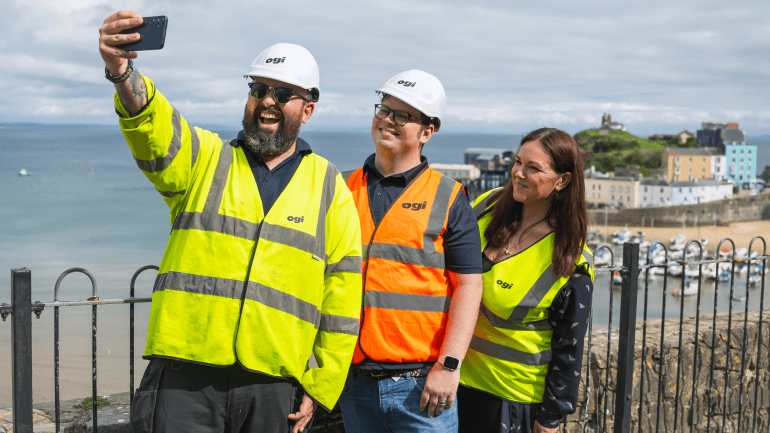
Wales’s leading alternative telecoms provider – Ogi – has revealed plans to bring full fibre connectivity to Tenby, one of Pembrokeshire’s most iconic seaside towns. Tenby is the latest of over 60 communities across south Wales to benefit from Ogi’s privately backed broadband rollout launched in 2021. Once work to connect around 5,000 premises in the town is complete, Ogi will be the leading alternative choice in much of west Wales.
As Nokia unveils its latest collaboration with Brazil’s Jacto for a new private network, we see industry lines blur, with telecom revolutionizing agriculture. As expected, automation will dominate, revolutionizing production lines in Jacto’s massive smart factory. A key player in this transformation – 4.9G/LTE and 5G connectivity, allowing various aspects of manual labor to be automated. A ground-breaking stroke, this could signal the advent of a new era in Latin America’s agriculture-tech crossover. Moreover, Nokia’s innovative compact DAC private wireless offering reveals the company’s flexibility and adaptability.
The EU’s first annual State of the Digital Decade report highlights an urgent call to action for increased investment to meet its 2030 technology targets. The report underlines the significance of collective efforts by member states to successfully navigate the prevalent digital transformation. The document illuminates areas such as 5G deployment, which has been slower than expected, and inadequate fiber network coverage, among others. Simultaneously, it draws attention to other essential aspects, like digital sovereignty and the digitalization of businesses, suggesting an additional investment of at least €200 billion may be necessary. Issues such as these could hamper the bloc’s ambition to double its share in the semiconductor sector by 2030.
T-Mobile US’s reported negotiations with Tillman FiberCo to utilize their fiber-to-the-premises (FTTP) infrastructure could significantly shape the retail fiber market. T-Mobile previously expressed interest in the fiber broadband sector, and partnering with Tillman could mitigate potential expenses of such endeavor. This potential venture aligns with Tillman’s recent strategic alliance with Northleaf Capital Partners, pooling $200 million for the FTTP rollout. While coverage plans remain unclear, this project is likely substantial and may lead to T-Mobile formally stepping into the fiber broadband landscape.
Prominent UK telecom companies like BT, VMO2, and Vodafone have been selected beneficiaries of government funding for research into Open RAN technology. Innovative projects, with a focus ranging from energy efficiency to security, will share in the £88 million ($121 million) funding. The main goal is to figure out whether Open RAN can rival traditional RAN, especially in high-traffic areas and rural deployments, in terms of cost, reliability and energy consumption.