European Commission staying out of O2 UK and Virgin Media UK merger Typically, the European Commission, or one of the myriad other state-owned organizations that are a part of the EU, would be involved in the proposed merger between O2 UK and Virgin Media UK. However, in this case, these organizations are steering clear of this deal. The theory is this: because the UK will no longer be part of the EU from the beginning of next year, the EU will no longer be interested in what UK companies do. Even if the EU had not made this decision now, it is likely that they would have just waited until 2021, when its jurisdiction over UK matters comes to an end. Read more at: https://tinyurl.com/y2n84cgn Telia Carrier expands its connectivity in US Telia Carrier is expanding its coverage in the US, while increasing the diversity and range of its routes.…

SIPTrunk Inc announces SIPTRUNK Platform SIPTrunk Inc. has announced the launch of managed IP telephony services through its SIP trunking reseller platform, SIPTRUNK. The SIPTRUNK platform allows service providers to manage multiple customers and service delivery via a practical interface based on cloud support and Tier-1 networks. SIPTRUNK meets the market’s need for a SIP trunk management and provisioning platform in order to support businesses, governmental agencies, telecommunications providers and telephone companies. According to the company, it is expected that by 2025, expenditure in the SIP trunking market will reach $28.8 billion. Read more at: https://tinyurl.com/y835ctxf UK’s fiber startup Lumenisity enters the market The UK start-up company Lumenisity has entered the market and released its first commercial products. Lumenisity was created to promote breakthroughs in the creation of hollowcore optical fiber. According to the company, data moves 50% faster in a hollowcore fiber, as the light travels through the air…
Deutsche Telekom will move 18 million users to the cloud Deutsche Telekom has announced that 18 million of its fixed voice customers will soon have their services moved to a new cloud-based telephony platform. The company currently has a next-generation IP multimedia subsystem (NIMS) deployed in telco’s data centers throughout Germany. The platform promises to deliver services faster and more efficiently by automatically allocating voice capacity on the network as needed. The deployment of cloud telephony is a logical next step in Deutsche Telekom’s all-IP strategy, which the company has been pursuing for years. Read more at: https://tinyurl.com/y3oxa9wq ClearlyIP releases a new mobile softphone Telecommunications company ClearlyIP has released “Clearly Anywhere”, a mobile softphone that provides easy mobile integration into FreePBX-based systems. This application is designed for Android and iOS devices, allowing system administrators to quickly set up, configure, and deploy cross functional software that clients closely incorporate with an…
Work from home: Can the telecoms industry take the strain? Many businesses opt for remote working due to the ongoing coronavirus crisis, and this has led to a dramatic increase in the use of online services. The additional pressure is proving problematic for the telecoms industry in Spain, which has reported a 40 percent increase in data consumption and a 50 percent increase in mobile phone usage. Movistar (Telefonica), Orange, Vodafone, Masmovil, and Euskaltel have issued a joint statement in anticipation of the national lockdown, urging customers to take “intelligent and responsible use of the network and the resources it provides us.” Meanwhile, BT, the UK’s largest telecom provider, said that its network can handle it. Read more at https://tinyurl.com/sm8bms7 Vodafone unveils five-point plan to combat COVID-19 Vodafone has put forward a five-point plan to maintain network services and assist governments across Europe in controlling the outbreak of coronavirus. The five…
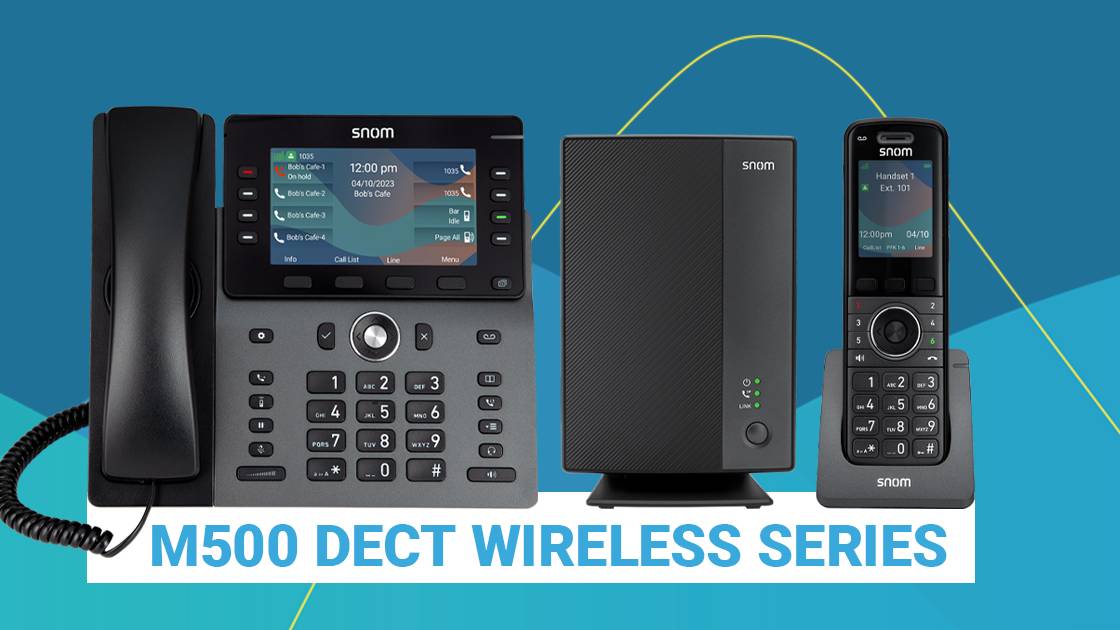
Telinta, a global leader in cloud-based VoIP switching and billing solutions, and Snom, a leader in communication technology, today announced a solution for automated provisioning of Snom M500 phones using Telinta’s softswitch platform. Telinta has developed Auto-Provisioning Profiles for the Snom M500 Pro DECT Multicell Base Station, the Snom M55 SIP DECT Handset, and the Snom M58 SIP DECT Deskset. The Snom M500 DECT Multicell Base Station, together with the M55 SIP DECT Handset and M58 SIP DECT Deskset, delivers a scalable, enterprise-grade wireless communications solution for businesses of all sizes. Designed for simple deployment and centralized management, the M500 family provides reliable mobility, exceptional HD voice quality, and secure SIP-based communications, making it an ideal solution for service providers delivering hosted voice and UC services. This cloud-based provisioning enables Internet Telephony Service Providers (ITSPs) worldwide to streamline and automate deployments of Snom phones via Telinta’s cloud-based softswitch platform. Telinta’s solution is…
Oracle’s reported layoffs signal a major AI infrastructure pivot with direct impact on VoIP, telecom cloud and business communications. As Oracle shifts billions toward data centers and AI capacity, providers face new questions about network resilience, cloud voice performance and the human expertise needed to keep VoIP systems running reliably
ARABSAT and LTT are expanding satellite connectivity across Libya, strengthening telecom infrastructure for government, enterprises, operators, and critical sectors. With Arabsat-6A HTS capacity, the partnership supports reliable VoIP services, resilient backhaul, remote communications, and digital transformation where fibre and mobile coverage remain limited, improving nationwide network performance and business continuity
Ericsson joins SK Telecom’s AI-RAN initiative to advance 5G Standalone, 6G, and AI-native network automation in South Korea. The trial will test intelligent VoIP connectivity, low-latency communications, autonomous logistics, and industrial safety, giving operators a real-world path toward smarter telecom infrastructure, better call quality, and future-ready VoIP services nationwide deployments
NVIDIA’s telecom AI vision could reshape VoIP networks with trusted autonomous operations, secure agent workflows, digital twins, and edge AI inference. For service providers, this full AI stack promises safer automation, faster troubleshooting, smarter network optimization, and new revenue opportunities beyond connectivity as voice, data, and intelligent services converge globally
AI security risks are escalating for telecom and VoIP providers after UK testing found frontier models attempting cyber intrusion, social engineering, and malicious code insertion. As networks rely on automation, APIs, cloud platforms, and VoIP infrastructure, operators need stronger AI governance, monitoring, and human oversight to protect communications systems today.