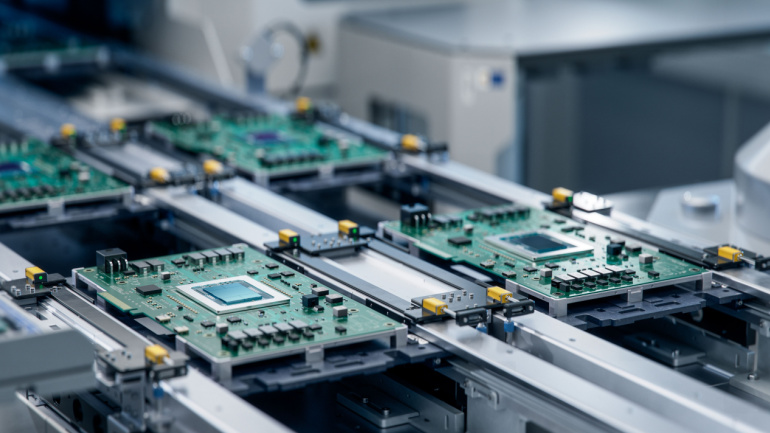
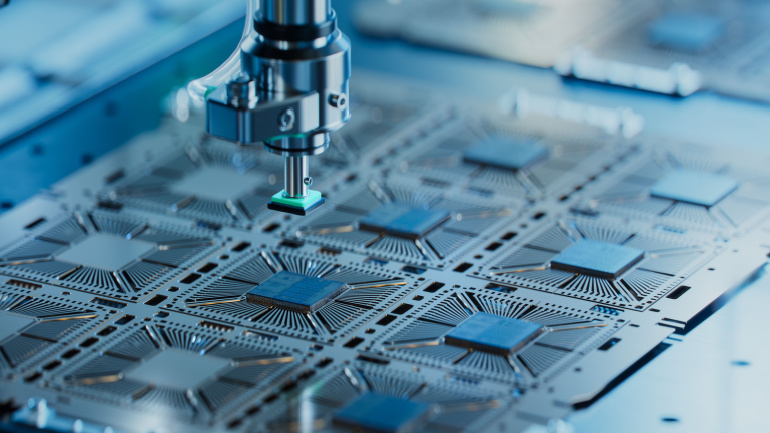
The United Kingdom is set to enhance its semiconductor research capabilities significantly, following the government’s decision to join forces with the European Union’s Chips Joint Undertaking (JU). This collaboration marks a pivotal step in the UK’s efforts to strengthen its position in the global semiconductor arena, promising to inject new energy into its research and innovation sectors.
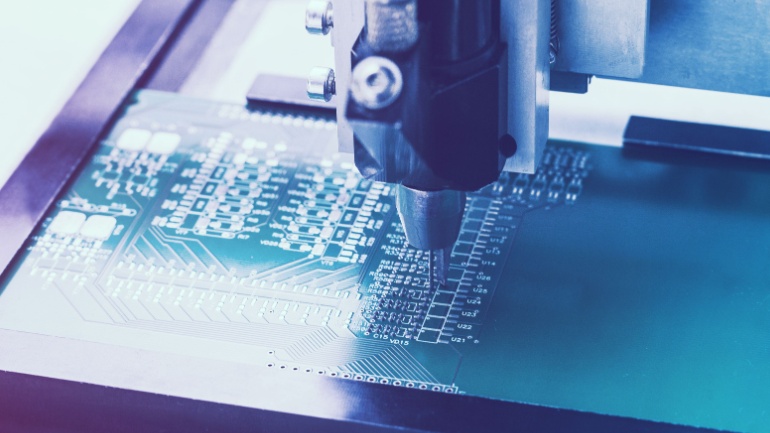
In a major development, AI semiconductor giant SAPEON is partnering with DOCOMO Innovations to boost AI services. Their focus ranges from Large Language Models to computer vision AI applications. The collaboration will leverage SAPEON’s latest AI semiconductor, the X330, expected to revolutionize sectors including finance and health. The high-performing X330 not only doubles its predecessor’s power efficiency but permits enhanced operations like voice recognition and automated responses.
In a significant move to strengthen its position in the global semiconductor industry, the Japanese government has committed approximately $307 million in subsidies to a high-profile semiconductor project. This initiative brings together major players NTT from Japan, Intel from the United States, and South Korea’s SK Hynix. Their collaboration focuses on the development of advanced optical semiconductor technology, which promises faster data processing speeds and reduced energy consumption compared to traditional electrical semiconductors.
IDC predicts a promising future for the semiconductor industry, driven by AI advancements and a stock level recovery. With a refreshed outlook signaling sustainable growth, the firm anticipates global chip revenue of $526.5 billion in 2023. Progress can be seen in the revised revenue forecast for 2024, hinting at a 20.2% year-on-year growth to $633 billion.
In a strategic move, Intel has decided to sell 10% of IMS Nanofabrication to Taiwan Semiconductor Manufacturing Company (TSMC), aiming to accelerate the development of cutting-edge lithography technology, vital to the production of state-of-the-art semiconductors. IMS, a leading producer of essential chip-manufacturing components, plays an essential role in the complex world of mobile devices and similar applications. The investment is expected to enhance IMS’ independence to address significant growth opportunities for multi-beam mask writing tools.
The US and India strengthen their strategic partnership, focusing on 6G research, Open RAN, and semiconductors, while collaborating on technology sharing, co-development, and co-production opportunities between industry, government, and academia.
ADI invests €630 million to expand its Limerick operations, tripling fabrication capacity and fostering innovation through the €100 million ADI Catalyst Centre. Meanwhile, energy efficiency becomes a priority for 5G Massive MIMO and future 6G development.
The European Commission allocates $9.2 billion for R&D initiatives in telecoms and semiconductor sectors, targeting innovative microelectronics, 5G and 6G technologies. To support digital sovereignty goals, private investment of $15.5 billion and 56 companies are involved.
China’s leap into 6G technology heralds a transformative era for VoIP and telecommunications. With the Chinese Ministry of Industry and Information Technology allocating the 6GHz band for real-world testing, this pivotal move underscores China’s ambition to lead the 6G revolution. The trials, involving giants like Huawei and ZTE, innovate VoIP’s future connectivity.
In the world of VoIP, the rapid growth of AI applications presents both opportunities and challenges. With over 3,400 AI tools in use, organizations face security risks as AI becomes integral to operations. Zscaler’s AI Protect platform addresses these risks by controlling access, safeguarding data flow, and ensuring regulatory compliance.