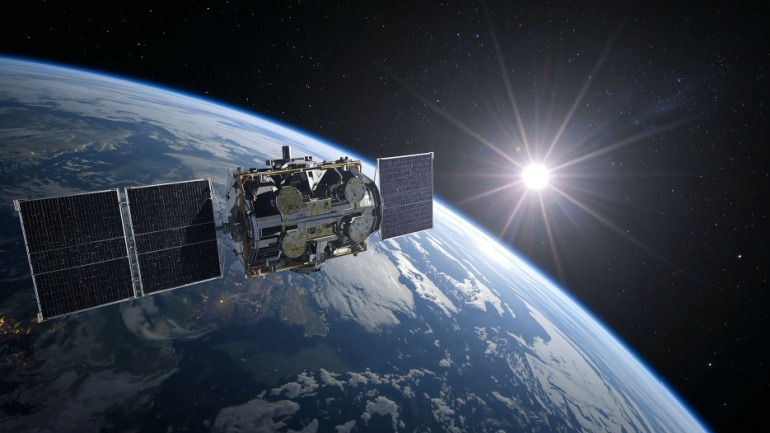
The Federal Communications Commission (FCC) recently approved Amazon Leo’s request to launch 4,500 additional low Earth orbit (LEO) satellites. This substantial expansion boosts the planned network to a total of 7,727 satellites. Amazon Leo, previously recognized as Amazon’s Project Kuiper, is positioning itself as a contender against Starlink in the satellite internet domain.
The newly approved units include 3,212 of Amazon’s more advanced Gen 2 satellites, while 1,292 Gen 1 satellites will enhance coverage in polar regions, such as the northernmost areas of North America and Europe. The FCC mandates that Amazon launch 50% of the satellites by February 2032, and the rest by February 2035.
Amazon has been under pressure to accelerate its deployment. Last year, it launched its initial batch of Gen 1 satellites, but progress has been slow. Merely 180 of the intended 1,616 satellites have been sent into orbit, prompting Amazon to request an extension from the FCC. The company is seeking to delay its initial deadline to July 2028 or even have it removed altogether.
Compared to Starlink, which already boasts close to 9,000 satellites in orbit, Amazon’s path is challenging. Starlink recently received FCC approval to further expand its constellation to 15,000 satellites. Despite these challenges, Amazon Leo aims to roll out its commercial services later this year.
In a significant partnership development, maritime connectivity reseller MTN announced it will be offering Amazon Leo’s services to the maritime sector. Although MTN’s strategy heavily relies on Starlink, it also collaborates with other satellite providers like OneWeb and geostationary operators to deliver robust hybrid connectivity solutions. “But Starlink is only part of the solution. MTN combines LEO networks like Starlink and OneWeb with GEO satellites, wireless, and near-shore RF to deliver a hybrid model that consistently outperforms legacy connectivity.”
Ultimately, the FCC’s approval opens a new chapter for Amazon Leo, but significant hurdles in deployment remain. The market dynamics between Amazon Leo and Starlink will be keenly watched, especially how these two players shape global satellite-based connectivity possibilities.