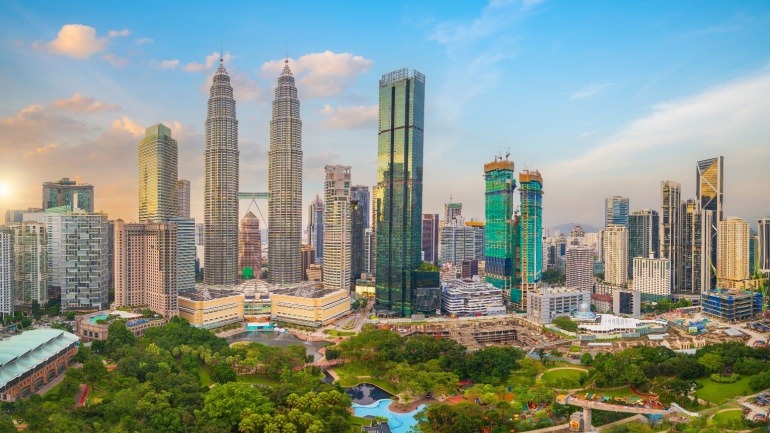
Malaysia’s evolving digital landscape is paving the path toward a robust digital economy, driven by advancements in 5G and Artificial Intelligence (AI). Recent reports from the Department of Statistics indicate a promising economic pivot, with a shift from traditional resource-driven growth to higher-value sectors like manufacturing and services. This shift is crucial as the nation positions itself as a digital leader.
The combination of AI and 5G is central to this transformation. While AI offers automation, increased productivity, and improved decision-making, 5G provides the necessary connectivity for AI to flourish. This synergy is expected to enhance connectivity across industries, public services, and more, significantly impacting Malaysia’s economic landscape.
Malaysia’s adoption of a dual 5G network is a critical step toward this digital evolution. This approach enhances flexibility, encourages competition, and aligns with both Western and China-based technological frameworks. It can help mitigate geopolitical risks and attract foreign investments. Indeed, foreign investment showed a substantial year-over-year increase of 47.5% in 2025, reflecting growing international confidence.
Investments in AI are already reshaping Malaysia’s infrastructure, with developments in sovereign AI cloud and the launch of its Large Language Model, ILMU. This commitment to domestic capability development underpins Malaysia’s growing digital economy.
The nationwide rollout of 5G has achieved significant coverage in populated areas, earmarking its potential as an economic enabler. Not only does it offer consumer benefits like faster speeds, but its real economic value emerges from powering industries such as healthcare, logistics, and public services with real-time data and automation capabilities.
As Malaysia aims for digital leadership, trust and security in digital infrastructure become paramount. The nation is embedding robust security measures to secure data flows, ensuring that digital advancements align with geopolitical and economic interests.
The dual 5G network model further strengthens Malaysia’s position as a stable and neutral destination for tech investments. Supporting multiple technology infrastructures can make Malaysia a regional digital hub in Southeast Asia. Large-scale investments from hyperscalers and tech firms are already leveraging this to establish bases in Malaysia, indicating trust in its strategic direction.
In essence, Malaysia is transforming from a digital adopter to a digital pioneer. With continued investment in AI and 5G, alongside supportive policies, the nation is well positioned to capitalize on digital technologies as a substantial economic force by the mid-2030s. Sustained efforts in workforce development and infrastructure improvements will be crucial to realizing this future.