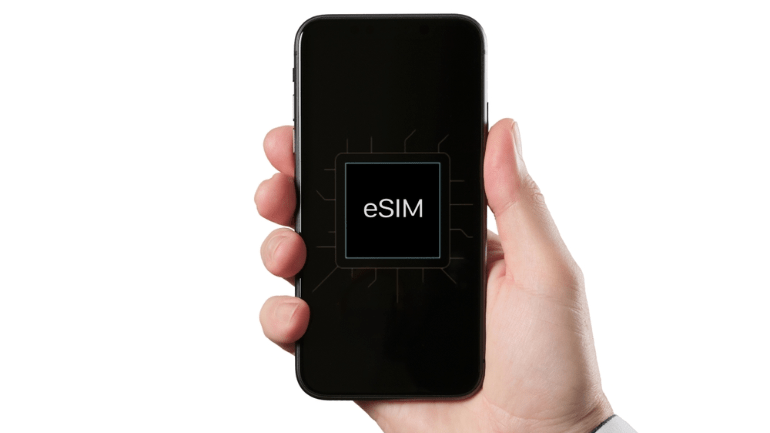
The world of mobile communications has long grappled with balancing user-friendly convenience against strict corporate compliance. The latest breakthrough by Wildix presents a game-changing evolution—launching a new eSIM feature within its Mobility Cloud suite. The update aims to address the persistent issue of what they term “blind spots” in enterprise data flow.
Essentially, the addition of an eSIM expands Wildix’s mobile communications capabilities, establishing a seamless connection between personal smartphones and the company’s central data architecture. What stands out in this development is the direct integration of business mobile calls into corporate workflows, eliminating the segregation between a personal mobile device and corporate infrastructure.
Traditionally, mobile business calls have operated separately from central systems, creating a disconnect many organizations find challenging to bridge. The new eSIM feature resolves this by routing calls through the Wildix Mobility Cloud, effectively treating each interaction as a SIP-based enterprise call, regardless of location. This not only strengthens compliance but ensures that business identity, availability, routing, and policy controls remain intact.
Dimitri Osler, Co-founder and CIO at Wildix, emphasized the fluidity of work today and the need for mobility solutions that provide continuity for business conversations.
The innovation doesn’t stop at integrating voice transport; rather, it extends to data capture capabilities. The eSIM can utilize voice AI, enhancing mobile conversations with real-time transcription, sentiment analysis, summaries, and structured outcomes. These insights are fed directly into the company’s sales intelligence layer, converting previously elusive mobile data into actionable insights.
In a market where Unified Communications (UC) vendors have often relied on smartphone apps to simulate desk phone functions, this Wildix advancement recognizes user preferences for native phone apps. Historically, enterprise apps have suffered from adoption challenges due to screen fatigue, latency, and battery drain. That leads many users to default to the native dialer they are accustomed to.
By shifting intelligence to the network layer, Wildix addresses these issues, highlighting a crucial disconnect in the workforce today. Enterprises lose visibility when users bypass additional apps, favoring regular cellular calls. This underscores the strategic shift towards Fixed-Mobile Convergence (FMC), a priority area for many CIOs who aim to secure and make sense of data from existing tools rather than introducing new, complex solutions.
For end-users, especially those frequently on the move like sales directors or field technicians, the impact is significant. Personal and business identities can now merge seamlessly on one device. A real estate agent could call a client from their personal phone, ensuring the caller ID aligns with office numbers and adheres to professional protocols.
This setup minimizes admin work. The Wildix eSIM allows automatic call logging and integrates strongly with AI. Salespeople who finish a call will find the conversation already transcribed, summarized, and uploaded to the CRM, saving time and harnessing their mobile into an interactive business network node.
Today’s mobile device users have muscle memory for native dialers, and Wildix’s solution capitalizes on that familiarity. By providing an innovation that requires minimal behavioral changes, they close the gap between personal convenience and enterprise compliance, ensuring companies capture every detail of crucial business interactions.