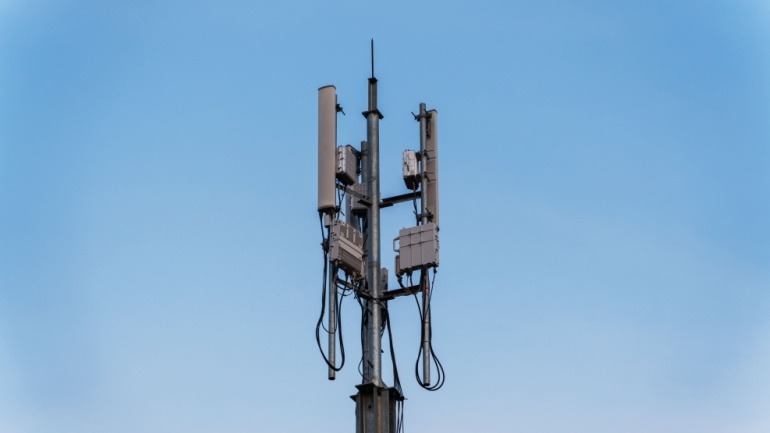
After years of cautious testing, Cargill, a major player in the US manufacturing scene, has accelerated its deployment of private 5G networks, scaling from 20 to 50 sites in just six months. This rapid expansion, in collaboration with NTT Data and Celona, marks a shift from viewing private 5G as a niche technology to recognizing it as a fundamental infrastructure across its global operations.
The speedy rollout indicates one of the fastest large-scale industrial deployments in the sector. Significantly, Cargill prefers not to focus on single-use cases. Instead, it sees private 5G as a universal service, akin to advanced Wi-Fi, providing robust connectivity essential for Industry 4.0 initiatives.
This development places Cargill alongside progressive industrial users like Airbus and John Deere. Cargill’s approach is pragmatic but ambitious, aiming for transformative industrial changes through foundational connectivity.
Since mid-2025, Cargill has worked closely with NTT Data and Celona to implement the Celona AerFlex system for global private 5G deployment. The partnership initially started with tests at 20 satellite offices, focusing on enhancing manufacturing processes and efficiency.
By early 2026, the deployment reached 50 sites across the US and Europe, with further expansion plans underway. These initiatives aim to support automation, robotics, and digital operations, alongside integrating AI workloads into its facilities. For instance, Boston Dynamics’ Spot the Dog is used for inspecting and monitoring hazardous areas at Cargill’s Amsterdam plant.
The specifics of spectrum usage in these deployments remain vague, though inferred from previous interviews and regulatory environments. In the US, the systems likely utilize the CBRS band, while in Europe, dedicated mid-band spectrum is used.
Cargill is also implementing an ERP platform from SAP, enhancing real-time data exchange and workforce connectivity. This move, driven by engineering director Robert Greiner, signifies a philosophical shift from isolated 5G use-case deployments to viewing the technology as integral infrastructure.
Greiner emphasizes that the true potential of private 5G is not realized through piecemeal deployment but rather through its ability to support various applications, much like Wi-Fi in corporate settings. This broad vision for 5G suggests it should be foundational, not just functional for specific tasks.
As private 5G technologies integrate into industrial landscapes, Cargill’s experience sheds light on the technology’s transformative potential, advocating for its use as a standard rather than an experiment.