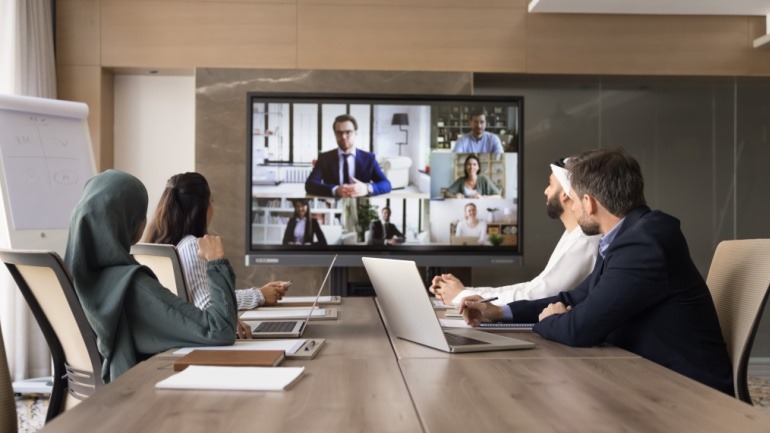
The meeting room market has entered a new phase. Platform choice no longer defines every room. Enterprise demand now pushes vendors toward practical interoperability, not closed ecosystems.
At InfoComm 2026, that shift became clear. Companies want rooms that handle any meeting link. They also want the experience to feel natural. A basic connection no longer satisfies users or IT teams.
Research from Cisco suggests up to 85% of enterprise IT teams support multiple meeting platforms. Many firms standardise internally on one system. Yet customers, suppliers, and partners often use another.
This creates daily friction. A room may support a call technically. Still, users may face limited controls, weak content sharing, or missing AI features. That gap now drives buying decisions.
Cisco and Zoom addressed this directly with Cisco Devices for Zoom Rooms. The offer brings native Zoom Rooms experiences to Cisco hardware. It covers devices from desk systems to larger room kits. Public beta access is open, with general availability planned for September.
The move goes beyond older SIP guest-join options. Those methods often delivered reduced features and separate management. The new model gives users a Zoom interface on Cisco devices.
Espen Løberg of Cisco said customer pressure shaped the partnership.
It’s really been our joint customers that have brought us together and enabled us to do this.
For enterprises, this approach offers useful flexibility. IT teams can keep preferred hardware and network tools. Users can work in the platform they know. Businesses may also avoid building separate rooms for every service.
However, this model also raises new questions. Native experiences differ across vendors and platforms. Management can become complex when estates mix services. Security policies also need careful alignment across meeting environments.
Meanwhile, Microsoft and Google have also moved in this direction. Google Meet rooms can join Teams meetings. Windows-based Teams Rooms can join Meet meetings. These links now work by default in supported environments.
Logitech has long served mixed-platform rooms through USB devices. That helped users connect laptops to almost any meeting service. Yet customer expectations have moved higher.
Henry Lavek explained the new demand clearly.
“People want to see more of it, they want it to be simpler, and they want more native experiences when switching between different applications and services.”
Neil Fluester of Logitech added important context.
“Traditionally, back 10 years ago, everything was about SIP and H.323 and everything was a walled garden.”
That older world made rooms difficult and rigid. Today, users expect one click and a familiar interface. They do not want to think about platforms during meetings.
Fluester summed up the real goal.
“When the technology can blend away, people can come into a meeting and concentrate on their meeting, that’s when it works.”
The next meeting room battle will not reward the longest feature list. It will reward the smoothest experience across Microsoft Teams, Zoom, Webex, and Google Meet.
For buyers, one question now matters most. Can the room support every meeting without reminding users about the technology? If yes, interoperability has finally become invisible.