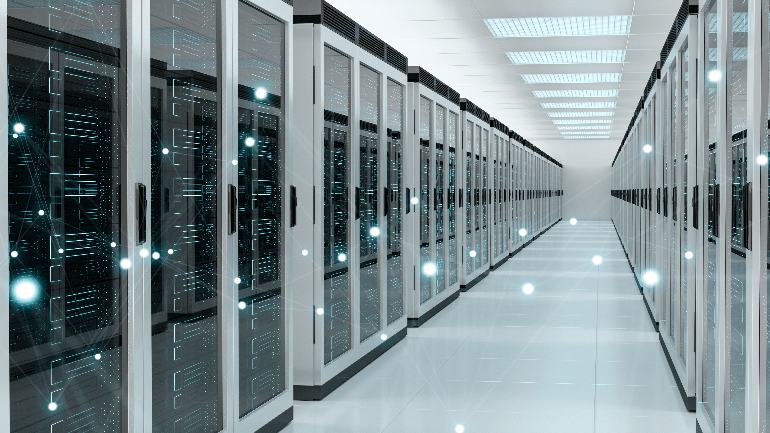
For years, Power Usage Effectiveness guided data center efficiency plans. But AI systems now change the equation. A site can score well on PUE and still waste energy during inference.
Inference is the stage when an AI model answers a request. Operators increasingly ask how much energy each answer takes. That metric pushes attention beyond cooling rooms and building systems. It also brings the optical network layer into focus.
Modern AI clusters depend on fast data movement. A high-performance GPU server may use ten or more optical transceivers. These links support communication across spine, leaf, and server switches.
As speeds rise to 800G and 1.6T, optics draw serious power. Moving data can approach the energy cost of computing it. That makes optical design a board-level and room-level efficiency issue.
This is where Linear Pluggable Optics gain attention. LPO modules remove the Digital Signal Processor and Clock Data Recovery function. These parts normally clean and re-time the signal inside the module.
In full re-timed optics, the DSP can use around 40% of module power. LPO shifts signal work to the host switch silicon. The switch’s SerDes then handles serialization and deserialization tasks.
The energy impact can be meaningful. An 800G link may fall from about 13W-16W to 7W-9W. Lower module power also means less heat at the switch faceplate.
That heat reduction matters in dense AI halls. It can ease cooling demand and reduce pressure on HVAC systems. For large clusters, small savings multiply quickly.
LPO can also cut latency. Traditional optics may add around 100 nanoseconds. LPO can reduce that figure to under 10 nanoseconds. That improvement supports faster AI training and more responsive inference workloads.
However, LPO does not fit every deployment. The host switch must provide strong signal handling. Many early rollouts align with newer platforms, including Tomahawk 5-class architectures.
Distance also remains a key factor. LPO typically suits shorter links, often below 500 meters. Cable quality and board layout also become more important. Without onboard re-timing, weak signal paths leave less room for error.
Still, operators do not need a sudden migration. LPO can work alongside standard full re-timed optics. This allows hybrid networks and phased upgrades inside the same fabric.
The wider message is clear. AI efficiency now depends on every watt along the data path. GPUs and cooling systems remain important. Yet the optical layer now carries strategic weight.
For short-reach, high-density AI environments, LPO offers a practical efficiency path. It can reduce power draw, lower heat, and improve compute output per watt-hour. As 1.6T networks approach, optical choices may shape sustainable AI growth.