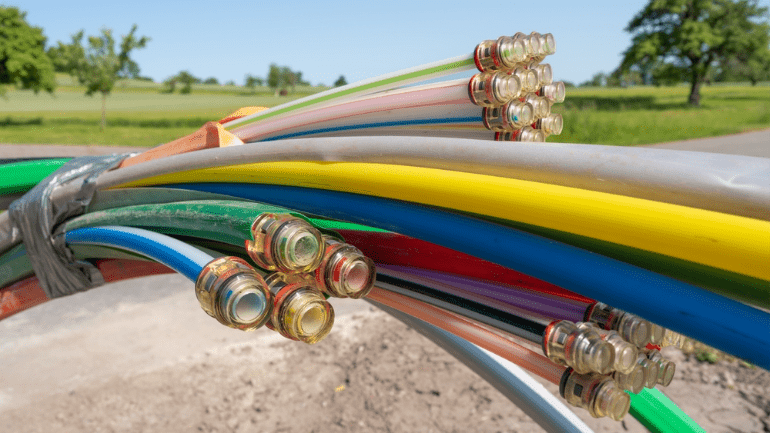
America’s fiber buildout kept moving this week, with several regional projects reaching key milestones. Most activity focused on fiber, upgrades, and rural coverage gaps.
Kinetic led the week with progress in Texas. The company expanded its fiber network by nearly 25% in greater Sugar Land. It added more than 7,600 new fiber locations through private funding. Its network now reaches over 40,000 homes and businesses across the region.
This growth matters for Fort Bend County. More fiber can improve remote work, cloud access, video calls, and business tools. However, private builds often favor areas with stronger revenue potential. That can leave harder-to-reach communities waiting longer for similar service.
Meanwhile, Wire 3 reached the halfway point in Deltona and DeLand, Florida. The $60 million fiber build began in May 2025. The company expects to finish work by late 2027. It described the update as “marking a major milestone for thousands of homes and businesses.”
That timeline shows both ambition and patience. Fiber builds take time, permits, labor, and capital. Customers may see service arrive block by block. Yet the long-term payoff can include more choice and better upload speeds.
In Connecticut, GoNetspeed connected its first Guilford customers. The company is investing $4 million in Guilford and Madison. The project targets 4,200 homes and businesses. GoNetspeed said work is “actively progressing,” as crews continue the local rollout.
Public funding also remains central to rural expansion. Armstrong Telecommunications is deploying 500 miles of fiber in West Virginia. The effort targets more than 5,000 unserved locations. It also supports service for 10,000 rural homes and businesses.
Armstrong’s work combines several funding programs. These include BEAD, LEAD, and Enhanced ACAM support. The company said LEAD work is “substantially complete,” while other phases continue. This blend of funding can close gaps faster. Still, managing multiple programs can slow delivery.
Elsewhere, Comcast expanded service in South Carolina. More than 1,000 new homes and businesses gained access. The project used federal support from pandemic-era recovery programs.
Empire Access launched fiber in Berwick, Pennsylvania. Its $1.4 million project reaches 2,800 locations. In Wisconsin, TDS Telecommunications completed initial upgrades across four communities. The work connected nearly 5,500 locations.
Finally, WOW boosted network speeds in Newnan, Georgia. Downloads rose to 2 Gbit/s, while uploads reached 500 Mbit/s. The upgrade forms part of a $5 million regional investment.
Together, these projects show a steady fiber push across varied markets. Urban edges, small towns, and rural counties all need stronger networks. The challenge remains clear: reach more people without leaving costly areas behind.