Japan’s satellite mobile market gained momentum with two major announcements this week.
Rakuten Mobile and AST SpaceMobile formed a new joint venture in Japan. The project has support from Japan’s Ministry of Internal Affairs and Communications. Rakuten said grants total around $1 billion.
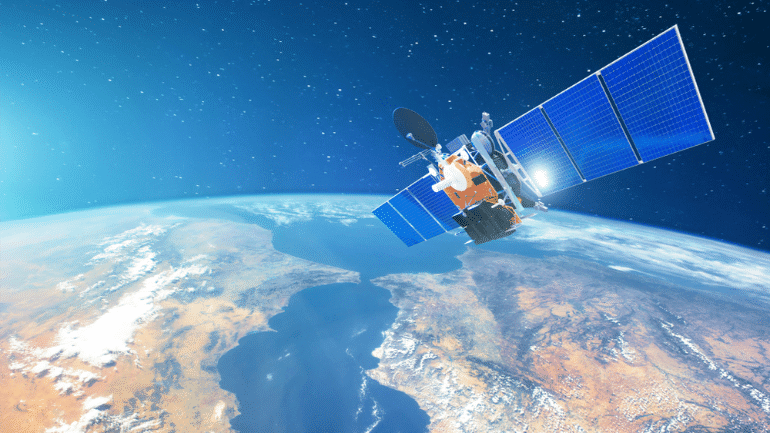
The venture will use AST’s Bluebird low-Earth orbit satellite network. It aims to deliver direct-to-smartphone service using midband spectrum. The companies plan to launch commercial service in March 2029.
The main focus is national resilience. Rakuten wants stronger communications during disasters and emergencies. That goal fits Japan’s needs, given its exposure to earthquakes and severe weather.
For mobile operators, direct-to-device service offers a strong network extension. It can reach remote areas without building towers. It can also keep users connected when ground networks fail.
However, the timeline shows the challenge ahead. AST’s network remains at an early stage. The company currently has 13 satellites in orbit. That includes one test satellite and five first-generation units.
Those first-generation satellites can support peak rates of 100 Mbit/s. AST’s second-generation Block 2 satellites should double that capacity. Yet the company needs many more satellites for broad coverage.
AST targets at least 45 to 60 satellites for key markets. These include North America, Asia, and Europe. Launch availability remains a major barrier for rapid deployment.
To address that issue, AST plans to develop its own rocket. The 20-ton Blacklift rocket could make its first commercial launch in late 2028. That timing will be important for the Japan service plan.
AST’s satellite design also differs from SpaceX and Starlink. Bluebird satellites use very large phased array antennas. These antennas help connect directly with standard mobile phones.
Starlink mainly built its network for broadband internet. It also operates at far greater scale. SpaceX has around 12,000 satellites in orbit today.
Still, SpaceX is moving into direct-to-cell services. Its next-generation V2 satellites recently gained FCC approval. The first launches could begin in 2027.
Meanwhile, NTT announced a separate satellite initiative in Japan. NTT, NTT DoCoMo Business, MUFG, the Development Bank of Japan, and Mitsubishi Electric signed an MoU.
The group will study a large satellite mega-constellation. It may support communications, Earth observation, positioning, navigation, and timing services. It may also support future space data centers.
The companies said they will examine “services enabled by mega-constellations, including communications, Earth observation, satellite-based positioning, navigation, and timing (PNT), and space data centers.”
Together, these moves show Japan’s satellite ambitions are growing fast. Mobile operators now see orbit as part of their network strategy. The next test will be execution, launch capacity, and real smartphone performance.