Nvidia, Rebellions and SK Telecom have signed a major AI infrastructure agreement in South Korea.
The three companies plan to build and test a sovereign AI inference system. Sovereign AI means local control over key AI infrastructure, data and computing capacity. The project has support from Korea’s Ministry of Science and ICT.
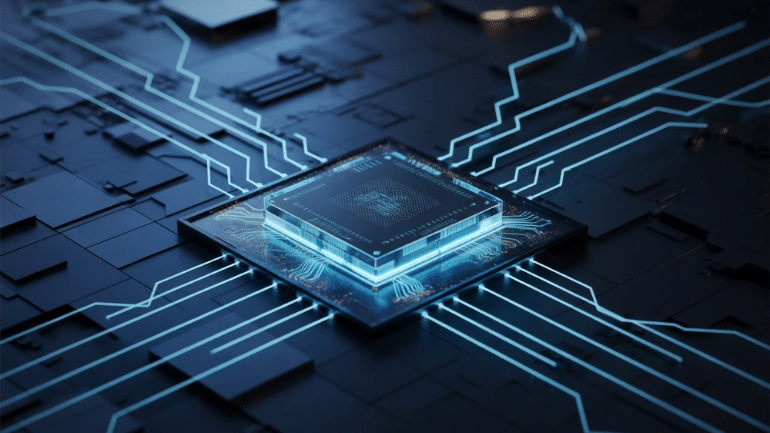
At the centre sits NVLink Fusion, Nvidia’s high-speed chip connection technology. The system will combine Nvidia GPUs with Rebellions’ next-generation Rebel R200 NPUs. GPUs handle broad computing tasks, while NPUs focus on AI workloads more efficiently.
The partners expect systems based on the Rebel R200 to be ready in 2028. However, they have not shared pricing, order volumes or detailed chip specifications. That makes the announcement strategic, rather than a confirmed commercial rollout.
For telecom operators, the project matters beyond South Korea. AI data centres now support customer care, fraud detection, network automation and public digital services. Operators want faster AI responses, lower energy costs and more local control.
Under the plan, SK Telecom will test the systems in its AI data centres. It will connect them to its A.X K2 foundation model and public services. These services fall under Korea’s “AI for All” initiative.
Nvidia will provide much of the surrounding platform. That includes the interconnect, rack design and software ecosystem. Rebellions will supply the Korean NPU technology and rack-scale systems.
“Korea has the talent, technology and industrial ambition to become a world leader in AI,” Jensen Huang said in the announcement.
Rebellions CEO Sunghyun Park also addressed the practical limits of full localization. “An approach that seeks to localize 100% of everything, from bolts and screws to operating systems, is unrealistic in terms of scalability and time to market,” he said.
That statement captures the core tension. Korea wants stronger domestic AI hardware capabilities. Yet the architecture still depends heavily on Nvidia technology.
Technically, the system will split AI response work into two stages. Nvidia GPUs will process the user prompt first. Rebellions NPUs will then generate the response token by token.
This design could improve throughput and power efficiency. Still, the companies have not published independent performance results. The data transfer between GPU memory and NPU memory remains especially important.
Rebellions already has some real-world deployments. Its ATOM-Max NPUs support SK Telecom services including call summaries, text-to-speech and fraud detection. The company claims strong efficiency gains, but those figures come from internal testing.
The wider market also looks competitive. Other AI chip specialists are already linking products to Nvidia’s platform. Rebellions must prove that its 2028 chip can perform at scale.
Meanwhile, Korea’s sovereignty strategy remains complex. Nvidia dominates many national AI projects worldwide. Using NVLink Fusion gives Korea speed and ecosystem access, but limits full independence.
For SK Telecom, the collaboration offers a practical path into AI infrastructure. It may help the operator scale AI services faster. Yet firm capacity commitments and technical benchmarks are still missing.
The next milestone will be evidence, not ambition. Rebellions must disclose credible R200 details. SK Telecom must show stable performance in production-scale environments. Only then will Korea know how sovereign this AI stack truly is.