Nokia will supply optical networking technology for a new international connectivity route. The corridor will link Africa, the Middle East and Europe. The project comes through a partnership with CMC Networks, a major regional connectivity provider.
The new Europe-Middle East-Africa Ring, or EMEA-R, targets wholesale and enterprise customers. It aims to deliver more reliable international capacity across key markets. For carriers, cloud providers, and large businesses, this could improve resilience and route diversity.
In its first phase, EMEA-R will connect Johannesburg to London. The route will run through Cape Town and the Atlantic Ocean. A second path will connect Jeddah to Marseille. That link will cross the Red Sea and Mediterranean.
Meanwhile, terrestrial connections will link London, Frankfurt and Marseille. This mix of subsea and land routes matters. It can reduce dependence on single paths. It also gives customers more options when planning critical traffic flows.
The service will offer International Private Leased Circuit connectivity. This is dedicated bandwidth between two locations. Customers can choose 1G, 10G and 100G capacity. That range suits both expanding enterprises and high-volume wholesale operators.
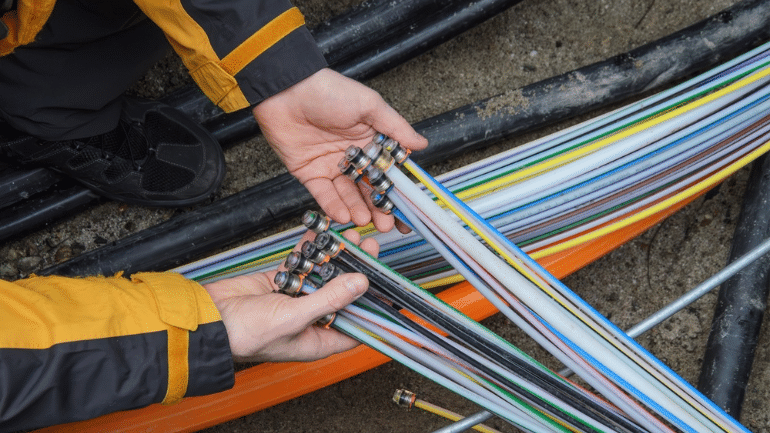
The network will use Nokia’s 1830 Photonic Service Switch platform. In simple terms, the system moves large volumes of data using light. It supports high-capacity transport with strong performance and predictable service levels. Connections to data centres, internet exchanges and customer sites will be available on request.
Nokia’s Head of MEA Hyperscaler and AI & Cloud, Samer Lutfi, said: “EMEA-R demonstrates how advanced optical transport infrastructure can help address the growing demand for seamless, high-performance connectivity across markets.
“By combining Nokia’s optical technology with CMC Networks’ regional reach and service expertise, the corridor gives wholesale and enterprise customers greater flexibility in how they access and scale international capacity. It also strengthens the connectivity foundation needed to support the evolution of cloud, AI and digital services across Africa, the Middle East and Europe.”
The timing looks significant. Cloud platforms, AI workloads and digital services need stable cross-border links. More capacity between these regions could support data centre growth. It may also help enterprises manage latency and service continuity.
However, international corridors face real operational demands. Subsea routes need careful maintenance and protection. Terrestrial segments also require strong coordination across markets. Customers will watch service availability, pricing and repair times closely.
CMC Networks Managing Director, Mahesh Jaishankar, said: “With EMEA-R, we are addressing a key need among carriers and enterprises for reliable, flexible and scalable connectivity across international markets.
“By combining our regional expertise and network reach with Nokia’s optical transport technology, we are simplifying how customers access and manage capacity across Africa, the Middle East and Europe. This enables them to scale with greater confidence, while supporting the growing demand for connectivity driven by cloud, AI and digital transformation.”
Overall, EMEA-R reflects a wider telecoms shift. Regional connectivity no longer supports only voice and basic data. It now underpins cloud access, automation, security, and digital trade. If delivered well, this new route could become a valuable backbone for three fast-changing regions.