In recent developments, the Pacific subsea network is emerging as a pivotal grid in supporting artificial intelligence (AI) expansion. A noteworthy partnership involves Telstra and Google exchanging network infrastructure to enhance connectivity. This collaboration marks a significant shift in the subsea cable landscape, highlighting strategic approaches to meet the increasing demands of AI and cloud traffic.
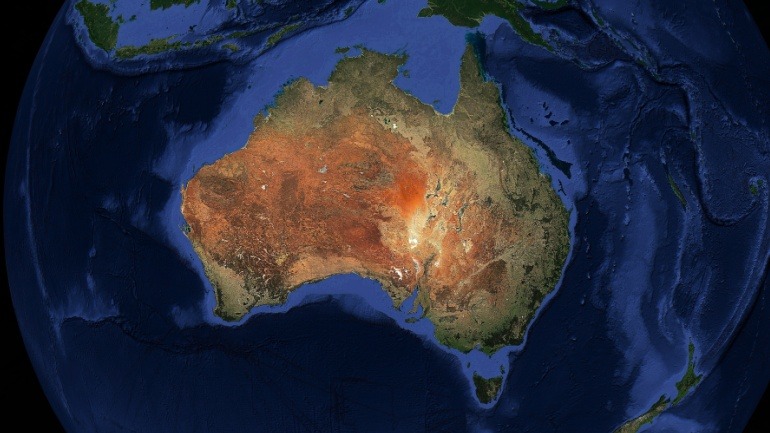
The agreement between Telstra and Google signifies a wholesale approach to AI-era connectivity. The exchange of terrestrial and subsea capacity utilizes Telstra’s Aura Network and Google’s Pacific cable systems. This configuration supports the burgeoning AI workloads and cloud traffic across Australia and the broader Asia-Pacific region. As such, the deal represents a strategic bridge between terrestrial and subsea networks, promoting resilient and redundant routing options. This approach minimizes disruptions and enhances high-speed connectivity for businesses, government services, and individuals.
In parallel, FLAG is launching a cable route between Chennai, India, and Singapore. This route supplements last year’s Mumbai-to-Singapore launch, offering greater route diversity and reducing dependence on existing pathways. This strategic addition aligns with increasing demands for multi-path network architectures, enabling better traffic management and improved resilience.
Meanwhile, Japan’s National Institute of Information and Communications Technology (NICT) has set a new record in fiber transmission, achieving 450 terabits per second (Tbps) on a standard optical fiber. This demonstrates the potential of exploiting existing networks through advancements in optical engineering. Such breakthroughs emphasize that capacity growth doesn’t solely rely on new routes but also on enhancing existing infrastructure.
The Pacific subsea landscape is reshaping with an intensified focus on route diversity. While hyperscalers are building their capacity and leasing from others, telcos are emerging as vital regional route orchestrators. They integrate both terrestrial and subsea assets into a cohesive network. The partnership between Telstra and Google exemplifies this evolving dynamic, representing a reciprocal wholesale model that combines global subsea control with regional terrestrial management.
This development is crucial amid increasing AI workloads that create extensive data flows between data centers. Route diversity becomes a priority to ensure minimal latency and high resilience, crucial in maintaining uninterrupted services. Given the evolving geo-political landscape, route diversity emerges as essential as bandwidth itself.
In summary, the Pacific is emerging as a critical region for the subsea industry, with Australia strengthening its connectivity to Japan, Singapore, and the western United States. Furthermore, India aligns more closely with Singapore-led routes. Companies such as Google and AWS are influencing this architecture significantly, and the Pacific subsea system increasingly resembles an AI expansion grid, complementing the established Atlantic backbone. As technology progresses, new fiber innovations promise to further enhance these networks, ensuring that infrastructure keeps pace with the rapidly growing demands of AI and global connectivity.