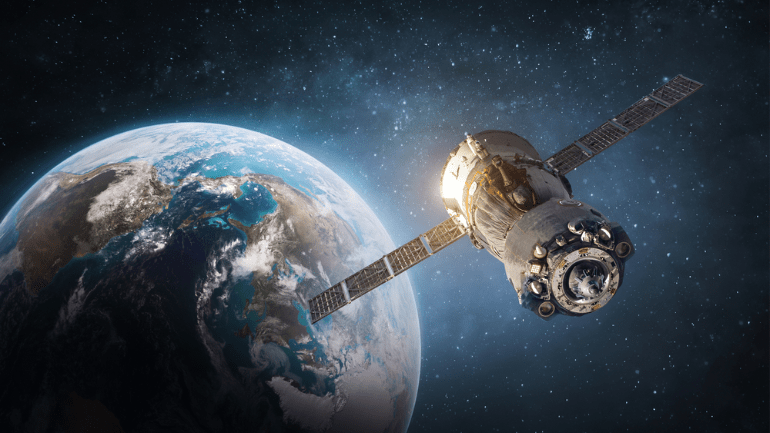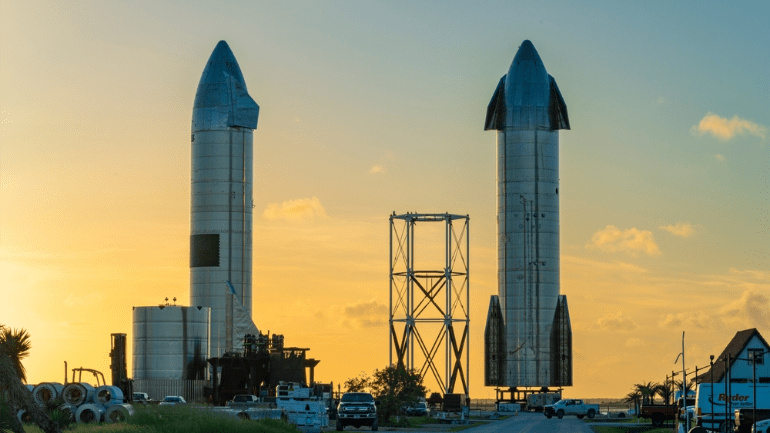
SpaceX is preparing a major step for satellite broadband. Its next Starship test flight could launch as soon as September 22. The mission aims to place 26 high-capacity V3 Starlink satellites into orbit.
This would mark a shift from testing to usable network growth. In July, Starship released 20 V3 satellites on suborbital paths. They completed checks, then burned up in Earth’s atmosphere. This time, SpaceX wants the satellites to join the live constellation.
The new V3 satellites matter because they carry far more capacity. Each unit supports about 1 Tbit/s of downlink capacity. It also supports 160 Gbit/s of uplink capacity. SpaceX says this improves downlink capacity tenfold over V2 satellites. Uplink performance rises by 22 times.
As a result, the full payload could add about 26 Tbit/s. That extra bandwidth could help Starlink serve more users. It could also improve performance in busier coverage areas. However, analysts still expect Starlink to fit rural markets best.
Evercore ISI analysts framed the launch as a key milestone. “Flight 14 is the first point where Starship can begin adding usable broadband capacity rather than only proving the vehicle,” they said. “A successful orbital insertion and V3 deployment would provide the first tangible proof point for the next leg of the broadband capacity ramp and begin validating the broader connectivity ambitions enabled by Starship.”
Still, the mission carries real execution risk. Starship has not yet completed this type of orbital profile. The upper stage must enter orbit, operate correctly, then return safely. SpaceX plans a controlled reentry and splashdown west of Chile.
The company also wants to test the larger reusability roadmap. Starship aims to complete six orbits during a nearly 10-hour flight. Its booster will perform a landing burn over the Gulf of Mexico.
SpaceX explained the goal clearly. “By going to orbit, the next phase of developing Starship to be fully and rapidly reusable can begin,” the company said.
For telecom watchers, the satellite payload may prove more important than the rocket spectacle. The V3 platform could support future Starlink Mobile services. It also links to next-generation direct-to-device plans. Those services use spectrum acquired from EchoStar.
Competition will also intensify. Starlink already leads the low-Earth orbit broadband market. More V3 capacity could widen that gap against Amazon Leo. Yet larger capacity does not solve every challenge. Dense urban broadband still demands careful economics and strong ground infrastructure.
Elon Musk also outlined the reusable rocket vision. “Once we can re-fly the ship, we will have made the first fully reusable orbital rocket.” He called Falcon 9 only “mostly reusable,” because its upper stage is lost.
Musk said Starship targets aircraft-like reuse. “It’s designed not just for reusability, but also rapid reusability like an aircraft,” Musk said.
The company may try catching the upper stage during flight 15. Musk gave the first attempt a 50% to 60% chance of success.
SpaceX is also planning beyond broadband. President Gwynne Shotwell said orbital compute satellites remain on track for 2027. For now, flight 14 could define Starlink’s next capacity era.