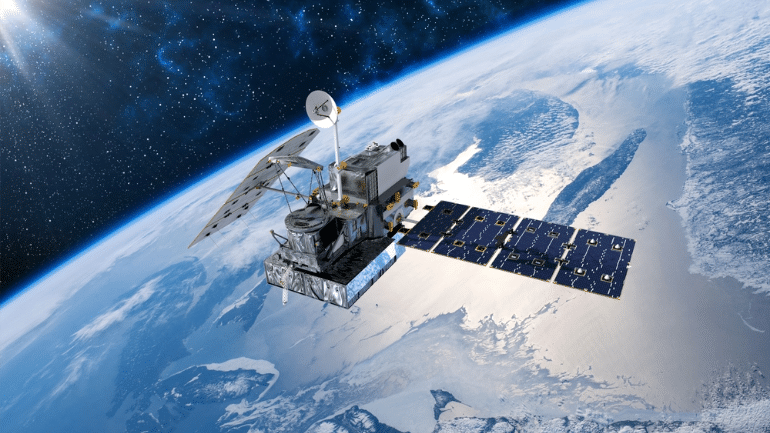
In an ambitious move, Jeff Bezos’ Blue Origin plans to deploy 51,600 satellites to create an array of orbital data centers. This development aligns with Blue Origin’s long-term strategic vision, rather than simply reacting to its competitor, SpaceX. Previously, SpaceX requested FCC approval for a significantly larger constellation of 1 million satellites.
Pravin Pradeep from Frost & Sullivan explains that Blue Origin’s move isn’t a sudden shift. Bezos has often mentioned the potential of non-terrestrial data centers for efficient energy management, especially given the high power demands of AI. This initiative builds on existing infrastructure, with assets like New Glenn, Blue Ring, TeraWave, and Project Sunrise forming the foundation for this space-based network.
The New Glenn rocket, a 320-foot tall reusable behemoth, is key for launching satellites. Blue Ring takes charge of space logistics while TeraWave focuses on high-throughput connectivity. Together, they set the scene for a sophisticated space infrastructure. Pradeep suggests this marks a shift in satellite use, from connectivity tools to distributed cloud and AI frameworks. The emphasis on optical inter-satellite links indicates a move towards decentralized, space-based data routing.
However, Blue Origin faces considerable challenges. SpaceX holds a first-mover advantage with a mature satellite constellation and proven launch track record. Project Sunrise’s orbital placement, in a sun-synchronous orbit, aims to tackle these hurdles by ensuring consistent solar power for extensive computational tasks while minimizing latency.
Despite this strategic positioning, catching up with SpaceX remains a monumental task. In Pradeep’s words, “It is more about staking a claim than demonstrating parity with Starlink.” Yet, Blue Origin does target a niche market of high-value enterprise users, potentially sidestepping direct competition with Starlink in the mass consumer arena.
Elevating their launch capabilities, the New Glenn rocket offers substantial payload capacity. Still, Pradeep notes the importance of consistent launch frequency, an area where SpaceX excels through its demonstrated capabilities across years.
Financial viability remains a pressing issue. Orbital data centers present an expensive proposition with complex engineering challenges. AWS CEO Matt Garman, at the Cisco AI Summit, remarked on the high costs of space deployment, stating, “It is just not economical.” This underscores the long road ahead for space-based data center economics, reliant on reduced launch costs and advanced space networking.
Nonetheless, Blue Origin’s step signifies a long-term commitment rather than a near-term goal. As Pradeep concludes, Blue Origin is gearing up for a future where space becomes integral to global computational infrastructure, not just reacting but planning for the evolving landscape.