Orange Wholesale CEO Michaël Trabbia has urged Europe to accelerate satellite connectivity plans. He warns that the region risks falling further behind the United States.
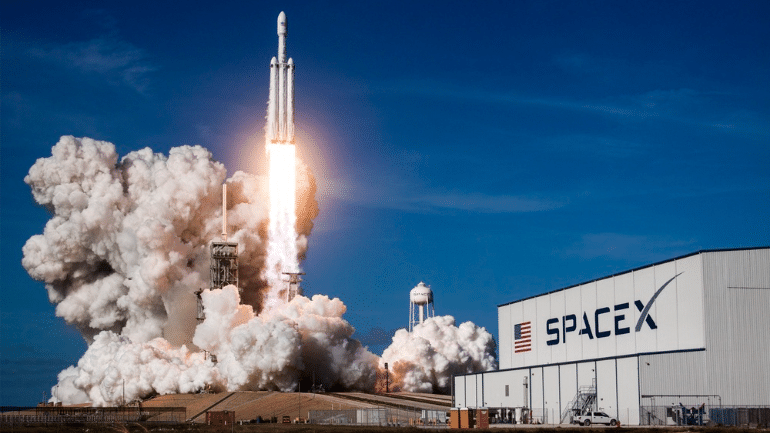
His comments focus on a fast-moving market shaped by SpaceX and Starlink. Their low-Earth orbit networks have changed deployment economics. Reusable rockets have also reduced launch costs and timelines.
For telecoms operators, the message is clear. Satellite connectivity now forms part of mainstream network strategy. It can extend coverage, support resilience, and serve remote users. Yet Europe still faces structural delays.
Trabbia said Europe does not lack engineering talent or industrial strength. Instead, he pointed to slow decision-making and outdated procurement methods. These processes struggle against integrated competitors with rapid technology cycles.
In a translated post, he wrote: “The principle of “geographical return”- which once helped unite nations and preserve expertise across multiple countries- has become a liability when faced with SpaceX’s agile, integrated model.
“Our programs continue to move at the pace of tenders and specifications finalised four or five years before the launch of a service intended to last a decade. This model no longer works against competitors who refresh their technology generations every two to three years.”
However, Trabbia also sees signs of change. Europe’s IRIS² programme has gained clearer funding, governance, and early customer support. The planned constellation aims to deliver secure sovereign communications.
He added: “Let us be realistic: Europe’s lag is an established fact. Yet, several recent decisions show that a turnaround is now possible. The agreement reached this summer regarding IRIS² has resolved the uncertainty.
“The project now has a budget, a schedule, leadership, and its first customers. Europe’s future dual-use constellation is beginning to take shape. It will provide ultra-secure, sovereign communications for government services, as well as high-speed connectivity for businesses and citizens.”
At the same time, Direct-to-Device technology is creating another opening. It allows ordinary smartphones to connect through satellites. This could help users stay reachable in coverage gaps.
The first services will focus on messaging. Voice and internet access should follow gradually. For mobile operators, this may become a useful coverage layer. It also raises important questions about spectrum access.
Trabbia said: “Another innovation is “Direct-to-Device” technology, which now makes it possible to connect smartphones via satellite- maintaining connectivity even in “dead zones.”
“Initially, this enables text messaging, but it will extend to voice calls and, gradually, internet access. This is a major strategic issue, particularly regarding access to frequencies,” he said.
Europe now plans to reserve some essential spectrum resources for regional players. Trabbia stressed that this should not block foreign operators. Instead, it should support fair competition and reduce strategic dependence.
“The goal is not to ban foreign constellations, but to create the opportunity for a homegrown solution to emerge, thereby avoiding a de facto monopoly and the associated strategic risks,” he noted.
The challenge now lies in execution. Europe has spectrum, expertise, and a flagship project. It must turn these assets into competitive services faster. For telecoms leaders, satellite is no longer a side market. It is becoming part of network sovereignty.