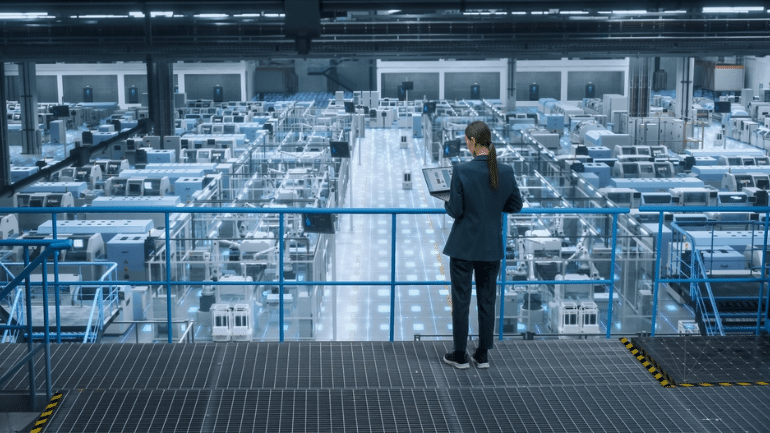
AI infrastructure spending is reshaping the data center market in 2026. Compute clusters keep expanding for model training. At the same time, operators need distributed capacity for fast inference.
Dell’Oro expects total data center spending to exceed $1 trillion this year. The largest hyperscalers lead that surge. Their capital spending may rise 78% year over year.
However, compute power alone does not create useful AI capacity. Data centers must connect at massive scale. This is where optical networking becomes central.
Nokia argues that optical infrastructure now supports two critical AI models. The first involves huge training clusters across data centers. The second supports distributed inference closer to users, enterprises, and applications.
In simple terms, optical networks move vast amounts of data between sites. They also link storage, backup systems, and workloads. For AI, this movement must happen quickly and reliably.
Coherent pluggables are one major development. These compact optical modules fit into routers and switches. They help operators carry high-capacity traffic without extra bulky equipment.
This approach can reduce space, power use, and cost per bit. That matters as AI traffic grows quickly. The move from 400G to 800G modules extends those gains further.
Analysts now expect hundreds of thousands of 800G coherent pluggables to ship in 2026. That would mark a more than tenfold increase from 2025.
Still, operators must manage deployment complexity. Direct integration into routers can challenge operations teams. Thin transponders offer another path. They keep many efficiency gains while simplifying some network tasks.
Optical line systems form another key layer. These systems gather and amplify wavelengths across fiber routes. They act like ramps and refueling points for optical traffic.
New compact modules can support up to 64 wavelengths. This can deliver 50 to 75 Tbps on each fiber pair. That capacity helps cloud and AI providers scale fast.
Yet amplification creates a real design challenge. Optical signals need boosting every 50 to 100 kilometers. Large providers now move petabits across hundreds of fiber pairs.
Traditional amplifier sites may struggle with this density. New high-density amplifiers address that issue. Some designs can support up to 160 fiber pairs per rack.
Automation also becomes essential in this environment. Operators need real-time visibility across optical routes. They must align capacity with fast-changing AI workloads.
Open interfaces can help teams manage multi-vendor environments. AI-enabled automation can detect issues early. That reduces the risk of outages reaching compute clusters.
Even so, automation requires trust, planning, and strong governance. Operators must understand how tools make decisions. They also need safeguards before automating critical routes.
The wider message is clear. AI investment depends on more than chips and servers. Without optical capacity, expensive compute assets may sit constrained.
For telecom and cloud players, optical networks are becoming strategic infrastructure. They connect intelligence across regions, sites, and users. In the next AI phase, bandwidth will matter as much as processing power.