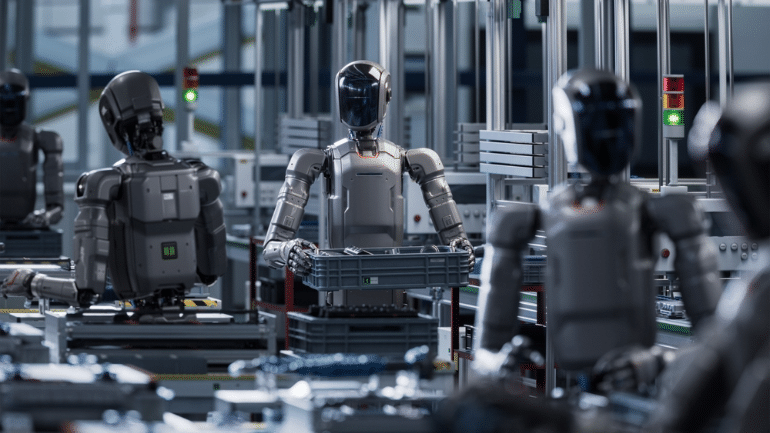
Industrial AI is forcing enterprises to rethink factory connectivity. More robots, sensors, cameras, and tablets now need reliable links. That shift exposes a gap between edge computing and shop-floor devices.
Private 5G already addresses part of this issue. It offers predictable performance, stronger control, and better support for critical workloads. Yet many firms still treat connectivity as an afterthought.
At the Industrial Wireless Forum, speakers described a clear market split. Early private 5G adopters now add AI workloads with more confidence. Others invest in AI first, then discover network limits later.
Future Technologies CEO Peter Cappiello framed the risk clearly. Factories are installing smarter devices at speed. However, local-area connectivity often trails behind compute and AI plans.
This matters because industrial AI depends on fast, stable data movement. A camera may support object detection. A robot may need precise timing. A worker device may carry safety information. Each application places pressure on the network.
Private 5G can help because it supports deterministic performance. In simple terms, the network behaves in a predictable way. That matters when production lines cannot pause for weak coverage.
Cappiello cited a large automotive site in the United States. The deployment supports 1,000 robots across five million square feet. Private 5G acts as the main network. Wi-Fi supports backup needs.
The project also shows the effort required. Engineers needed 30 radio-frequency designs before reaching the right result. That detail highlights an important reality. Private 5G is not plug-and-play for every factory.
Still, the reward can be substantial. Reliable wireless links help robots move safely and consistently. They also reduce dependence on public networks for critical operations.
Telenor executive Terje Jensen added a measured view on AI traffic. He said AI represents about one percent of total traffic today. Some forecasts expect rapid growth by 2030. Jensen said the total may still remain modest overall. “Which is not a lot,” he said.
However, averages can hide major local pressure. AI video, object recognition, and surveillance create heavy uplink traffic. This matters inside ports, factories, hospitals, and energy sites.
Jensen said enterprises now ask for more than bandwidth. They want resilience, autonomy, security, and traffic isolation. “Best-effort is not enough anymore,” he said.
That change may reshape telecom sales. Operators must offer assured service levels, not just faster connections. Private and public network roaming will also become more important.
For Industry 4.0, the message is direct. AI plans need network planning from the start. Otherwise, weak connectivity can slow automation and reduce competitiveness.
Jensen closed with a simple market instruction. “Collaborate,” he said. “Sit down and figure it out. We can do a lot with the tools we already have.”